 Save to Pinterest
 There's something about the smell of butter hitting a hot pan that stops me mid-morning and pulls me back to my grandmother's kitchen, where French toast was less a recipe and more a ritual. She'd crack eggs into a bowl with a certainty I've only recently understood—it wasn't about perfection, it was about confidence. One Saturday, I tried to make it without her around, and I rushed through the soaking, convinced I knew better, and ended up with bread that fell apart on the spatula. That failure taught me more than her quiet certainty ever could. Now, when I make French toast, I do it her way, with patience and butter, and somehow it always tastes like a second chance.
I made this for my roommate on a Tuesday morning after she'd had a terrible night, and watched her face change from exhausted to almost human again with the first bite. That's when I realized French toast isn't really breakfast—it's a quiet way of saying someone matters to you.
Ingredients
- 4 large eggs: The backbone of your custard; they're what transforms plain bread into something that tastes spun and golden.
- 1 cup whole milk: The liquid that carries the richness; whole milk makes a difference because skim feels thin and sad by comparison.
- 2 tbsp heavy cream (optional): This is where luxury sneaks in—it makes the custard cling to the bread instead of running off.
- 1 tbsp granulated sugar: A light sweetness that doesn't overpower, just whispers.
- 1 tsp pure vanilla extract: Use real vanilla; the imitation kind tastes like regret.
- 1/2 tsp ground cinnamon (optional): A pinch that changes everything, warming the whole thing without announcing itself.
- Pinch of salt: The thing nobody thinks about until they taste French toast that tastes like empty carbs instead of cake.
- 8 slices day-old brioche, challah, or thick white bread: Fresh bread is the beginner's mistake; day-old bread has structure that soaks without collapsing.
- 2 tbsp unsalted butter: For cooking, and yes, butter matters here.
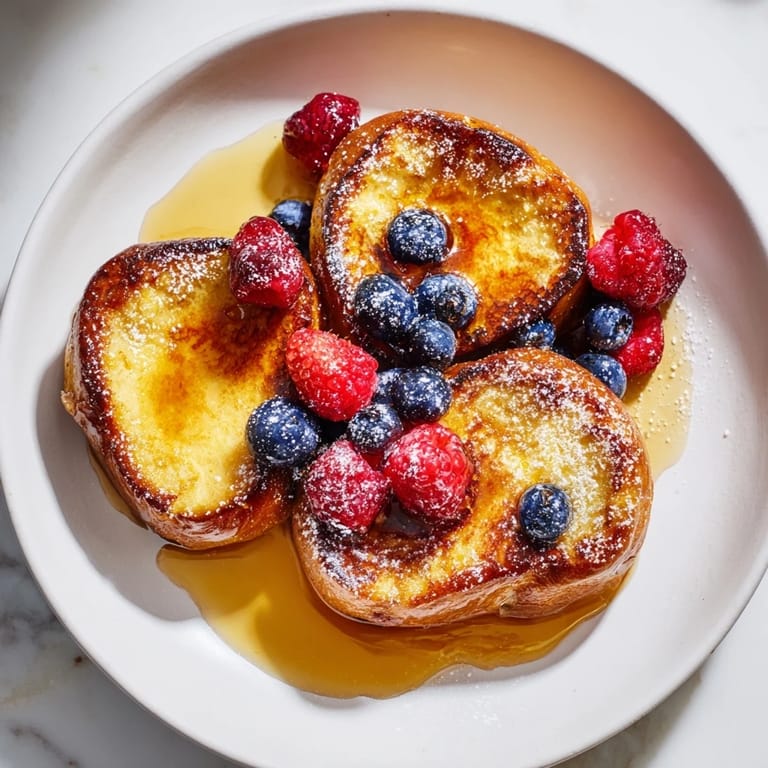
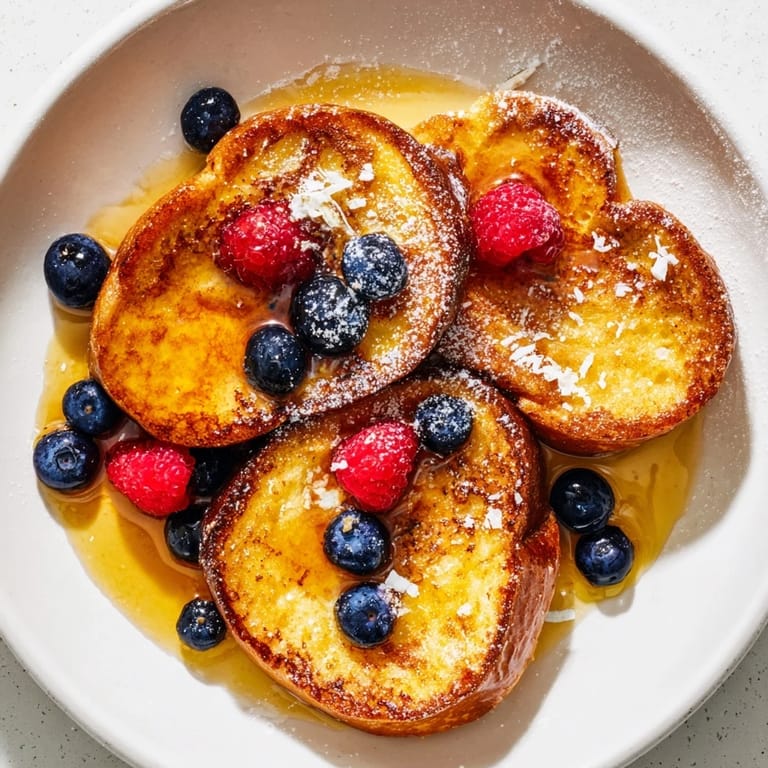
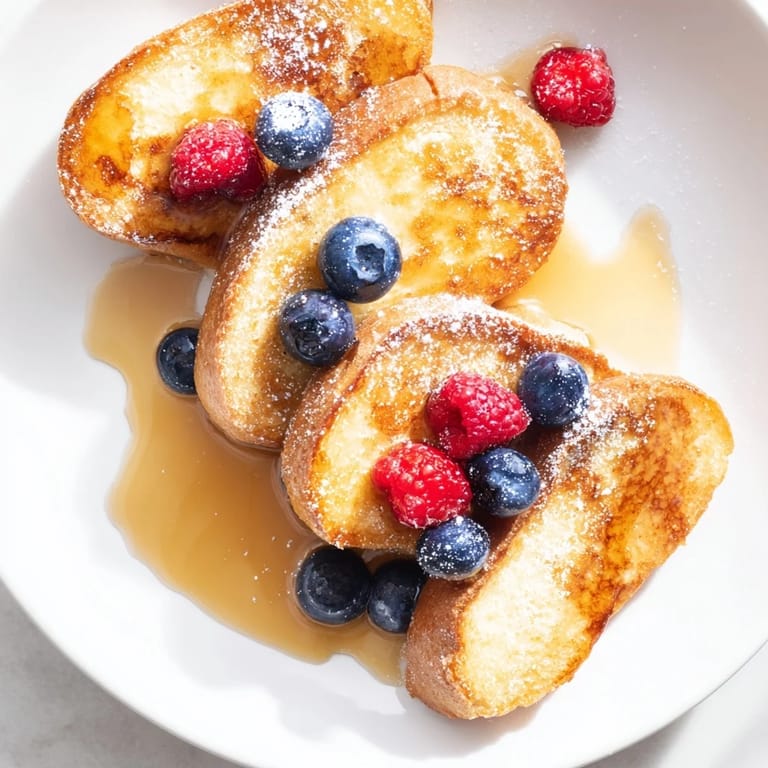
- Maple syrup, powdered sugar, fresh berries: Toppings that let the French toast be the star while they play supporting roles.
Tired of Takeout? 🥡
Get 10 meals you can make faster than delivery arrives. Seriously.
One email. No spam. Unsubscribe anytime.
Instructions
- Whisk your custard foundation:
- In a large bowl, whisk together eggs, milk, cream, sugar, vanilla, cinnamon, and salt until it's smooth and uniform. This is where you set the tone—take your time here.
- Heat your skillet:
- Set a non-stick skillet or griddle over medium heat and let it warm properly. Add 1 tablespoon of butter and listen for the quiet sizzle that tells you it's ready.
- Dip with intention:
- Hold each bread slice for a few seconds in the custard on each side—long enough to coat, not long enough to turn it into bread soup. This is the move that separates soggy from sublime.
- Cook until golden:
- Place your coated bread onto the hot skillet and cook for 2–3 minutes per side, watching as the surface turns a deep amber. When the edges look set and the inside sounds hollow when you tap the spatula against it, flip.
- Keep the momentum going:
- Transfer finished slices to a serving plate while you work through the rest, adding more butter to the pan as it disappears.
- Finish with warmth:
- Serve immediately, still warm enough that maple syrup pools into every crevice, dust with powdered sugar if you're feeling fancy, and add berries if you have them.
 Save to Pinterest
 My friend once asked me why I bothered making French toast when pancakes were faster, and I didn't have a good answer until I made both for her. The pancakes were gone in three bites. The French toast lasted through a whole conversation about her week, about the things she was worried about, about small victories I'd forgotten to celebrate. That's the difference between food and breakfast.
Bread Matters More Than You Think
The bread is honestly the whole conversation here. Fresh brioche is too delicate, almost crumbly in your hands before it even hits the pan. Challah, with its slightly denser crumb, holds the custard like it was designed for this exact purpose. I've also used thick slices of regular white bread, and while it's not fancy, it works because thickness gives you something to dip without the whole thing disintegrating. If you're buying bread specifically for this, tell the bakery person it needs to be one day old—they understand immediately.
The Custard Ratio Secret
The magic happens in the bowl before anything touches a pan. Too much milk and your French toast tastes watery, almost sad. Too little and it tastes dry no matter how long you soak it. The recipe I've given you is balanced because it accounts for bread that's already a little stale and has lost some of its moisture. When you add that optional heavy cream, you're buying insurance against dryness and adding a richness that makes people ask if you did something special. You did—you just used cream.
Timing and Temperature
Medium heat is your friend here because high heat rushes everything. The outside burns while the inside stays barely warm, and you've learned nothing except frustration. Medium heat lets the butter do its job, lets the custard cook all the way through, and gives you time to watch for the exact moment the edges are set and ready to flip. I used to think impatience was a virtue in the kitchen. I was wrong.
- If your skillet is truly non-stick, one tablespoon of butter per batch is enough; if it's older or temperamental, add another half tablespoon.
- The sound changes when it's ready to flip—listen for a subtle sizzle shift, and you'll know.
- Make sure your serving plate is warm so the French toast stays that perfect texture all the way to the table.
 Save to Pinterest
 French toast is the breakfast that tastes like someone loves you, even if that someone is just yourself on a quiet morning. Make it often, make it with butter, and don't rush.
Recipe FAQs
- → What type of bread works best for this dish?
Day-old brioche, challah, or thick white bread absorb the custard well without becoming soggy, providing the best texture and flavor.
- → Can I add extra richness to the custard mixture?
Yes, adding heavy cream to the egg and milk mixture enhances the custard’s creaminess and depth of flavor.
- → How do I prevent the bread from becoming soggy?
Soak each slice briefly in the egg mixture, allowing just enough time to absorb without falling apart before cooking.
- → What toppings complement this breakfast best?
Maple syrup, powdered sugar, and fresh berries add sweetness and freshness that balance the rich custardy bread.
- → Is this suitable for dairy-free diets?
Plant-based milk and butter substitutes can be used to make a dairy-free version without compromising flavor.