 Save to Pinterest
 My friend Sarah brought back stories from her trip to Honolulu, but what really stuck with me was her description of a poke bowl she'd eaten at a beachside shack—the way the spicy tuna melted on her tongue, how the creamy avocado balanced the heat, and those little sesame seeds that popped between her teeth. I spent weeks trying to recreate it in my own kitchen, and honestly, my first attempt was a disaster (too much sriracha, undercooked rice), but that failure taught me more than any perfect bowl ever could. Now whenever I make this, I'm transported back to that conversation, and I realize poke bowls aren't just about the ingredients—they're about bringing a slice of island ease into an ordinary weeknight.
I made this for a small dinner party last summer, and watching my guests' faces light up when they lifted their first spoonful—that perfect moment when the tuna, rice, and avocado came together—reminded me why I love cooking for people. One guest asked for the recipe right there at the table, pen in hand, and I knew I'd created something worth keeping.
Ingredients
- Sushi rice (2 cups): This is the foundation, and rinsing it properly makes all the difference—it removes excess starch and ensures fluffy, separate grains instead of a mushy base.
- Rice vinegar (3 tbsp), sugar (1 1/2 tbsp), salt (1 tsp): These three ingredients are the seasoning trio that transforms plain rice into something bright and slightly tangy; never skip this step.
- Sushi-grade tuna (400 g): Buy from a reputable fishmonger who explicitly sells sushi-grade fish; quality here matters more than anywhere else in the recipe.
- Japanese Kewpie mayonnaise (2 tbsp): It's richer and silkier than regular mayo, and it makes the spicy tuna marinade taste authentic and luxurious.
- Sriracha (2 tsp): Start with this amount and taste as you go; heat levels vary wildly between brands, and you can always add more but can't take it back.
- Sesame oil (1 tsp), soy sauce (1 tsp), lime juice (1 tsp): These create umami depth and brightness together, so use all three even if one seems like a small amount.
- Cucumber, avocado, edamame, pickled ginger, seaweed salad, sesame seeds: Each topping brings its own texture and flavor story; don't treat them as optional extras.
Tired of Takeout? 🥡
Get 10 meals you can make faster than delivery arrives. Seriously.
One email. No spam. Unsubscribe anytime.
Instructions
- Rinse and cook the rice:
- Run cold water over the sushi rice in a fine-mesh strainer, stirring gently with your fingers until the water runs clear—this takes patience but prevents a gluey outcome. Combine the rinsed rice with 2 1/2 cups water in a saucepan, bring to a boil, then cover tightly, lower the heat to the gentlest simmer, and let it steam for 15 minutes without peeking.
- Season while warm:
- The moment the rice comes off the heat, immediately drizzle the vinegar mixture over it and fold gently with a rice paddle or fork, turning the rice from bottom to top as if you're being kind to it. Spread it on a large plate or wooden board to cool to room temperature—this matters because warm rice can wilt your toppings.
- Build the spicy tuna marinade:
- Whisk the mayo, sriracha, soy sauce, sesame oil, and lime juice together until smooth and creamy, then fold in your diced tuna and green onion with a gentle hand so you keep those beautiful chunks intact. Pop it in the fridge while you prep everything else, and the flavors will marry beautifully.
- Prepare all your toppings:
- Slice the cucumber thin enough to see light through it, fan your avocado slices, shell the edamame if needed, and arrange everything within arm's reach. This mise en place moment is crucial because assembly is quick once you start.
- Assemble the bowls:
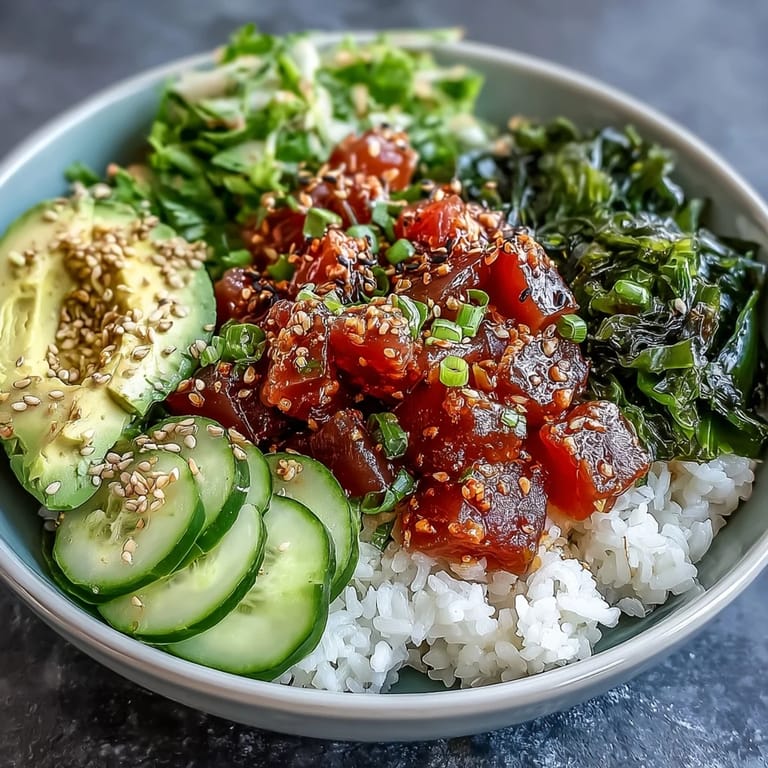
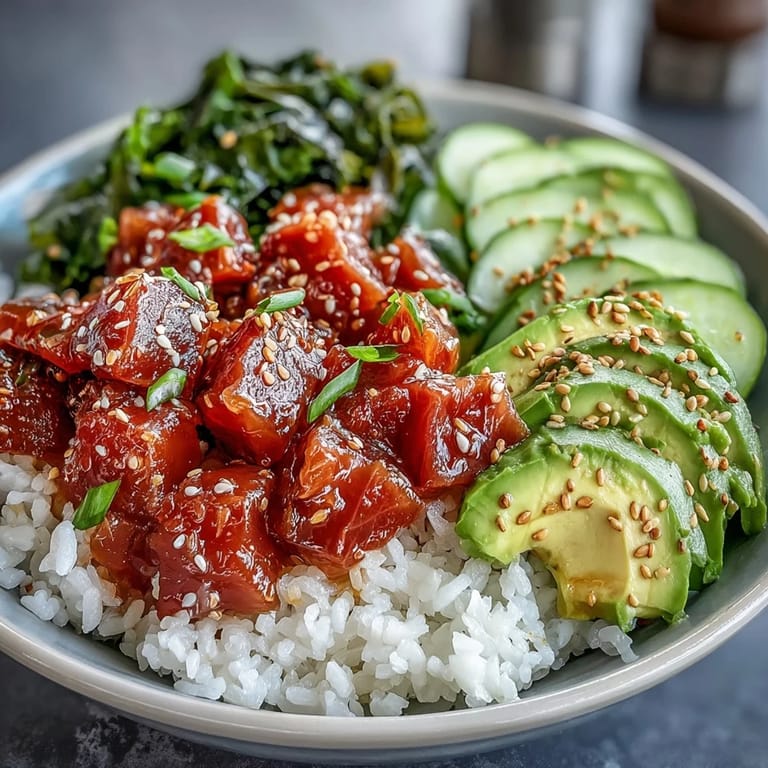
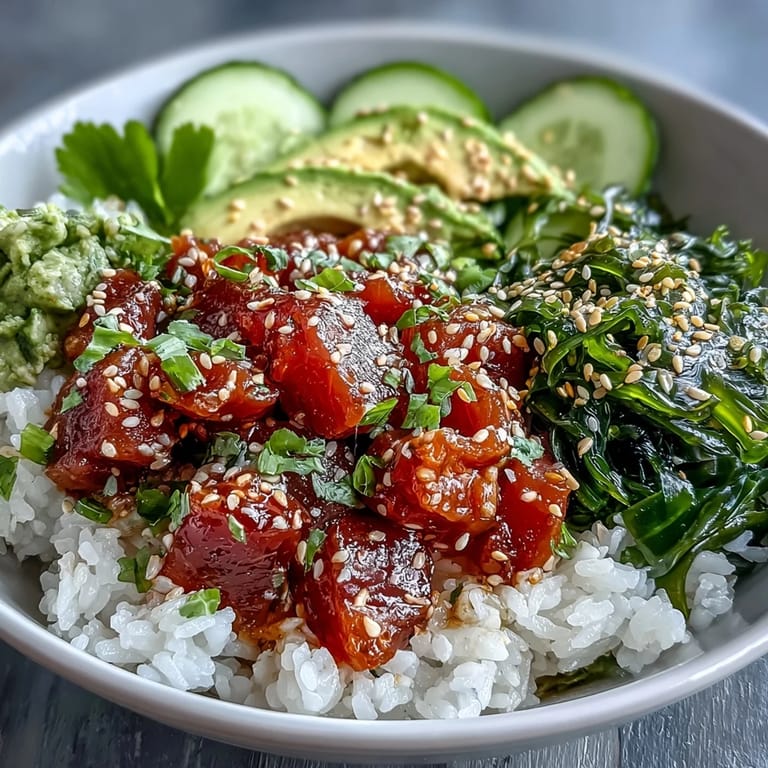
- Divide the cooled rice evenly among four bowls, creating a slight indent in the center with the back of a spoon, then crown each bowl with the spicy tuna right in that sweet spot. Arrange your cucumber, avocado, edamame, pickled ginger, and seaweed in sections around the tuna like you're painting a edible landscape.
- Finish and serve:
- Sprinkle extra sesame seeds over the top and add a pinch of furikake if you're feeling fancy, then serve immediately while everything is fresh and the rice is still cool.
 Save to Pinterest
 There's something almost meditative about assembling a poke bowl, arranging each element with intention, knowing that in a few bites someone will experience a moment of pure joy. That's when it stopped being just dinner and became a small act of care.
The Art of Marinating Tuna
The spicy tuna marinade is where all the personality lives, and I learned this the hard way by over-marinating once and ending up with mushy fish. The key is balance—the creamy mayo coating protects the delicate tuna flesh from breaking down while the sriracha and sesame oil add complexity. I usually marinate for no more than 30 minutes, just long enough for flavors to nestle in without compromising texture. Think of it like a quick kiss rather than a deep embrace.
Rice Temperature Matters More Than You'd Think
Cold rice absorbs toppings better and prevents them from wilting or sliding around, which is why I always let my rice cool completely before assembly. On the flip side, if your room is particularly warm, you can even chill the rice briefly in the refrigerator, though be gentle when handling it so you don't crush the grains. This one detail changed how my poke bowls turned out, making them look intentional and thoughtful rather than hurried.
Customization Without Losing the Soul
Once you master the basic formula—seasoned rice, spicy protein, bright toppings—you can play with variations endlessly. I've made versions with seared salmon, added crispy wonton strips for crunch, or swapped in sriracha mayo for a milder version when cooking for friends who don't love heat. The beauty is that the structure stays true while the details can shift with seasons, availability, or mood.
- Try brown rice or quinoa if you want more fiber, though the flavor profile shifts slightly and becomes earthier.
- Add a drizzle of spicy mayo over the finished bowl for extra richness and heat.
- Roasted nori strips add a smoky, briny note that perfectly complements the creamy avocado.
 Save to Pinterest
 Making a poke bowl is less about following rules and more about trusting your instincts and tasting as you go. Serve it immediately, eat it slowly, and let yourself enjoy the fact that something this good can come together in your own kitchen.
Recipe FAQs
- → How do I prepare the sushi rice perfectly?
Rinse sushi rice under cold water until clear, then cook with measured water. After cooking, season with a mix of rice vinegar, sugar, and salt, fluffing gently to combine.
- → What gives the tuna its spicy flavor?
The spicy kick comes from a marinade combining Sriracha, mayonnaise, soy sauce, lime juice, and sesame oil, enhancing the fresh tuna’s taste.
- → Can I substitute the tuna with other seafood?
Yes, salmon can be used instead of tuna for a different, milder flavor while keeping the dish’s vibrant profile.
- → What toppings complement the bowl best?
Cucumber, avocado, edamame, pickled ginger, and seaweed salad or nori strips add freshness, creaminess, and umami to balance the spicy tuna.
- → Are there alternatives to sushi rice?
Brown rice or quinoa can be used as healthier bases, providing a slightly different texture while maintaining the bowl’s essence.