 Save to Pinterest
 My neighbor Anna once invited me over after smelling cabbage boiling through the apartment hallway. I walked in to find her kitchen counter covered in pale green leaves, a bowl of meat and rice in the center, and her hands working faster than I could follow. She didn't measure anything, just rolled and tucked with the kind of rhythm that comes from making something a hundred times. That afternoon, I learned that cabbage rolls aren't just food—they're patience, tradition, and the kind of comfort that fills a room before it even reaches the table.
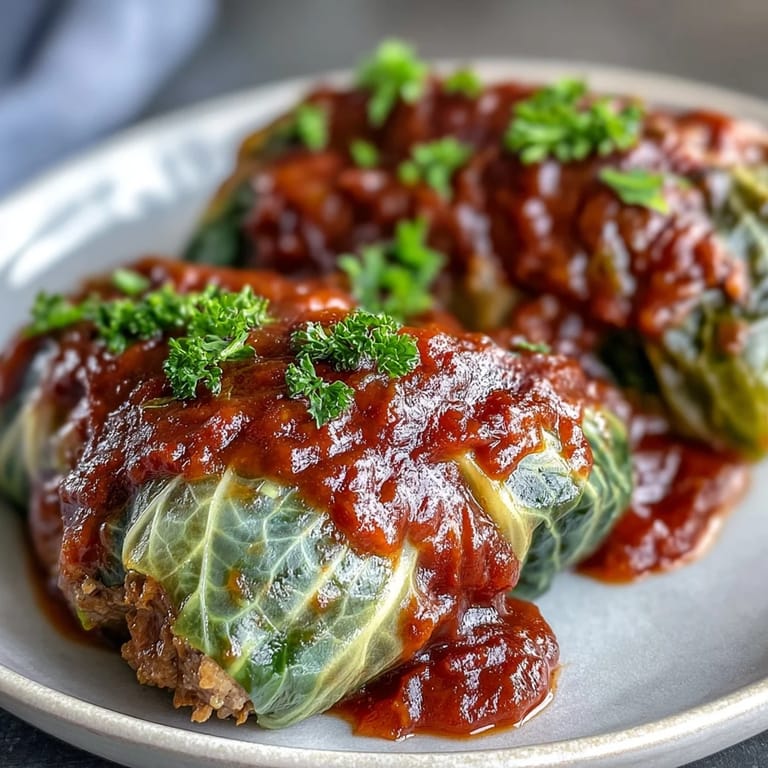
I made these for a potluck once, stacked in a deep dish and still bubbling from the oven. People who'd never heard of cabbage rolls went back for seconds. One friend sat down with his plate and said it reminded him of his childhood, even though his family never made them. There's something about the combination of soft cabbage, rich tomato sauce, and that slightly sweet, savory filling that hits a universal comfort note. I've been making them ever since, tweaking the spices, adding more garlic, sometimes sneaking in extra parsley because I like the color.
Ingredients
- Large head of green cabbage: Choose one that feels heavy and firm with tightly packed leaves, which softens beautifully when boiled and becomes pliable enough to roll without tearing.
- Ground beef or pork: A mix of both gives the filling more flavor and moisture, but all beef works just fine if that's what you have on hand.
- Uncooked long-grain white rice: You'll parboil this so it finishes cooking inside the rolls, soaking up all the savory juices as it bakes.
- Onion and garlic: Finely chop them so they blend into the filling and sauce without leaving chunky bites that might break the tender texture.
- Egg: This binds the meat and rice together so the filling holds its shape when you roll and slice into each piece.
- Fresh parsley: It adds a bright, grassy note that cuts through the richness and makes the filling taste fresher.
- Tomato passata or crushed tomatoes: The base of your sauce should be smooth and slightly sweet, coating every roll as it bakes.
- Tomato paste: A spoonful deepens the color and adds concentrated tomato flavor that makes the sauce taste like it simmered all day.
- Sugar: Just a tablespoon balances the acidity of the tomatoes and rounds out the sauce without making it taste sweet.
- Dried thyme: It brings an earthy, subtle warmth that pairs perfectly with tomato and cabbage.
- Salt and black pepper: Season generously because both the filling and sauce need enough to bring out all the other flavors.
Tired of Takeout? 🥡
Get 10 meals you can make faster than delivery arrives. Seriously.
One email. No spam. Unsubscribe anytime.
Instructions
- Prep the oven and cabbage:
- Preheat your oven to 180°C (350°F). Bring a large pot of salted water to a rolling boil, then carefully cut out the core of the cabbage and lower the whole head into the water, letting the outer leaves soften and peel away naturally as they cook for about 8 to 10 minutes.
- Make the tomato sauce:
- Heat oil in a pan over medium heat and cook the chopped onion and garlic until they turn soft and fragrant, about 3 minutes. Stir in the tomato paste and let it cook for a minute before adding the passata, sugar, thyme, salt, and pepper, then let it simmer gently for 10 minutes until it thickens slightly.
- Parboil the rice:
- Cook the rice in boiling water for just 5 minutes so it's only halfway done, then drain it well and let it cool a bit before mixing it with the meat. This keeps the rice from turning mushy inside the rolls.
- Mix the filling:
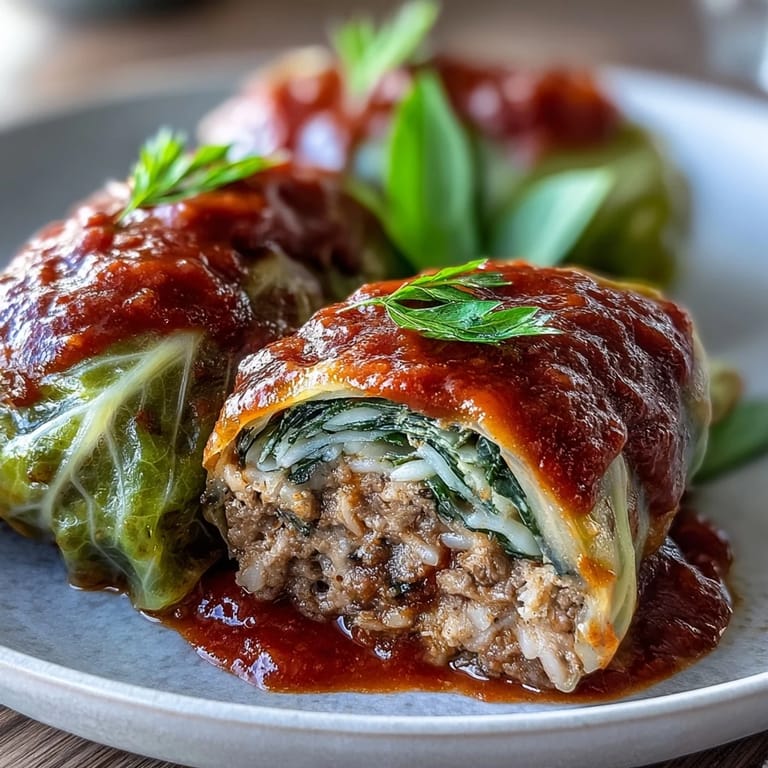
- In a large bowl, combine the ground meat, parboiled rice, chopped onion, minced garlic, egg, parsley, salt, and pepper, mixing everything together with your hands until it's evenly distributed. The mixture should feel moist but not too wet.
- Roll the cabbage leaves:
- Lay a cabbage leaf flat on your work surface with the stem end closest to you, then spoon 2 to 3 tablespoons of filling near the base, fold in the sides, and roll it up tightly like a little burrito. Repeat until you've used up all the filling and leaves.
- Assemble the dish:
- Spread a thin layer of tomato sauce across the bottom of your baking dish to prevent sticking, then arrange the cabbage rolls seam side down in a single snug layer. Pour the rest of the sauce evenly over the top.
- Bake covered:
- Cover the dish tightly with foil or a lid and bake for 1 hour, letting the rolls steam and cook through in the sauce. If you want a thicker sauce, remove the foil in the last 15 minutes.
- Rest and serve:
- Let the dish cool for a few minutes before serving so the rolls firm up slightly and the sauce settles. Garnish with extra parsley if you like a fresh pop of color.
 Save to Pinterest
 The first time I served these to my family, my youngest asked if we could have them every week. My partner sat quietly with a second helping, scraping up every bit of sauce with bread. There was no grand conversation, just the sound of forks and the occasional hum of approval. It's funny how a dish made of such simple ingredients can turn a regular dinner into something people remember. I think it's because cabbage rolls ask you to slow down, to take your time rolling each one, and that care somehow makes it into every bite.
Choosing Your Cabbage
Not all cabbages roll the same. I learned this after buying a small, tightly wound head that refused to give up its leaves without tearing. Now I look for larger heads with looser outer layers that peel away easily once softened. Green cabbage is traditional, but savoy cabbage works too if you want leaves that are a little more delicate and lacy. The key is boiling the whole head just long enough that the leaves bend without falling apart, which usually happens around the 8 minute mark. If a leaf rips, don't toss it—just use two smaller pieces and overlap them when you roll.
Making It Your Own
Anna told me her mother used to add a handful of raisins to the filling for a touch of sweetness, and I've tried it once—it was different, but good. You can swap the meat for cooked lentils or finely chopped mushrooms if you want a vegetarian version, though you might want to add a bit of smoked paprika for depth. Some people stir sour cream into the sauce at the end, others serve it on the side with a sprinkle of dill. I've even seen versions with a layer of sauerkraut at the bottom of the dish, which adds a tangy sharpness that cuts through the richness. The recipe is forgiving, so don't be afraid to adjust it based on what you have or what sounds good.
Storing and Reheating
Cabbage rolls are one of those rare dishes that actually improve after a night in the fridge. The flavors meld together, the rice absorbs more sauce, and everything tastes more cohesive. I usually make a double batch and freeze half in a foil-lined dish, then pop them straight into the oven from frozen, adding an extra 20 minutes to the baking time. Leftovers reheat beautifully in the microwave or on the stovetop with a splash of water to loosen the sauce.
- Store covered in the fridge for up to 4 days and reheat gently to keep the rolls intact.
- Freeze unbaked or fully cooked rolls for up to 3 months, tightly wrapped to prevent freezer burn.
- Serve with crusty bread, mashed potatoes, or a dollop of sour cream for a full meal.
 Save to Pinterest
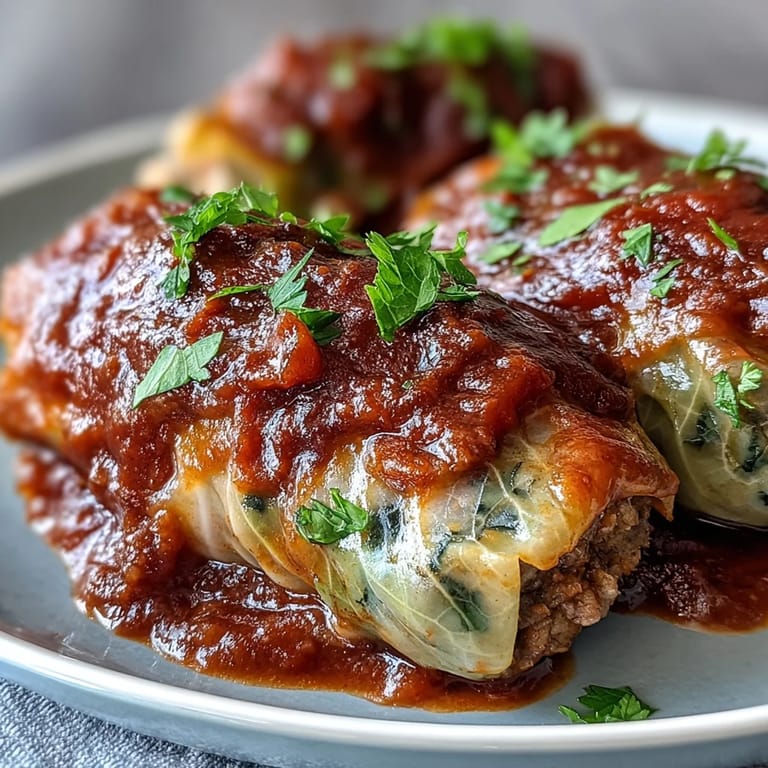
 There's something deeply satisfying about pulling a dish of cabbage rolls out of the oven, the sauce bubbling around the edges, the smell filling every corner of the house. Whether you're making them for the first time or the fiftieth, they never stop feeling like a small act of love wrapped in cabbage.
Recipe FAQs
- → Can I prepare cabbage rolls ahead of time?
Yes, you can assemble the rolls up to 24 hours in advance. Store them covered in the refrigerator and add the sauce just before baking. You may need to add 10-15 minutes to the cooking time if baking from cold.
- → How do I prevent the cabbage leaves from tearing?
Blanch the cabbage head in boiling water until the leaves are pliable and easy to peel away. If a leaf tears, you can overlap two smaller leaves or patch it with another piece. Remove the thick center vein for easier rolling.
- → What can I substitute for ground beef?
Ground pork, turkey, chicken, or a beef-pork blend work excellently. For a vegetarian version, use cooked lentils, finely chopped mushrooms, or a combination of both to replace the meat.
- → Why is the rice only partially cooked before adding?
Par-cooking the rice prevents it from becoming mushy during the long baking time. The rice will finish cooking while absorbing the flavorful juices from the meat and tomato sauce in the oven.
- → How should I store and reheat leftovers?
Store covered in the refrigerator for up to 4 days. Reheat in a covered dish in the oven at 160°C (325°F) for 20-25 minutes, or microwave individual portions. The flavors develop and deepen after a day, making leftovers particularly delicious.
- → Can I freeze cabbage rolls?
Absolutely. Freeze assembled unbaked rolls in an airtight container for up to 3 months. Thaw overnight in the refrigerator before baking, or bake from frozen adding 30-40 minutes to the cooking time.