 Save to Pinterest
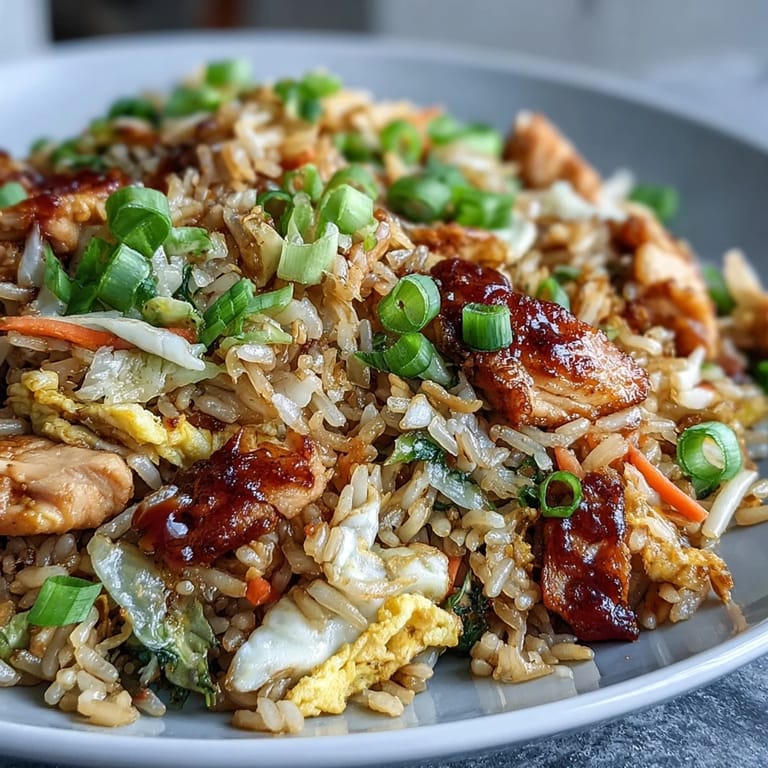
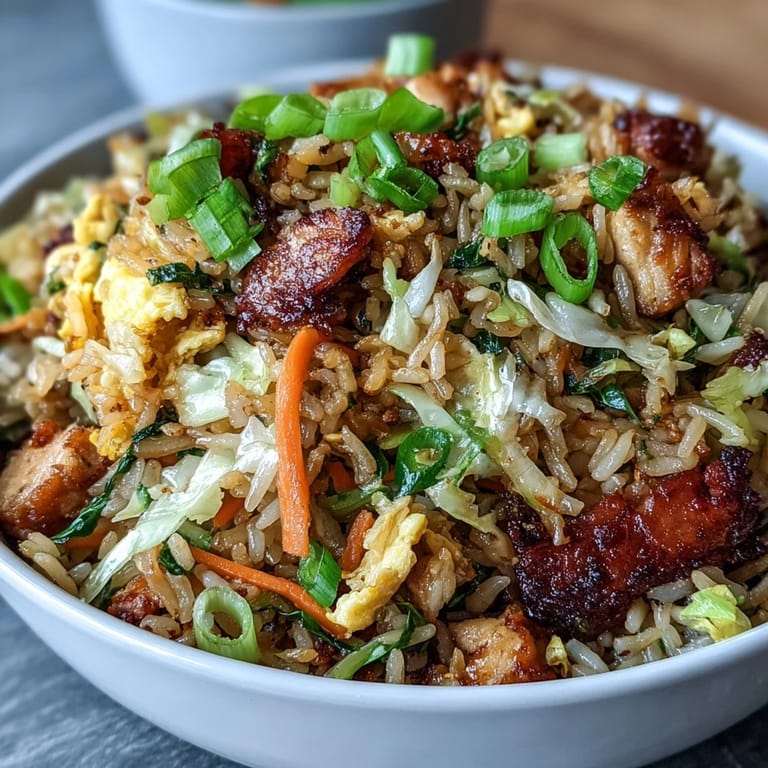
 My neighbor showed up one evening with a craving she couldn't quite name—something between an egg roll and fried rice, crispy and savory all at once. We raided my fridge, threw together what we had, and halfway through cooking, the kitchen filled with this incredible aroma of garlic and ginger hitting hot oil. That night, this dish was born, and it's been my go-to ever since when I want something that feels indulgent but comes together in under forty minutes.
I made this for my kids on a Tuesday when everyone was tired and nobody wanted to wait around for food, and watching them actually ask for seconds without complaining felt like winning the dinner lottery. The crispy cabbage mixed with those scrambled eggs just clicked for them, and now they request it by name.
Ingredients
- Cooked chicken breast: Use rotisserie chicken if you're short on time, or shred it while it's still warm for the easiest texture.
- Large eggs: These become your creamy binder, so don't skip them or substitute.
- Green cabbage: Slice it thin so it wilts into the rice without disappearing completely.
- Carrots: Julienne them thin enough that they cook through in minutes without losing their slight sweetness.
- Green onions: Split the batch—half goes in during cooking, half becomes your final garnish for color and freshness.
- Bean sprouts: Optional, but they add a crunch that makes the dish feel textured and intentional.
- Jasmine or long-grain rice: Must be chilled from the day before so each grain separates instead of clumping together.
- Garlic and ginger: Mince these fresh and add them together so they bloom in the oil at exactly the same moment.
- Low-sodium soy sauce: The backbone of flavor—you can always add more, but you can't take it back.
- Oyster sauce: Adds umami depth, though it's completely optional if shellfish concerns you.
- Toasted sesame oil: Just a teaspoon is enough; it's potent and makes everything taste more intentional.
- White pepper: Gentler than black pepper and feels more traditionally Asian in spirit.
- Vegetable oil: Use a neutral oil with a high smoke point so the pan stays hot without burning anything.
Tired of Takeout? 🥡
Get 10 meals you can make faster than delivery arrives. Seriously.
One email. No spam. Unsubscribe anytime.
Instructions
- Get your pan singing:
- Heat one tablespoon of oil in your wok or large skillet over medium-high heat until it shimmers and moves like water. You'll know it's ready when a drop of water sizzles immediately.
- Awaken the aromatics:
- Add your minced garlic and ginger, stirring constantly for about thirty seconds until the kitchen smells like a good restaurant. This isn't optional—it's the moment everything gets flavor.
- Soften the vegetables:
- Toss in the cabbage and carrots, stirring continuously for three to four minutes until the cabbage starts to turn translucent at the edges. You want them tender but not mushy, with just a whisper of crunch still there.
- Scramble the eggs:
- Push everything to the side, add the remaining oil, and pour in your beaten eggs. Let them sit for just a moment before scrambling gently, breaking them into small, soft curds as they set. Mix everything together once they're just cooked through.
- Warm through the protein:
- Add your shredded chicken and bean sprouts if using, stirring for a minute or two until everything is heated. This step is quick because the chicken is already cooked—you're just bringing it up to temperature.
- Incorporate the rice:
- Add your chilled rice, breaking apart any clumps with the back of your spatula as you stir. Keep going for two to three minutes until the rice separates completely and mingles with all the vegetables.
- Season everything:
- Pour in your soy sauce, oyster sauce if using, and toasted sesame oil, then dust with white pepper. Stir constantly for a minute so every grain of rice gets coated in flavor.
- Finish with freshness:
- Toss in most of your sliced green onions, reserving a small handful for the top. Taste as you go and adjust seasoning—some soy sauces are saltier than others, and your palate knows what you like.
- Plate and serve:
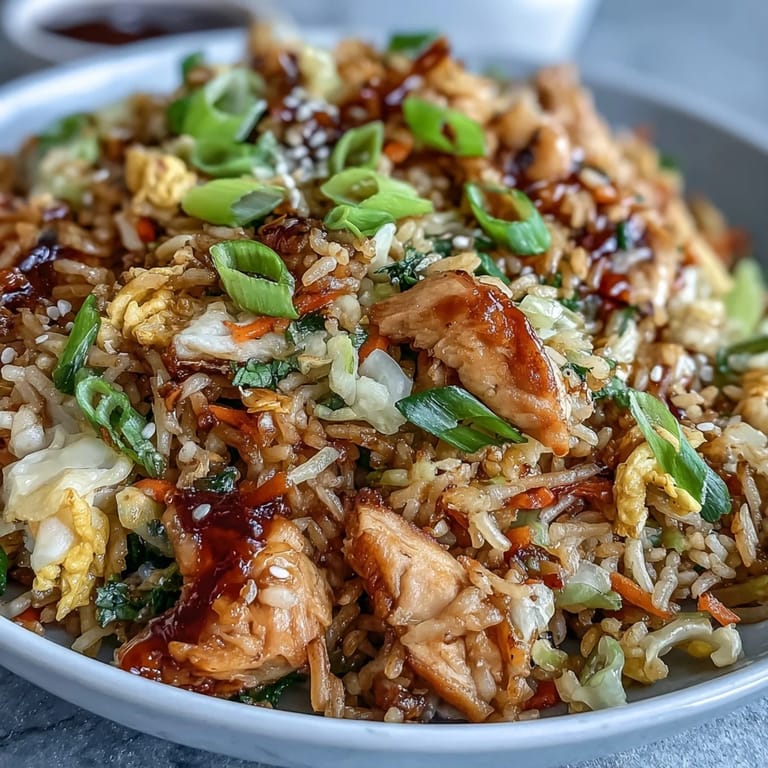
- Scoop into bowls while everything is still steaming, and crown each portion with those reserved green onions for a pop of color and crunch.
 Save to Pinterest
 There's something almost meditative about the sound of the spatula hitting the wok, how the kitchen transforms in those twenty minutes from ordinary to alive with heat and aroma. By the time you're garnishing with green onions, you've created something that tastes like it took hours but demanded almost none of your time.
Why Cold Rice Changes Everything
The first time I tried making this with freshly cooked rice, the whole dish turned into a sticky, sad mass that bore no resemblance to what I'd imagined. I learned the hard way that hot rice is mostly water, and water creates steam instead of allowing those beautiful crispy-edged pieces to form. Now I'm religious about using rice that's spent at least a few hours in the fridge, and it makes all the difference between a good dish and one that actually tastes like it came from a restaurant.
Building Flavor in Layers
One of the tricks I've picked up is that the order of ingredients matters almost as much as the ingredients themselves. Garlic and ginger need those first few seconds alone in the oil to release their essential oils, which then perfume every single thing that follows. If you throw them in with the vegetables, they just become scattered and timid instead of becoming the confident foundation that holds everything together.
Customize Without Losing the Soul
The magic of this dish is that it adapts to whatever you have on hand while still tasting intentional and cohesive. I've made it with shrimp instead of chicken, added snap peas for extra crunch, and once I threw in some cashews because they were sitting on the counter. The core of garlic, ginger, soy, and sesame oil stays the same, and that's what keeps it feeling like itself.
- Water chestnuts add a subtle crunch that mimics the egg roll experience even more closely.
- For a vegetarian version, tofu pressed and cubed works beautifully if you give it a quick pan-sear first to add texture.
- If you're missing oyster sauce, a splash of hoisin or even a touch of honey deepens the flavor without changing the personality of the dish.
 Save to Pinterest
 This dish has become my answer to almost every question—what's for dinner, what do I make for someone who's had a hard day, how do I use up those vegetables before they go sad in the drawer. It's proof that some of the best meals come from improvisation and listening to what your kitchen is telling you.
Recipe FAQs
- → Can I use freshly cooked rice instead of chilled?
Freshly cooked rice tends to become mushy when stir-fried. For best results, use rice that's been refrigerated overnight, or spread freshly cooked rice on a baking sheet and chill for 30 minutes before cooking.
- → What's the best way to shred the chicken?
Use two forks to pull apart cooked chicken breast, or dice it into small bite-sized pieces. Rotisserie chicken works beautifully if you want to save time.
- → Can I make this vegetarian?
Simply omit the chicken and substitute with firm tofu, extra vegetables like snap peas or bell peppers, or increase the amount of scrambled eggs for protein.
- → How do I prevent the rice from sticking to the pan?
Use a well-seasoned wok or large nonstick skillet. Ensure the pan is hot before adding ingredients, and use enough oil to coat the surface. Breaking up rice clumps with your hands before adding helps too.
- → What can I substitute for oyster sauce?
For a vegetarian option, try mushroom stir-fry sauce or hoisin sauce. You can also increase the soy sauce slightly and add a pinch of sugar for balance.
- → How long will leftovers keep?
Store in an airtight container in the refrigerator for up to 4 days. Reheat in a skillet over medium heat, adding a splash of water if needed to prevent sticking.