 Save to Pinterest
 My neighbor brought over a container of these noodles on a Tuesday evening when I was too tired to cook, and I remember being stunned by how something so simple could taste like a restaurant dish made in minutes. The steam rising from the bowl carried this unmistakable ginger-and-scallion perfume that filled my whole kitchen, and I found myself making them twice the next week just to understand how she'd pulled it off. What started as borrowed recipe notes became my go-to when I need something that feels impressive but doesn't demand much effort.
I made this for my kids one rainy Saturday when we were all stuck inside, and watching them slurp the noodles without complaint—no negotiating about vegetables, no pushing food around the plate—told me everything I needed to know about whether this dish was a keeper. My daughter asked if we could have it for her birthday dinner, and that's when I knew it had crossed from weeknight solution to something people actually looked forward to eating.
Ingredients
- Wheat noodles (350 g): Lo mein, ramen, or even spaghetti works beautifully—the key is cooking them just shy of total softness so they still have a whisper of texture when the glaze hits them.
- Neutral oil (4 tbsp): This is your flavor carrier, so don't skimp, and make sure it's actually neutral (canola, grapeseed) rather than something assertive like olive oil which fights the whole vibe.
- Scallions (4 plus 1 for garnish): The white parts go into the hot oil first to release their gentle sweetness, while the green parts finish the dish with fresh bite—separating them is how you get both depth and brightness.
- Fresh ginger (2 tbsp minced): Don't bother peeling it if you're mincing it finely; the skin adds nothing but texture and the flavor is identical, saving you time.
- Garlic (2 cloves minced): This rounds out the aromatics without overpowering, so two cloves is really the right amount unless you're the type who loves bold garlic in everything.
- Red chili (1 small, optional): A quiet heat that doesn't scream at you, perfect if you want complexity without making your eyes water.
- Soy sauce (4 tbsp): The backbone of your glaze, providing that salty-savory depth that makes this feel authentic and craveable.
- Dark soy sauce (1 tbsp optional): If you have it, use it—it darkens the color and adds an earthy sweetness that regular soy alone can't deliver.
- Oyster sauce (1 tbsp): Use vegan oyster sauce if that works for your table, and honestly the difference is barely noticeable once everything is tossed together.
- Brown sugar (1 tbsp): Just enough to balance the saltiness with a gentle sweetness that melts right into the sauce.
- Rice vinegar (1 tbsp): The brightness that keeps the whole dish from feeling heavy, cutting through the richness with just a whisper of tang.
- Toasted sesame oil (1 tsp): Use actual toasted sesame oil not the light kind—the toasted version has this haunting, almost smoky flavor that changes everything about the final bite.
- Water (2 tbsp): This keeps your glaze from being too intense and gives the noodles room to absorb all that flavor instead of sitting in sticky clumps.
- Toasted sesame seeds (1 tsp for garnish): Toast them yourself if you can—the difference between store-bought and fresh-toasted is the difference between okay and unforgettable.
- Fresh cilantro (optional): Not essential but adds a grassy freshness that makes people feel like they're eating something more complex than it actually is.
Tired of Takeout? 🥡
Get 10 meals you can make faster than delivery arrives. Seriously.
One email. No spam. Unsubscribe anytime.
Instructions
- Get your noodles ready:
- Bring a large pot of water to a rolling boil and cook the noodles according to the package timing, but stop one minute before they're supposed to be done—they'll finish cooking gently when the hot sauce hits them. Drain them in a strainer and give them a quick rinse under cold water to stop them cooking further, then set them aside in a bowl so they don't stick to each other.
- Mix your glaze while everything is cold:
- Whisk together the soy sauce, dark soy sauce if using, oyster sauce, brown sugar, rice vinegar, sesame oil, and water in a small bowl until the sugar dissolves. Setting this aside now means you won't be fumbling with bottles and measurements when everything is hot and moving fast.
- Wake up your aromatics:
- Heat your neutral oil in a large skillet or wok over medium heat, then add the white parts of the scallions along with the minced ginger, garlic, and chili if you're using it. Stir constantly for about a minute until the kitchen smells like a good Asian restaurant and the raw edge is gone, but pull back before anything starts to brown or the flavors turn sharp.
- Bring the noodles into the party:
- Add your cooked noodles to the skillet and toss them gently but thoroughly with the fragrant oil and aromatics, breaking up any clumps as you go. This is where everything starts coming together and the heat brings out the ginger and garlic in a way that raw ingredients never could.
- Add the glaze and toss until shiny:
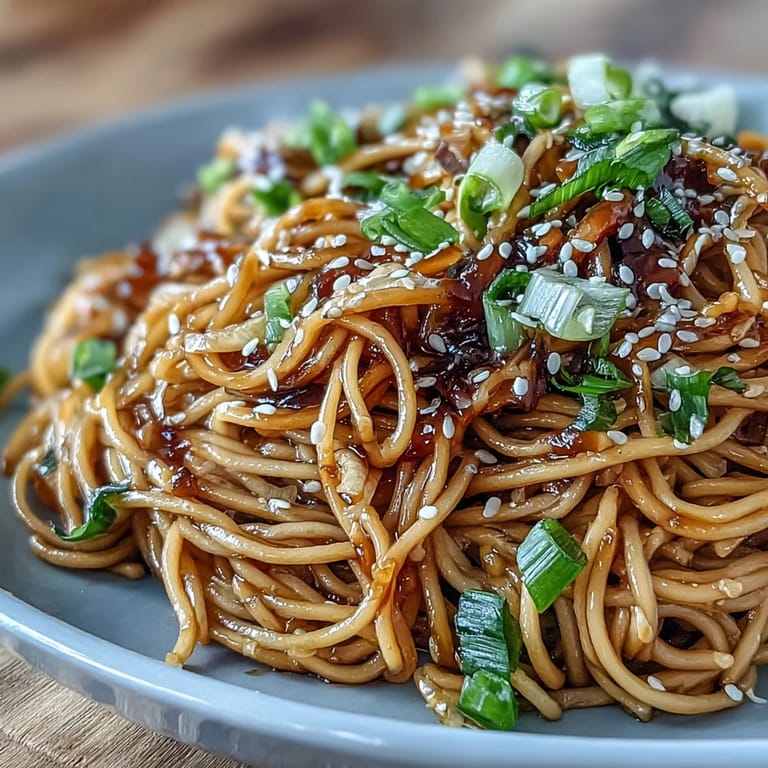
- Pour all your mixed glaze over the noodles and toss constantly for 2 to 3 minutes until every strand is glistening and the sauce has reduced just slightly. The noodles will soak up the liquid like they've been waiting for this their whole lives, and you'll notice the aroma shift from just ginger-garlic to something rounder and more complex.
- Finish with the fresh greens:
- Pull the skillet off the heat, scatter the green parts of the scallions over everything, and give it one final gentle toss. The heat from the noodles will barely wilt them, keeping their fresh bite intact while their flavor melds into the whole dish.
- Plate and garnish while it's still steaming:
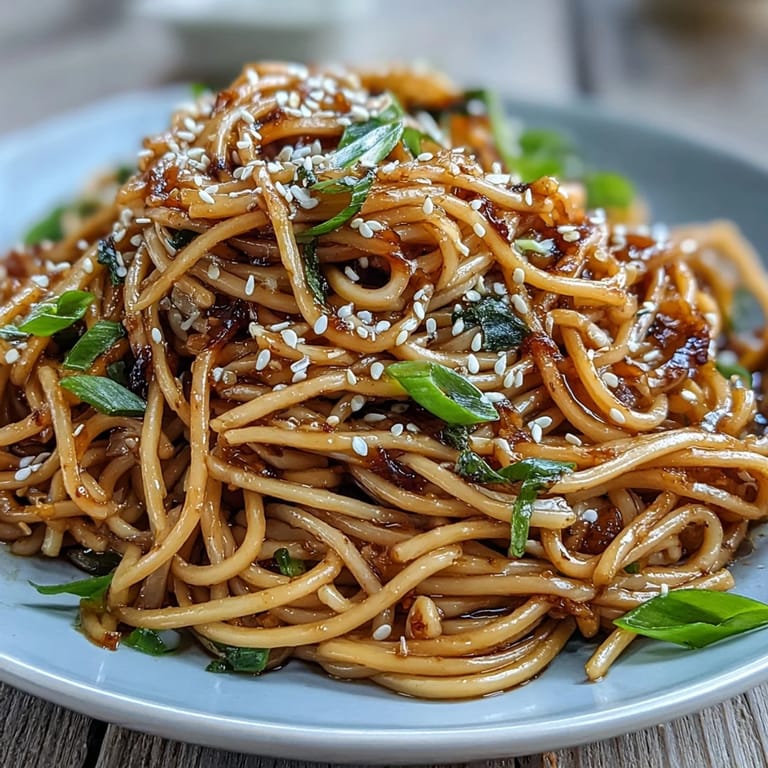
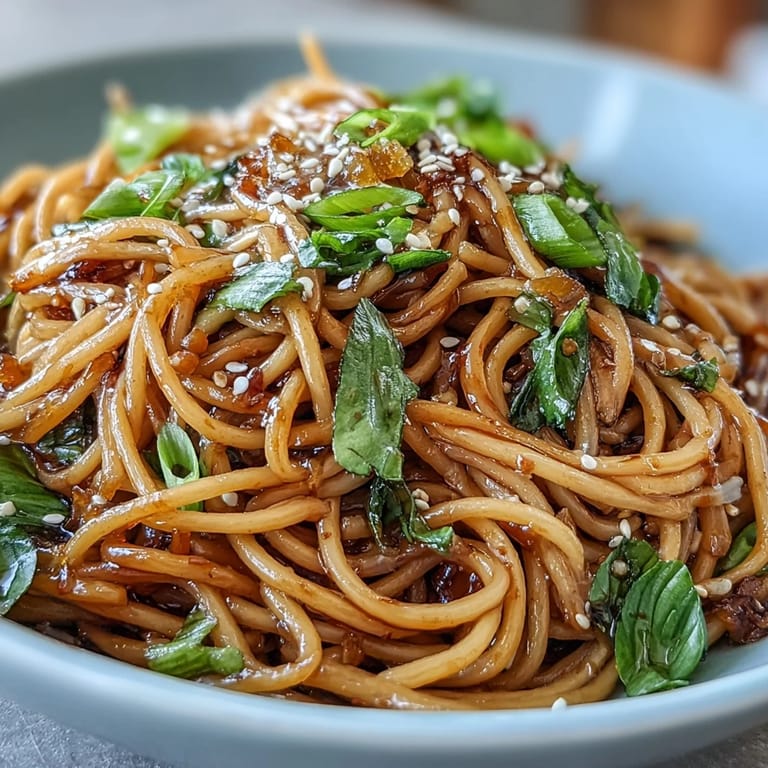
- Divide the noodles among bowls or plates immediately and scatter toasted sesame seeds, extra scallion greens, and cilantro if you're using it over the top. Serve right away while everything is still hot and the textures are at their best.
 Save to Pinterest
 There's something almost meditative about standing at the stove with the wok spatula in hand, watching the noodles transform from pale and plain to glossy and aromatic, knowing you've built something delicious from just a handful of pantry staples. My friend texted me a photo of this dish she'd made from my notes, and her caption was just a string of heart emojis—that's the moment I realized it wasn't just a recipe anymore, it was a small gift I could keep giving.
Why This Works So Well
The beauty of this dish lives in the balance between savory depth and bright acid, between heat and sweetness, and between cooked warmth and fresh raw scallion finish. Every single ingredient earns its spot—there's nothing hanging around just for tradition or looks, which is why even with just eight core flavors, the dish tastes complete and sophisticated. When you bring noodles, oil, and aromatics together, you create a base that's forgiving and adaptable; when you add a balanced glaze, you create something that tastes like it took real skill to make.
How to Make It Vegan
If you're cooking for someone who doesn't eat animal products, or if you're simply exploring that direction yourself, this dish practically makes itself vegan without tasting like a compromise. Swap in vegan oyster sauce or use an extra tablespoon of soy sauce instead, and nobody at the table will know or care about the difference.
What Vegetables Make Sense Here
The beauty of noodle dishes is that they're a platform for whatever vegetables need eating—sauté mushrooms or shredded carrots in that oil before adding the noodles, or toss in tender greens like bok choy or snap peas during the final toss. Pickled cucumbers on the side add brightness and cut through the richness, while a drizzle of chili oil at the table lets everyone heat-customize their own bowl.
- Mushrooms add umami and an almost meaty texture that makes the dish feel more substantial.
- Bok choy or snap peas bring freshness and crunch that balances the soft noodles perfectly.
- A side of pickled vegetables transforms the whole meal from one-note to complete and restaurant-quality.
 Save to Pinterest
 Make this when you need dinner on the table but don't want to feel like you've skipped the care part, because this dish sits right at that intersection of simple and special. Once you've made it twice, you'll have the rhythm down so thoroughly that your hands will move through it without thinking, leaving your mind free to enjoy the smell and the anticipation of something delicious about to happen.
Recipe FAQs
- → What noodles work best for this dish?
Wheat-based noodles like lo mein, ramen, or spaghetti hold up well and provide the right texture for this preparation.
- → Can I make this dish vegan?
Yes, by using a vegan oyster sauce or replacing it with extra soy sauce, the dish becomes fully plant-based.
- → How do I prevent the noodles from sticking?
After cooking, rinse noodles briefly under cold water to stop cooking and reduce stickiness before stir-frying.
- → What is the role of the soy glaze?
The soy glaze adds a savory-sweet coating that enhances the noodles with rich umami and a glossy finish.
- → Can I add vegetables to this dish?
Absolutely, sautéed mushrooms, shredded carrots, bok choy, or snap peas complement the flavors and add nutrition.