 Save to Pinterest
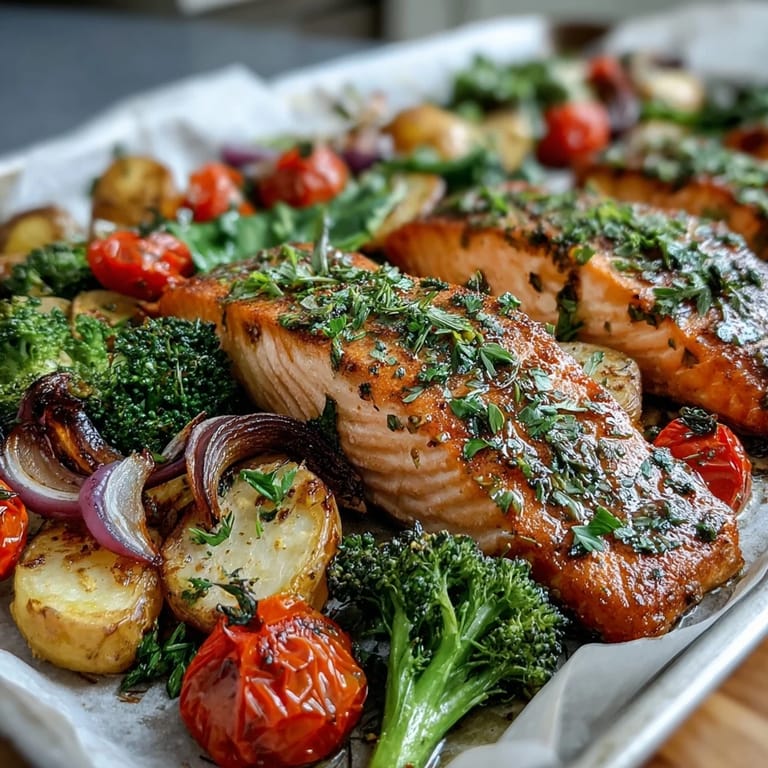
 Wednesday nights used to mean takeout by default, until a friend mentioned she'd mastered sheet pan salmon in her tiny kitchen. I was skeptical—how could something so effortless actually taste restaurant-quality? Turns out, the trick isn't complexity; it's letting good ingredients do the work while the oven handles everything. That first time, I roasted salmon with those tangy mustard notes and watched the vegetables caramelize into something almost sweet. Twenty-five minutes later, dinner was ready, the kitchen smelled incredible, and I realized I'd stumbled onto something I'd make again and again.
I made this for my sister who'd just switched to eating more fish, and watching her expression when she tasted that mustard-glazed salmon was worth every minute. She asked for the recipe before finishing her plate, which felt like the highest compliment. Now it's become our default when we're both too busy for fussing but unwilling to compromise on flavor.
Ingredients
- Salmon fillets (4, about 170 g each): Look for fillets that feel firm to the touch and smell clean and briny, never fishy—that's your sign they're fresh.
- Dijon mustard (2 tablespoons): This is the soul of the glaze, bringing a sophisticated tang that balances the richness of the salmon without overpowering it.
- Olive oil (3 tablespoons total): Split between the glaze and vegetables, it carries flavor and helps everything roast evenly, creating those crucial crispy edges.
- Lemon juice (1 tablespoon): Brightens the mustard and cuts through richness, waking up your palate with every bite.
- Honey (1 teaspoon): Just enough to round out the Dijon's sharpness and encourage caramelization on the vegetables.
- Garlic (1 clove, minced): Raw garlic in the glaze adds depth without the harshness you'd get if it roasted too long.
- Broccoli florets (2 cups): They'll crisp at the edges and stay tender inside, absorbing that mustard-tinged pan flavor.
- Cherry tomatoes (2 cups, halved): Halving them exposes the insides so they caramelize and burst slightly, concentrating their natural sweetness.
- Red bell pepper (1 large, sliced): The gentle sweetness and slight char from roasting rounds out the tangy mustard profile beautifully.
- Red onion (1 medium, wedged): Wedges hold together during roasting and become almost jam-like and sweet by the time everything's done.
- Dried Italian herbs (1 teaspoon): A supporting player that adds warmth without stealing the spotlight from the mustard and salmon.
Tired of Takeout? 🥡
Get 10 meals you can make faster than delivery arrives. Seriously.
One email. No spam. Unsubscribe anytime.
Instructions
- Set your oven to high heat:
- Preheat to 220°C (425°F) and line your sheet pan with parchment paper or a light grease—this small step prevents sticking and makes cleanup almost laughably easy.
- Build the glaze:
- Whisk together mustard, olive oil, lemon juice, honey, minced garlic, salt, and pepper in a small bowl until smooth and emulsified. Taste a tiny bit on your finger; it should be tangy with a subtle sweetness.
- Season and arrange the vegetables:
- Toss broccoli, cherry tomatoes, bell pepper, and red onion with olive oil, herbs, salt, and pepper, then spread them across your sheet pan in a single layer. Leave some space in the middle and around the edges where the salmon will nestle in.
- Place the salmon:
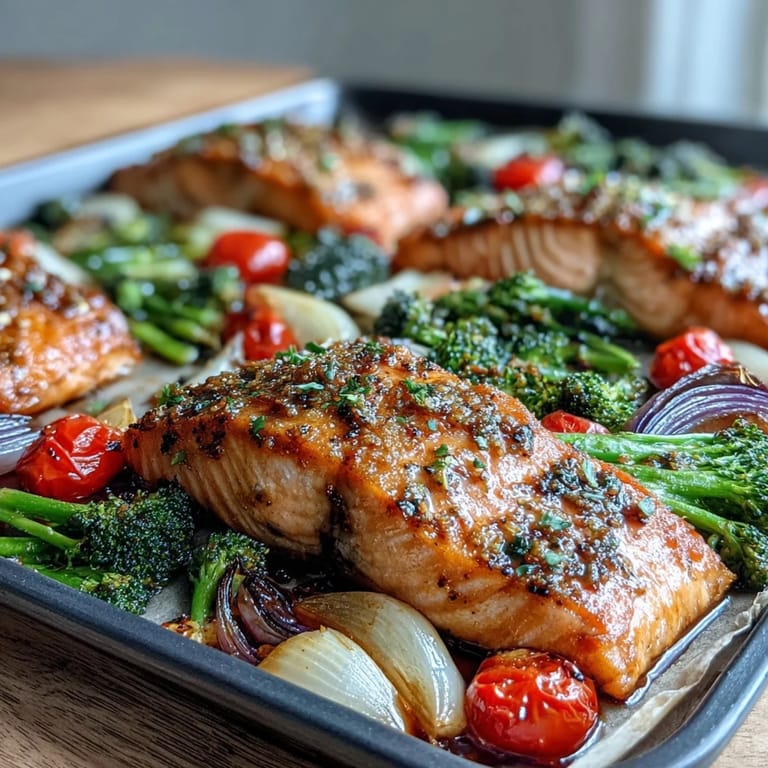
- Nestle the fillets skin-side down (if using skin-on) among the vegetables, then brush each one generously with your Dijon glaze, making sure to coat the tops and sides. The glaze will caramelize and form a light crust.
- Roast everything together:
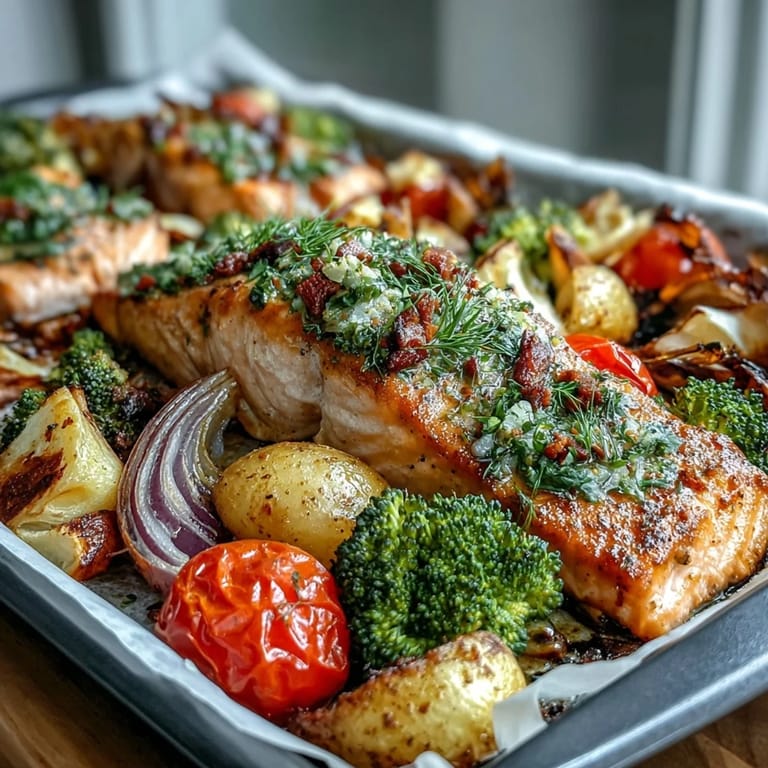
- Slide the pan into the oven for 20 to 25 minutes—salmon should flake easily with a fork and look opaque throughout, while vegetables should be tender with caramelized, slightly charred edges. Don't peek constantly; let the heat do its work.
- Finish and serve:
- Remove from the oven, squeeze fresh lemon over everything, scatter parsley if you're using it, and serve immediately while the salmon is still warm and the vegetables hold their texture.
 Save to Pinterest
 My neighbor smelled this cooking through our shared wall and appeared at my door asking what I was making. We ended up sharing the meal on my porch at sunset, and somehow a simple weeknight dinner turned into an hour of conversation. That's when I realized this recipe does more than feed you—it creates the kind of moment worth remembering.
Why This Works as a Complete Meal
The beauty of sheet pan cooking is that everything roasts at the same temperature, hitting doneness simultaneously. Your protein, vegetables, and pan juices all mingle together, creating a self-sauced plate without any extra work. The acid from the lemon and mustard glaze keeps the salmon from tasting heavy, while the roasted vegetables provide substance and natural sweetness that balances the savory elements.
Timing and Temperature Matters
High heat is your ally here—425°F ensures the vegetables caramelize while the salmon stays moist inside. Lower temperatures mean soggy vegetables and pale, uninspiring color; higher temperatures risk drying out the fish before the vegetables finish. The 20 to 25 minute window is generous enough to account for different oven quirks, but start checking at 18 minutes if your oven runs hot.
Making It Your Own
This recipe is a foundation, not a rulebook. I've swapped asparagus for broccoli when that's what I had, replaced cherry tomatoes with halved regular tomatoes, and even threw in thinly sliced fennel once when I was feeling adventurous. The mustard glaze adapts beautifully—a touch more honey if you prefer sweetness, extra garlic if you're bold, or a tiny pinch of cayenne if you want heat sneaking through.
- Add lemon zest to the salmon just before roasting for extra brightness and visual appeal.
- Try Dijon mixed with whole grain mustard for more texture and a slightly different flavor profile.
- Leftover salmon flakes beautifully into salads or grain bowls the next day if you somehow have any left.
 Save to Pinterest
 This is the kind of dinner that makes you feel capable in the kitchen without demanding hours of your time. Serve it, enjoy it, and know that you've created something genuinely delicious with your own hands.
Recipe FAQs
- → What type of mustard is used for glazing the salmon?
Dijon mustard is used to create a rich, tangy glaze that complements the fish and roasted vegetables.
- → Can I substitute the vegetables in this dish?
Yes, broccoli can be swapped with asparagus or green beans based on preference or availability.
- → How do I know when the salmon is cooked perfectly?
The salmon is ready when it becomes opaque throughout and flakes easily with a fork.
- → Is it necessary to use skin-on salmon fillets?
Either skin-on or skinless fillets can be used; skin-on helps keep the fish moist during roasting.
- → What herbs enhance the flavor in this dish?
Dried Italian herbs or herbes de Provence add fragrant, earthy notes that elevate the roasted vegetables.
- → What wine pairs well with this salmon dish?
A crisp Sauvignon Blanc or unoaked Chardonnay pairs nicely, balancing the tangy glaze and roasted flavors.