 Save to Pinterest
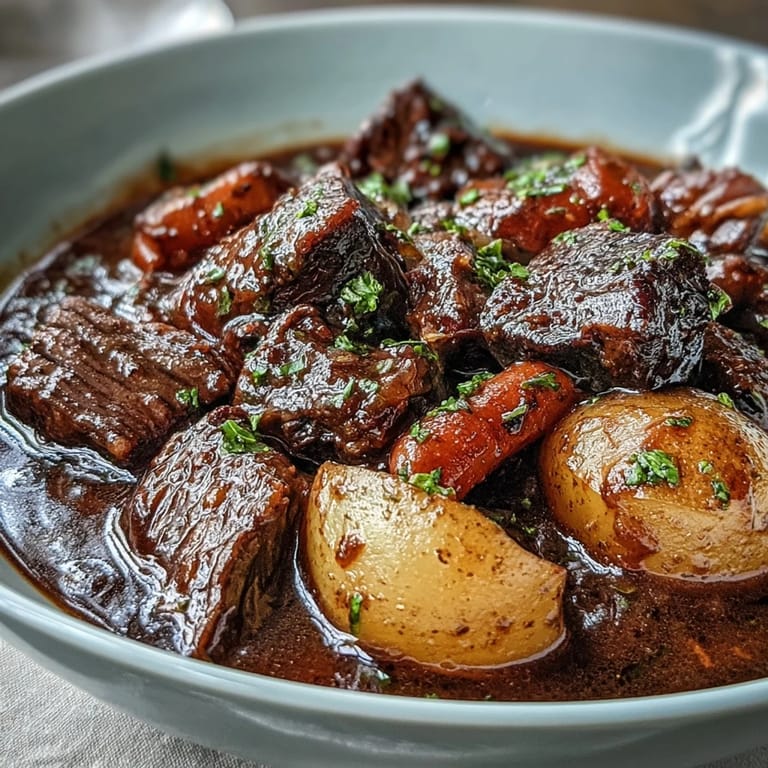
 There's something about the sound of beef hitting a hot skillet that signals comfort is on the way. My neighbor once mentioned how her grandmother would start this stew in the morning and the whole house would smell like home by dinner time, and I became obsessed with recreating that feeling. The first time I made it, I underestimated how long eight hours actually is—I kept lifting that slow cooker lid every thirty minutes like it would somehow speed things up. Now I know better: the waiting is half the magic, and that patience transforms tough beef into something so tender it barely needs a fork.
I made this for my book club on a particularly rainy October evening, and I remember one friend saying it was exactly what her soul needed that night. Someone brought it up months later and asked if I'd make it again, which felt like the highest compliment. That's when I realized this wasn't just dinner—it was the kind of dish that people remember and crave.
Ingredients
- Beef chuck (2 lbs, cut into 1.5-inch cubes): Chuck is where the magic happens—it has enough marbling and connective tissue that it becomes impossibly tender during the long braise, unlike leaner cuts that dry out.
- Kosher salt and black pepper (1/2 tsp each): Season the beef generously before searing; this creates a flavorful crust and helps lock in juices.
- Carrots (3 large, cut into 1-inch pieces): Cut them uniform so they cook evenly, and don't peel them too thin or they'll dissolve into the broth.
- Parsnips (2, peeled and sliced): These add an earthy sweetness that makes the broth more complex—they're easy to overlook but absolutely worth including.
- Yukon Gold potatoes (2 large, chopped into chunks): These waxy potatoes hold their shape beautifully throughout the long cook and don't turn mealy like russets can.
- Yellow onion (1 large, diced): The onion breaks down almost completely, sweetening the broth and creating body without any chunks at the end.
- Celery stalks (3, sliced): Celery is your silent flavor builder—it adds depth that people taste but can't quite name.
- Garlic (3 cloves, minced): Add it raw rather than cooking it separately; it mellows beautifully during the slow braise.
- Tomato paste (2 tbsp): This concentrate adds umami and acidity that balances the richness of the beef and broth.
- Worcestershire sauce (1 tbsp): Just enough to add complexity without making the stew taste obviously 'Worcestershire-y'.
- Bay leaf (1) and dried herbs (thyme and rosemary, 1 tsp each): Bay leaf is essential for depth; the thyme and rosemary echo those forest-like flavors that make stew feel like autumn.
- Beef broth (4 cups): Use good quality broth if you can—it's the foundation of your entire stew, so don't skimp here.
- Dry red wine (1 cup): The wine adds tannins and complexity; it cooks off but leaves behind a sophistication that plain broth can't match.
- Cornstarch (2 tbsp) and cold water (2 tbsp): Mixed into a slurry, this thickens the stew without adding flour or changing the gluten-free status if that matters to you.
Tired of Takeout? 🥡
Get 10 meals you can make faster than delivery arrives. Seriously.
One email. No spam. Unsubscribe anytime.
Instructions
- Season and sear your beef:
- Pat the beef cubes dry with paper towels—this helps them brown instead of steam—then season generously with salt and pepper. Working in batches so you don't overcrowd the pan, sear each piece in a hot skillet until deeply golden on all sides, about three minutes per batch. This takes patience but it's worth every second because you're building flavor that will carry through the entire eight hours.
- Build your aromatic base:
- In the slow cooker, combine the seared beef with carrots, parsnips, potatoes, onion, and celery. Stir in the garlic, tomato paste, Worcestershire sauce, bay leaf, and dried herbs until everything is evenly distributed. The tomato paste will seem concentrated now but it'll mellow and become part of the broth's backbone.
- Add your liquid and let it work:
- Pour the beef broth and red wine over everything, stirring gently so the vegetables settle into the liquid without breaking apart. Set the slow cooker to low and cover it completely—and this is crucial—don't peek for at least the first four hours, then just once after that.
- Finish and thicken:
- After eight hours, the beef should shred easily with a fork and the vegetables should be completely tender. Mix cornstarch and cold water in a small bowl until smooth, then stir it into the stew and switch the cooker to high. Cook uncovered for fifteen minutes, stirring occasionally, until the broth thickens and turns glossy.
- Taste and serve:
- Remove the bay leaf, then taste for salt and pepper—you might be surprised how much more you want at this point. Serve in wide bowls with crusty bread or over mashed potatoes to catch every drop of that incredible broth.
 Save to Pinterest
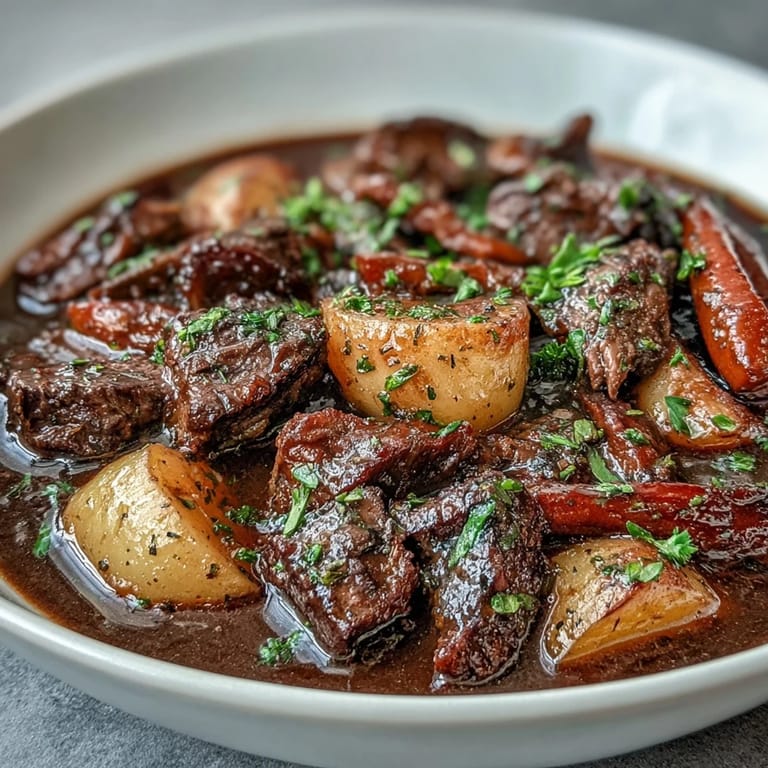
 I think about the time my friend's teenager, who usually picks at everything, asked for seconds of this stew and actually looked forward to leftovers. That's the moment I understood this recipe isn't fancy or complicated—it's just genuinely nourishing in a way people respond to.
Why Slow Cooker Magic Works Here
The long, gentle heat of a slow cooker does something that regular pot cooking can't quite achieve: it breaks down the collagen in beef chuck into gelatin, creating that silky mouthfeel that makes the stew feel luxurious. The vegetables soften completely without becoming mushy because they're cushioned by liquid the entire time. The flavors meld so thoroughly that you can't taste individual spices—just one cohesive, warming embrace of a dish.
Variations That Actually Work
One autumn I added sliced mushrooms in the last hour and they absorbed so much broth that I'm now convinced they belong in every batch. I've also made it with sweet potatoes instead of Yukon Golds for a dinner party and the subtle sweetness changed the entire character—some guests preferred it, though purists said it lost something essential. The base is sturdy enough that you can make it your own: try adding peas at the end for brightness, swap in root vegetables you love, or leave out the wine entirely if you're cooking for someone avoiding alcohol.
Serving Suggestions and Storage
Crusty bread is non-negotiable because it gives you something to soak up that incredible broth, though mashed potatoes create a more substantial meal that feels almost indulgent. I've learned to serve this in wide, shallow bowls rather than deep ones—it looks more inviting and the stew cools just enough to eat immediately. Leftovers keep beautifully for four days in the refrigerator, and it actually freezes well for up to three months if you store it in a container that leaves some headroom for expansion.
- Let leftovers cool completely before refrigerating to avoid warming up the whole fridge.
- Reheat gently on the stove over medium heat rather than the microwave to preserve the texture.
- If freezing, leave at least an inch of space at the top of your container since the stew expands slightly when frozen.
 Save to Pinterest
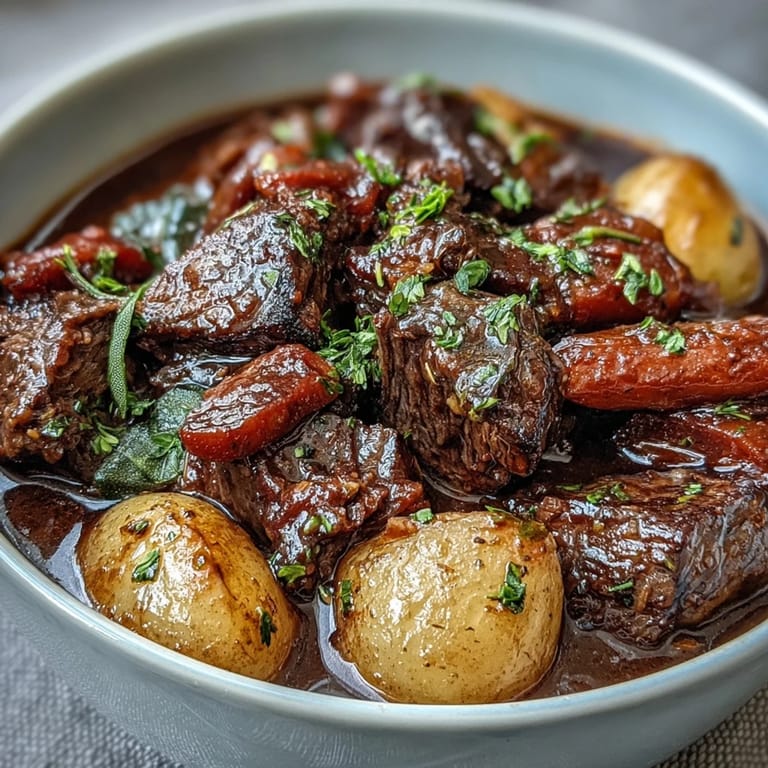
 This stew is the kind of cooking that reminds you why you love feeding people—it fills your home with warmth and gives everyone at the table permission to slow down. Once you make it once, you'll understand why it's the recipe people ask for on cold nights.
Recipe FAQs
- → What cut of beef works best for this stew?
Beef chuck is ideal due to its marbling and ability to become tender during long, slow cooking.
- → Can I substitute the root vegetables?
Yes, sweet potatoes or turnips can replace Yukon Gold potatoes and parsnips for a sweeter or different flavor profile.
- → Is it necessary to sear the beef first?
Searing locks in juices and adds a rich, browned flavor to the stew, enhancing the overall taste.
- → How do I thicken the stew at the end?
Mix cornstarch with cold water to create a slurry and stir it in. Cook uncovered on high to thicken the broth.
- → Can I prepare this without alcohol?
Yes, simply replace the dry red wine with additional beef broth for a non-alcoholic version.
- → What herbs are used to flavor the stew?
Bay leaf, thyme, and rosemary provide aromatic and earthy notes that complement the beef and vegetables.