 Save to Pinterest
 There is a specific sharpness to lemongrass hitting boiling water that always clears my mind after a long day. I used to stand over the pot in my tiny apartment just to breathe in the steam before the chicken even touched the water. This soup brings a bright energy to the table that few other dishes can match. Every time I see that vibrant orange broth, I know I am in for something special. It is a reliable friend during cold seasons or whenever I need a culinary reset.
My friends once gathered around my stove while I frantically searched for a jar of roasted chili paste to save a batch that lacked depth. We laughed about how the kitchen smelled like a spa before the savory notes finally kicked in. That single spoonful of nam prik pao turned our dinner from a dull broth into a restaurant quality masterpiece. It was a humble lesson in the power of using the right aromatics for the job. Now, I never start the pot until I know that jar is sitting on the counter.
Ingredients
- Chicken Stock: A high quality base makes the aromatics shine without being overpowered.
- Chicken: Slicing the meat thinly ensures it stays tender and cooks almost instantly.
- Lemongrass: Smashing the stalks with a heavy object releases the oils that provide that signature citrus fragrance.
- Kaffir Lime Leaves: Tearing them by hand is better than cutting because it bruises the leaves perfectly.
- Galangal: This root provides an earthy and peppery depth that regular ginger simply can not replicate.
- Thai Birds Eye Chiles: These little firecrackers provide the heat so use them sparingly if you are sensitive.
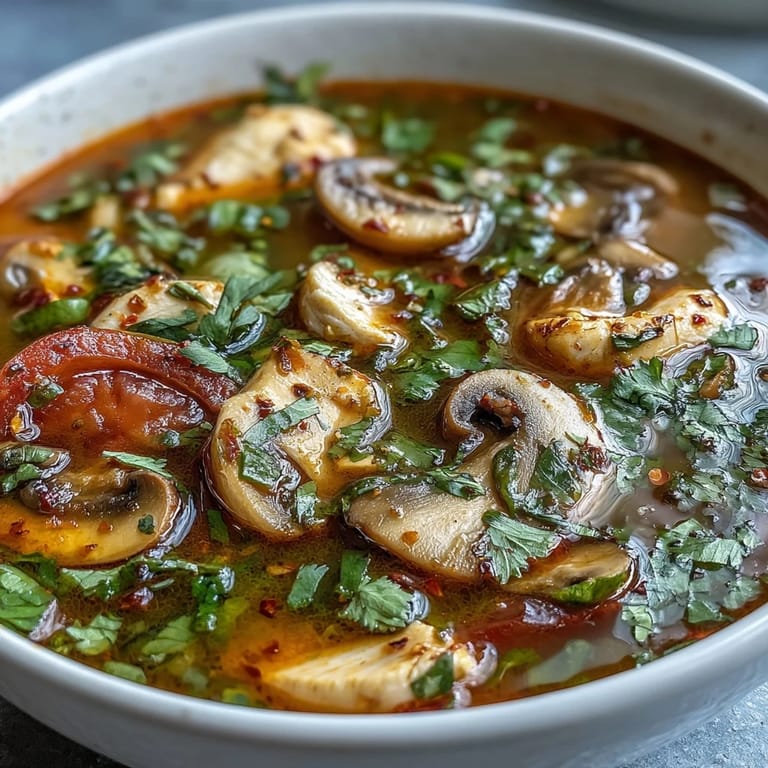
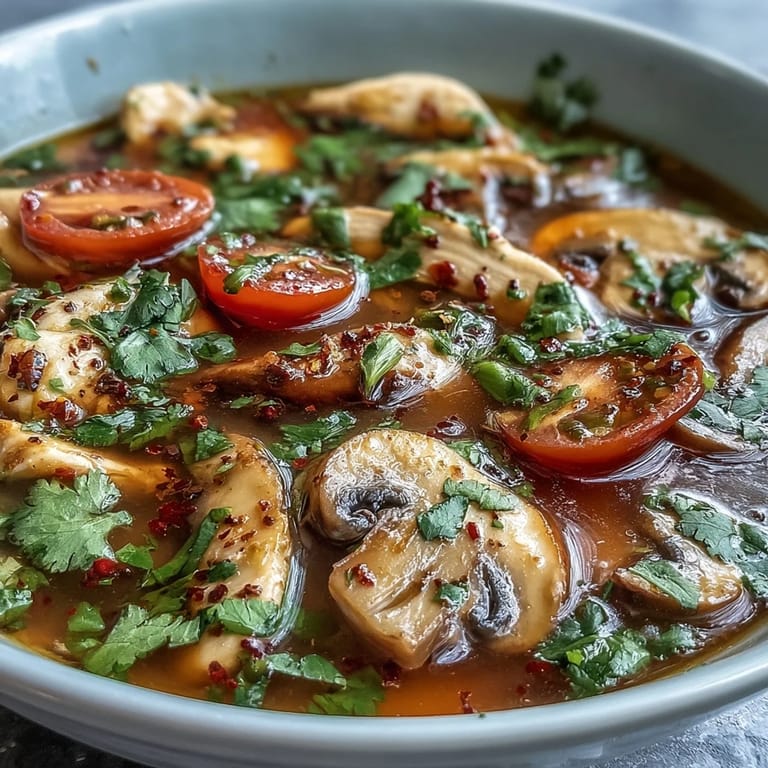
- Oyster Mushrooms: These soak up the broth like little sponges and add a lovely texture to every bite.
- Tomatoes: The wedges add a subtle sweetness and a beautiful pop of color to the bowl.
- Onion: A few slices provide a soft crunch and a base level of savory sweetness.
- Nam Prik Pao: This roasted chili paste is the soul of the dish which gives it color and smoky heat.
- Fish Sauce: It smells strong initially but provides the essential salty umami that defines the broth.
- Sugar: Just a small pinch balances out the intense acidity of the lime juice.
- Salt: Use a tiny amount to round out the flavors after everything else is added.
- Lime Juice: Always add this at the very end to keep the flavor bright and zingy.
- Cilantro: Fresh herbs at the end provide a cooling contrast to the spicy broth.
Tired of Takeout? 🥡
Get 10 meals you can make faster than delivery arrives. Seriously.
One email. No spam. Unsubscribe anytime.
Instructions
- Infusing the Aromatics:
- Bring your stock to a boil and let the lemongrass, lime leaves, galangal, and chiles dance in the pot for five minutes. This creates a fragrant base that smells like a dream.
- Poaching the Chicken:
- Drop in your chicken slices and watch them turn opaque and tender in just a few minutes of simmering. Be careful not to overcook them so they stay juicy.
- Adding the Vegetables:
- Toss in the mushrooms, tomatoes, and onion, letting them soften just enough to stay succulent. You want them to have a bit of life left when you serve.
- Building the Flavor:
- Stir in the chili paste, fish sauce, sugar, and salt until the broth turns a rich and glowing orange. The kitchen will fill with an incredible smoky aroma at this stage.
- The Finishing Touch:
- Take the pot off the heat before stirring in the fresh lime juice to keep the citrus notes sharp. Heat can dull the brightness of the lime so timing is key here.
- Serving and Garnish:
- Ladle the hot soup into bowls and top with plenty of fresh cilantro and extra chiles if you want more heat. Serve it immediately while the steam is still rising.
 Save to Pinterest
 There was a winter evening when my brother was feeling under the weather and this soup was the only thing he wanted. Seeing him light up after the first sip reminded me that some recipes are more than just fuel.
Finding the Right Roots
I spent years thinking ginger was a perfect swap for galangal until I finally found the real thing at a local market. The difference is night and day because galangal has a piney, sharp edge that creates the authentic Tom Yum profile. If you can find it, buy a large piece and freeze whatever you do not use for later. It stays fresh in the freezer for months and can be sliced while still frozen.
Mastering the Spice Level
Everyone has a different threshold for heat, and birds eye chiles do not play around. I usually start with one smashed chile and let it steep, tasting the broth as it goes. You can always add more at the end, but you can never take the heat back once it is in there. Crushing them gently releases the spice without making the broth look cloudy.
Texture and Finishing Touches
Achieving the perfect vegetable texture is all about timing so nothing turns into mush. I like my tomatoes to be just warmed through so they still hold their shape when you bite into them. The mushrooms should be silky and tender, having absorbed just enough of the spicy broth to be flavorful.
- Check the balance of salt and lime juice one last time before it leaves the stove.
- The aromatics like lemongrass and galangal are for flavor and usually stay in the bowl but are not meant to be eaten.
- Add a splash of evaporated milk at the end if you prefer a creamier and milder version of the soup.
 Save to Pinterest
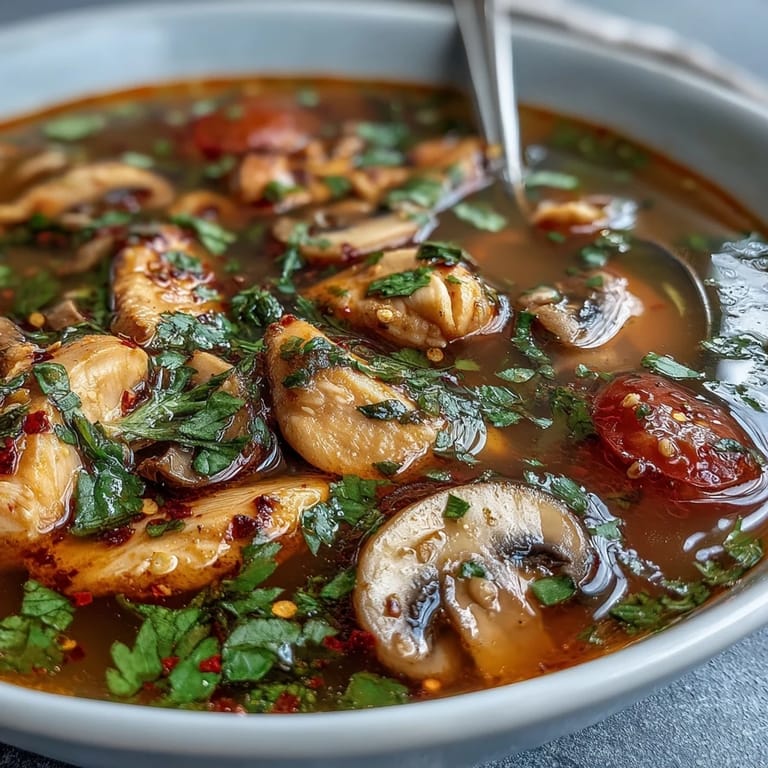
 This soup is a vibrant celebration of bold flavors that will warm you from the inside out. Enjoy every spicy and sour spoonful.
Recipe FAQs
- → What makes Tom Yum Gai authentic?
Authentic Tom Yum Gai requires the holy trinity of Thai aromatics: lemongrass, galangal, and kaffir lime leaves. These ingredients, combined with nam prik pao (roasted chili paste), fresh chiles, and lime juice, create the distinctive spicy-sour flavor profile that defines this beloved soup.
- → Can I adjust the spice level?
Absolutely. Start with 2 smashed Thai birds eye chiles and taste the broth before serving. For milder heat, remove the chiles after infusing or reduce the quantity. For extra heat, add more fresh chiles or include the seeds when smashing them.
- → What parts of chicken work best?
Boneless, skinless chicken breast or thighs both work beautifully. Thighs offer slightly more richness and stay tender during cooking, while breast provides a leaner option. Slice thinly against the grain for the most tender texture.
- → Can I make this vegetarian?
Yes. Substitute vegetable stock for chicken stock, replace fish sauce with soy sauce or vegetarian fish sauce, and use tofu or extra mushrooms instead of chicken. The aromatic herbs and spices create equally delicious results.
- → How do I store leftovers?
Store cooled soup in an airtight container in the refrigerator for up to 3 days. The flavors often develop and improve overnight. Reheat gently on the stovetop, adding fresh lime juice before serving to brighten the flavors. Avoid boiling to prevent vegetables from becoming mushy.
- → What can I serve with Tom Yum Gai?
Enjoy as a starter or light main course. Pair with jasmine rice for a complete meal, or serve alongside other Thai dishes like pad thai or green curry. The soup also works wonderfully as a warming bowl on its own with crusty bread for soaking up the flavorful broth.