 Save to Pinterest
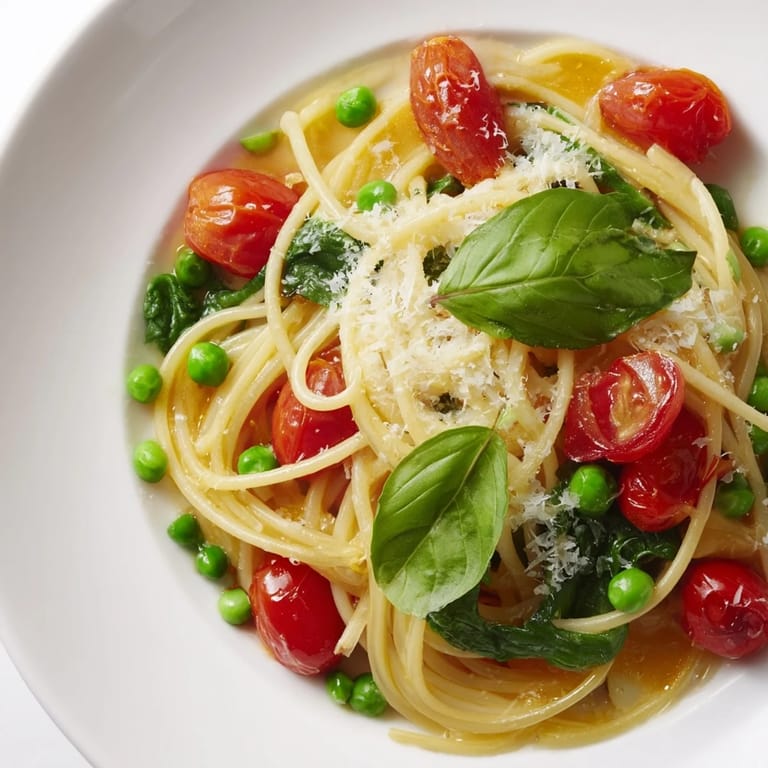
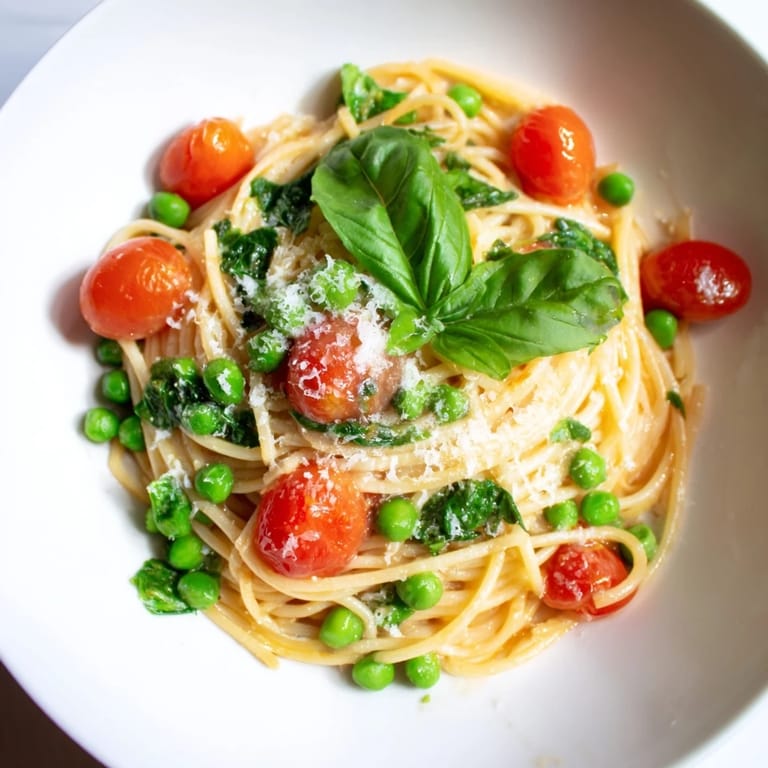
 The first time I made this one-pot spaghetti, I was genuinely skeptical about cooking pasta directly in broth. But watching those spaghetti strands soften and curl around bright green peas and jewel-like cherry tomatoes changed everything about my weeknight cooking routine. There is something deeply satisfying about hearing the gentle bubbling of vegetables and pasta becoming one cohesive dish. My kitchen filled with the most incredible aroma of garlic and tomatoes within minutes. Now it is my go-to when I want something vibrant but have zero energy for cleanup.
Last April my sister came over feeling completely drained from work, so I made this spaghetti while she sat at the counter telling me about her day. She took one bite and actually went quiet for a full minute, which never happens. That dinner turned into a weekly tradition we both look forward to, especially on days when we need comfort food that still feels light and fresh.
Ingredients
- 350 g dried spaghetti: The pasta releases starch into the broth as it cooks, creating a naturally creamy sauce without any cream needed
- 150 g frozen or fresh peas: These add sweet bursts of spring flavor and stay perfectly tender when cooked directly in the broth
- 100 g baby spinach: The spinach wilts beautifully into the pasta, adding nutrition and gorgeous color without any bitter taste
- 200 g cherry tomatoes, halved: They soften just enough to release their juices while keeping their shape, creating little pockets of sweetness
- 2 cloves garlic, thinly sliced: Thin slices mellow as they cook, infusing the entire dish with gentle garlic flavor rather than harsh raw bites
- 1 small red onion, thinly sliced: Red onion adds a subtle sweetness and beautiful pinkish color that complements the green vegetables
- 1 L vegetable broth: This is the cooking liquid and seasoning base combined, so use a good quality broth you enjoy drinking on its own
- 2 tbsp olive oil: Starting with oil prevents sticking and adds richness that balances the light vegetable broth
- 1/2 tsp salt and 1/4 tsp black pepper: Because the broth reduces as the pasta cooks, season lightly at first and adjust at the end
- 1/4 tsp red pepper flakes: Completely optional, but this tiny amount adds just enough warmth to make the flavors pop without making it spicy
- Zest of 1 lemon: This is the secret ingredient that makes the dish taste bright and fresh, cutting through the richness
- 30 g grated Parmesan cheese: The salty, umami richness of Parmesan ties all the vegetables together perfectly
- Fresh basil leaves: Torn basil adds a final aromatic punch that makes the dish feel like it came from an Italian kitchen
Tired of Takeout? 🥡
Get 10 meals you can make faster than delivery arrives. Seriously.
One email. No spam. Unsubscribe anytime.
Instructions
- Start with your aromatic base:
- Heat olive oil in your large pot over medium heat, then add the sliced garlic and red onion. Cook for 2-3 minutes until the garlic is fragrant and the onion has softened, stirring occasionally so nothing browns.
- Add everything but the finishing touches:
- Add the spaghetti, peas, spinach, and halved cherry tomatoes to the pot. Pour in the vegetable broth, then season with salt, black pepper, and red pepper flakes if using.
- Let it become something magical:
- Bring everything to a boil, then reduce heat slightly and cook uncovered for 10-12 minutes. Stir occasionally with your wooden spoon to prevent the pasta from sticking, and watch as the liquid transforms into a silky sauce that coats each strand.
- Finish with brightness:
- Once the pasta is al dente and most of the liquid has been absorbed, stir in the lemon zest. Remove from heat immediately.
- Serve it with love:
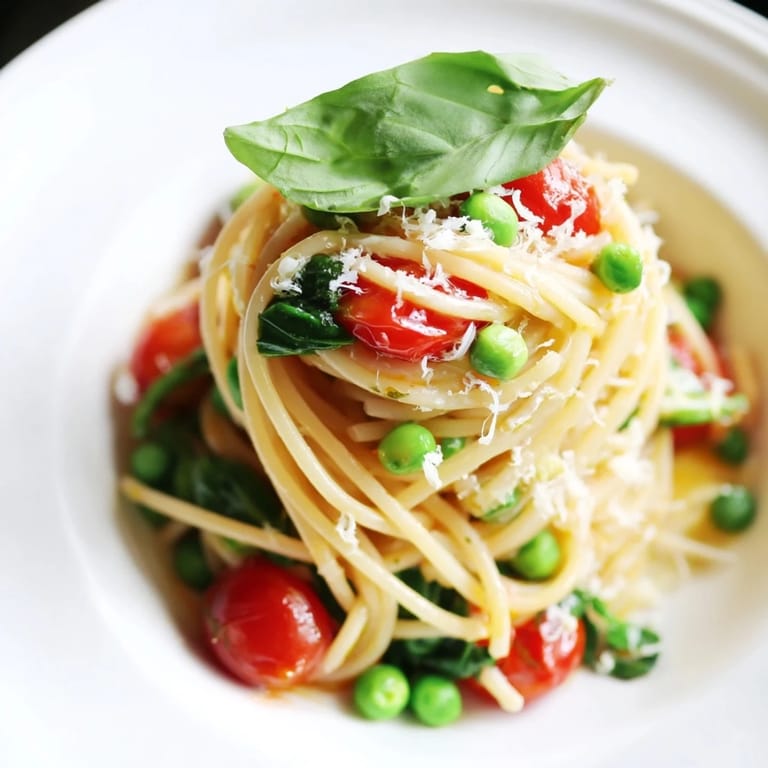
- Divide the spaghetti among four plates and generously top with grated Parmesan and fresh basil leaves. Serve while steaming hot.
 Save to Pinterest
 This recipe has saved me on countless busy weeknights when I wanted something homemade but only had twenty minutes to spare. There is something so reassuring about a meal that comes together so quickly yet tastes like it simmered all afternoon.
Making It Your Own
I have learned that this one-pot method works beautifully with other vegetables depending on what is in season or sitting in my crisper drawer. Sometimes I add asparagus pieces in spring or zucchini cubes in summer, and the cooking time stays exactly the same.
Perfect Pairings
A crisp white wine like Sauvignon Blanc cuts through the starch and complements the fresh vegetables beautifully. For a complete meal, I sometimes serve this with a simple green salad dressed with lemon vinaigrette to echo the bright flavors in the pasta.
Storage and Make-Ahead Tips
This pasta actually tastes even better the next day as the flavors continue to meld together in the refrigerator. I keep leftovers in an airtight container and reheat with a splash of water to loosen the sauce, bringing back that just-cooked texture. Sometimes I deliberately make a double batch just for easy lunches.
- The pasta will absorb more liquid as it sits, so add a splash of broth or water when reheating
- Fresh basil is best added right before serving, but everything else reheats perfectly
- This dish keeps well for up to three days in the refrigerator
 Save to Pinterest
 There is something profoundly nourishing about a bowl of pasta that celebrates the simple beauty of spring vegetables. I hope this recipe becomes as much of a comfort in your kitchen as it has in mine.
Recipe FAQs
- → Can I use fresh vegetables instead of frozen peas?
Yes, fresh peas work beautifully in this dish. Use the same quantity and add them at the same time. Fresh vegetables may require slightly less cooking time, so check for doneness a minute or two earlier.
- → What pasta shapes work best?
Spaghetti is traditional, but linguine, fettuccine, or penne all work wonderfully. Shorter shapes like penne may cook more evenly and absorb the broth better in a one-pot setting.
- → How do I prevent the pasta from sticking?
Stir occasionally throughout cooking, especially in the first few minutes after adding the pasta. The constant stirring helps break up starch and prevents clumping. Using a wooden spoon works best.
- → Can I add protein to this dish?
Absolutely. White beans, chickpeas, or lentils add heartiness and protein. A drained can of chickpeas blends seamlessly into this dish. For animal protein, try adding shrimp in the last few minutes or diced cooked chicken.
- → Is this suitable for gluten-free diets?
Yes. Simply substitute regular spaghetti with gluten-free pasta. Check the package for cooking time, as gluten-free pastas sometimes cook slightly faster. The rest of the ingredients are naturally gluten-free.
- → How should I store leftovers?
Store in an airtight container in the refrigerator for up to 3 days. The pasta will continue absorbing any remaining liquid, creating a thicker consistency. Reheat gently on the stovetop with a splash of water or broth to restore the desired consistency.