 Save to Pinterest
 There's something about the smell of mushrooms hitting hot oil that makes me pause whatever I'm doing. Years ago, on a gray October afternoon when the kitchen felt too quiet, I threw together this barley soup almost by accident—using what was lingering in my vegetable drawer and a half-remembered soup my grandmother used to make. The first spoonful was warm, honest, and exactly what I needed that day. Now it's become my go-to when the weather turns and people need feeding without fuss.
Last winter, I made this for a friend who'd just moved to town and didn't know many people yet. She sat at my counter while the soup bubbled away, and we talked about everything from failed apartments to dream jobs. By the time we ladled it into bowls, the conversation had shifted to something lighter, and she told me later that bowl of soup felt like the first real welcome she'd gotten. Food does that sometimes—it becomes a moment instead of just a meal.
Ingredients
- Pearl barley: Rinse it first to remove excess starch, or it'll make your broth cloudy; the texture stays slightly chewy even when fully cooked, which is exactly what you want here.
- Olive oil: Don't skimp—good oil makes the soffritto taste right from the start.
- Yellow onion, carrots, celery: This holy trinity builds the flavor foundation, so take a moment to cut them evenly so they soften at the same pace.
- Garlic: Mince it fine and add it after the vegetables start softening, otherwise it can turn bitter and ruin the whole pot.
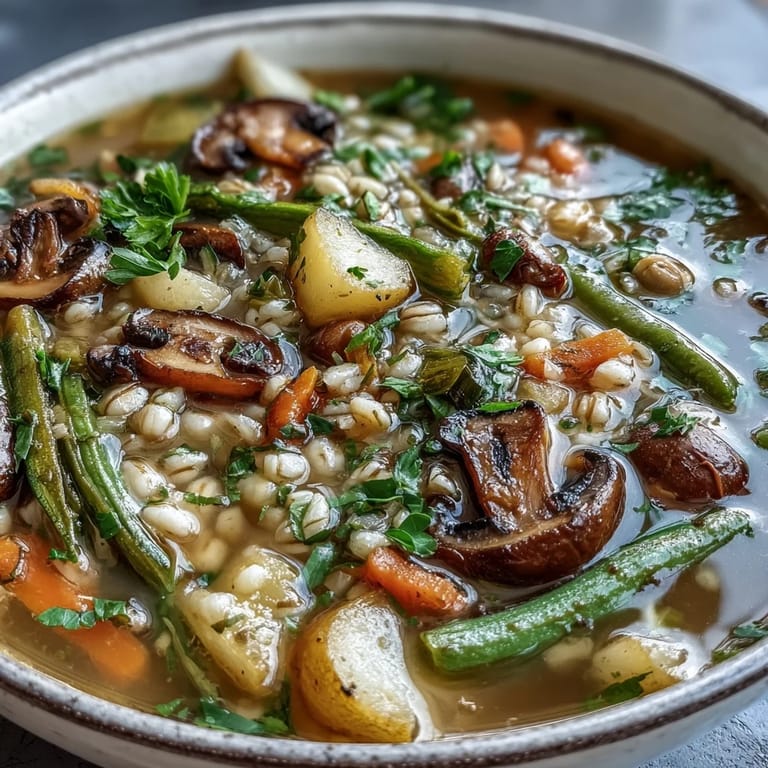
- Cremini or white mushrooms: Slice them thick enough that they don't disappear, but thin enough that they release their moisture quickly into the broth.
- Potato: Waxy potatoes hold their shape better than starchy ones; I learned this the hard way after a pot of mushy soup.
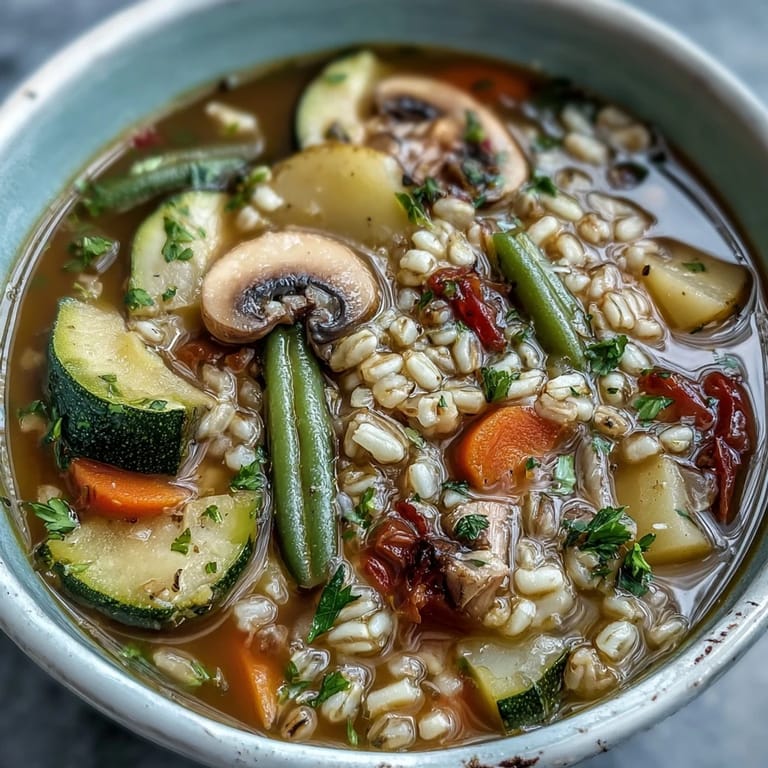
- Zucchini: Add it in the middle of cooking, not at the start, so it stays tender instead of turning into mush.
- Diced tomatoes: The acidity balances the earthiness of the mushrooms and barley beautifully.
- Green beans: Fresh or frozen work fine; they add color and a slight snap to each bite.
- Vegetable broth: Use good broth—it's the backbone of the whole thing, so taste it first before you use it.
- Thyme, oregano, bay leaf: These dried herbs create warmth without overpowering; fresh parsley at the end adds brightness that ties everything together.
Tired of Takeout? 🥡
Get 10 meals you can make faster than delivery arrives. Seriously.
One email. No spam. Unsubscribe anytime.
Instructions
- Build your flavor base:
- Heat olive oil in a large pot over medium heat and add the diced onion, carrots, and celery. Let them soften for about 5 minutes, stirring occasionally—you want them golden and fragrant, not browned. The kitchen will already start smelling like something good is happening.
- Welcome the mushrooms:
- Stir in the minced garlic and sliced mushrooms, cooking for another 5 minutes until the mushrooms release their dark liquid and shrink slightly. This step is crucial because it concentrates all that earthy umami flavor into your broth.
- Bring everything together:
- Add the diced potato, zucchini, green beans, and canned tomatoes with their juice, stirring gently to combine all the pieces. The pot will look full and colorful at this point, which is a good sign.
- Add the broth and grains:
- Pour in the vegetable broth and scatter in the rinsed pearl barley, then sprinkle in the thyme, oregano, bay leaf, salt, and pepper. Give it a thorough stir so nothing gets stuck to the bottom of the pot.
- The long, slow simmer:
- Bring everything to a boil over medium-high heat, then lower the temperature, cover the pot, and let it simmer gently for 40 to 45 minutes. The barley will gradually soften from chewy to tender, and all the flavors will marry together into something warm and complete.
- Taste and finish:
- Once the barley and vegetables are tender, fish out the bay leaf and take a spoonful to taste—you might want a touch more salt or pepper. Ladle into bowls and top each one with a pinch of fresh chopped parsley for a final bright note.
 Save to Pinterest
 This soup has a way of appearing on tables exactly when people need it most. It's humble enough that no one feels like you've gone to too much trouble, but hearty enough that it actually satisfies both hunger and something less tangible—that need to be cared for by someone who took the time to cook.
Why This Soup Works Year-Round
What makes this recipe special is its flexibility. In summer, I lighten it by using half the broth and serving it warm rather than hot, so it becomes almost a thick vegetable stew. In winter, I add an extra cup of broth and sometimes throw in kale or spinach toward the end of cooking. The barley stays forgiving through all these variations—it soaks up flavor and never becomes mushy if you treat it with a little care.
Building Depth Through Layering
The real secret to this soup is patience with the soffritto. Those first few minutes of cooking the onion, carrot, and celery aren't just about softening them—they're about slowly coaxing out their natural sweetness and depth. I've noticed that when I rush this step, the final soup tastes one-dimensional. When I let it breathe for those 5 minutes, everything that comes after feels rooted and grounded.
Variations and Substitutions That Actually Work
This is one of those recipes that welcomes improvisation. I've made it with white beans stirred in at the end for extra protein, swapped the zucchini for diced eggplant, and even used a mix of fresh and dried mushrooms when I had them on hand. Sweet potatoes instead of regular potatoes give it an almost autumn feel, and parsnips add a subtle sweetness that pairs beautifully with the earthiness of the barley and mushrooms.
- For extra heartiness, stir in a drained can of white beans or lentils during the final 10 minutes of cooking.
- Swap any vegetables you have—cauliflower, spinach, kale, or even thinly sliced beets all belong in this pot.
- If you're cooking for someone with gluten sensitivity, substitute the barley with brown rice or quinoa and adjust the cooking time to match the grains you choose.
 Save to Pinterest
 This soup feels like an old friend in a bowl—reliable, nourishing, and always welcome when the world feels a bit too sharp or cold. Make it this week and see what moments it creates.
Recipe FAQs
- → Can I substitute barley for a gluten-free grain?
Yes, you can replace barley with brown rice or quinoa to make this dish gluten-free. Adjust cooking times accordingly as these grains cook faster.
- → What mushrooms work best in this soup?
Cremini or white mushrooms are excellent choices due to their earthy flavor and firm texture that hold up well during cooking.
- → How do I enhance the protein content?
Adding a drained can of white beans during cooking provides a vegan protein boost without altering the soup’s texture.
- → What herbs complement the flavors here?
Dried thyme and oregano bring warmth and depth, while fresh parsley at the end adds a bright, fresh finish.
- → Can I prepare this soup ahead of time?
Yes, it simmers well in advance and flavors deepen overnight. Reheat gently to maintain texture and freshness.