 Save to Pinterest
 I discovered this soup on a grey afternoon when my kitchen felt too quiet and my energy had completely flatlined. My neighbor dropped off a bag of vegetables from her garden—beets still dusty with soil, carrots that smelled earthy and alive—and something just clicked. Within an hour, my pot was bubbling with the most vibrant colors, and the aroma alone made me feel like I'd already recovered.
I made this for my sister when she was recovering from a rough week, and watching her face light up as she tasted it told me everything. The fresh herbs hit differently when someone's been feeling run down, and she actually asked for the recipe instead of just politely saying it was nice. That's when I knew this wasn't just another soup—it became her go-to when life needed resetting.
Ingredients
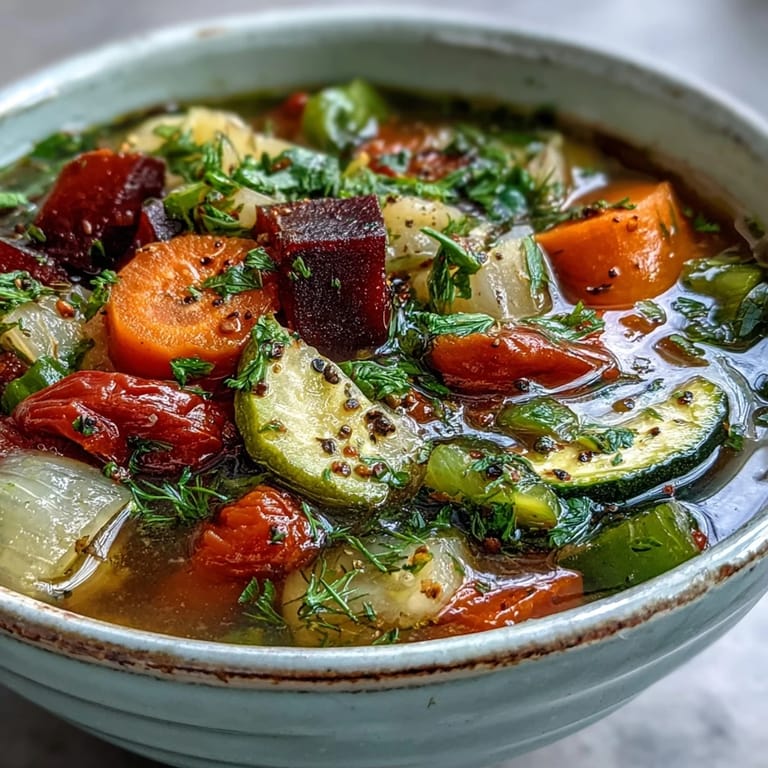
- Beetroot: The deep red-purple color isn't just for show; beets have this earthy sweetness that balances the acidity of the tomatoes, and they stain your cutting board red as a reminder you're doing something real.
- Carrots: Their natural sweetness rounds out the entire flavor profile, and I learned the hard way that slicing them thinner than you think helps them cook evenly with everything else.
- Courgette (zucchini): This becomes silky and mild when simmered, adding body to the broth without any overwhelming flavor.
- Tomatoes: Fresh ones matter here because they break down into the broth and create a subtle sweetness that boxed varieties just can't match.
- Green bell pepper: It keeps its slight crunch even after simmering, giving you little flavor pockets of freshness throughout.
- Red onion: The red variety has a gentler sweetness than yellow, and it softens into almost nothing, building the flavor base.
- Garlic: Two cloves is just enough to add depth without making this taste like a vampire repellent.
- Vegetable broth: Low sodium is crucial because you'll be adjusting seasoning at the end, and you want control over the salt level.
- Fresh herbs: Parsley, dill, and basil aren't afterthoughts here; they're what transform this from nice to memorable, so don't skip them.
- Olive oil: Two tablespoons is the right amount to build flavor without making the soup greasy or heavy.
- Lemon juice: This is the secret weapon that brightens everything and prevents the soup from tasting dull or one-dimensional.
Tired of Takeout? 🥡
Get 10 meals you can make faster than delivery arrives. Seriously.
One email. No spam. Unsubscribe anytime.
Instructions
- Heat your base:
- Pour the olive oil into your pot and let it warm over medium heat until it shimmers slightly. Add the red onion and garlic, stirring until the kitchen fills with that unmistakable savory aroma—you'll know it's ready when the onion turns translucent and the garlic smells mellow instead of sharp, about 2 to 3 minutes.
- Build with roots:
- Toss in the beetroot and carrots, stirring occasionally so they get coated in the oil. These are the slower vegetables, so give them about 5 minutes to start softening and releasing their colors into the pot, turning the oil a gorgeous deep red.
- Add the tender vegetables:
- Now stir in the courgette, tomatoes, and green bell pepper, letting them cook together for 3 to 4 minutes until you see the tomatoes starting to break down slightly. The kitchen will smell like late summer at this point, even if it's the middle of winter.
- Pour in the broth:
- Add all 1.5 liters of vegetable broth and raise the heat to bring it to a gentle boil. You'll see bubbles racing across the surface, then immediately turn the heat down to low so it simmers quietly, releasing steam that smells like pure vegetable comfort.
- Let it simmer gently:
- Cover the pot and let it bubble away for 20 to 25 minutes until every vegetable is tender when you poke it with a fork. This is when the flavors really get to know each other and the broth absorbs all the vegetable essence.
- Finish with brightness:
- Remove the pot from heat and stir in the fresh parsley, dill, basil, lemon juice, salt, and black pepper. Taste it and adjust—this is your moment to make it taste exactly how you want it, more salt, more lemon, whatever feels right.
- Serve and enjoy:
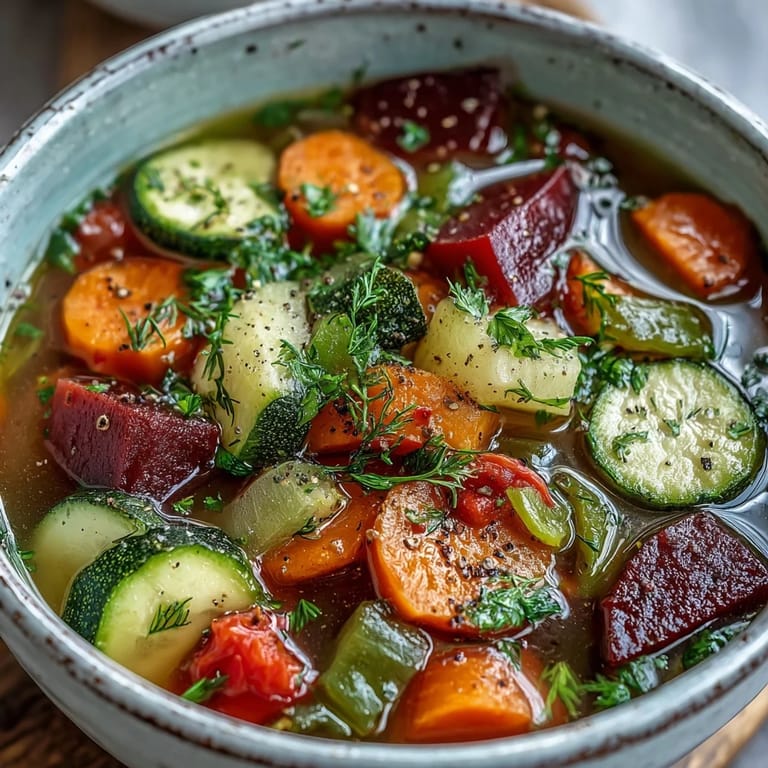
- Ladle it into bowls while it's still steaming hot, and if you want to get fancy, add an extra sprinkle of fresh herbs on top. The color contrast between the green herbs and the vibrant soup base is honestly beautiful enough to make you feel better just looking at it.
 Save to Pinterest
 There's something almost magical about watching someone eat this soup when they're feeling depleted. My best friend called me after having a bowl and said she could actually taste the care in it, which sounds sappy but honestly made me realize that the most nourishing food comes from paying attention to what people actually need.
Variations to Keep It Interesting
I've played around with this recipe more times than I can count, and it's incredibly forgiving. Sometimes I add a handful of spinach or kale in the final minute just to bump up the greens without changing the flavor much. Other times I've thrown in white beans or lentils when I wanted something more substantial, and it shifts from a light detox situation to an actual meal. The beauty of a vegetable soup is that it respects your mood and your pantry.
Storage and Make-Ahead Magic
This soup actually tastes better the next day once the flavors have had time to marry together, so it's perfect for batch cooking on Sunday and eating through the week. It keeps in the fridge for about 4 days, and it freezes beautifully for up to 3 months if you store it in portions. I learned this the hard way by making a double batch and being thrilled when I discovered it was even more flavorful on day two.
Why This Matters More Than Just Nutrition
Making this soup has become my ritual when I need to reset, whether that's physically or mentally. It forces you to slow down with your knife work, fill your space with good smells, and create something with your hands that's genuinely good for you. Food like this reminds you that taking care of yourself isn't complicated—sometimes it's just beautiful vegetables, time, and intention.
- Prep your vegetables the night before if you want to make this even faster on the day you actually cook it.
- Taste the soup twice—once during cooking and once at the end—because seasoning can shift as it simmers.
- Serve it with crusty bread or alongside a simple salad if you want to make it a more complete meal.
 Save to Pinterest
 This soup has become proof that the most healing foods are often the simplest ones, built on vegetables and time and nothing fancy. Make it when you need it, share it with someone who needs it, and trust that it will do exactly what it's supposed to do.
Recipe FAQs
- → What makes this soup colorful?
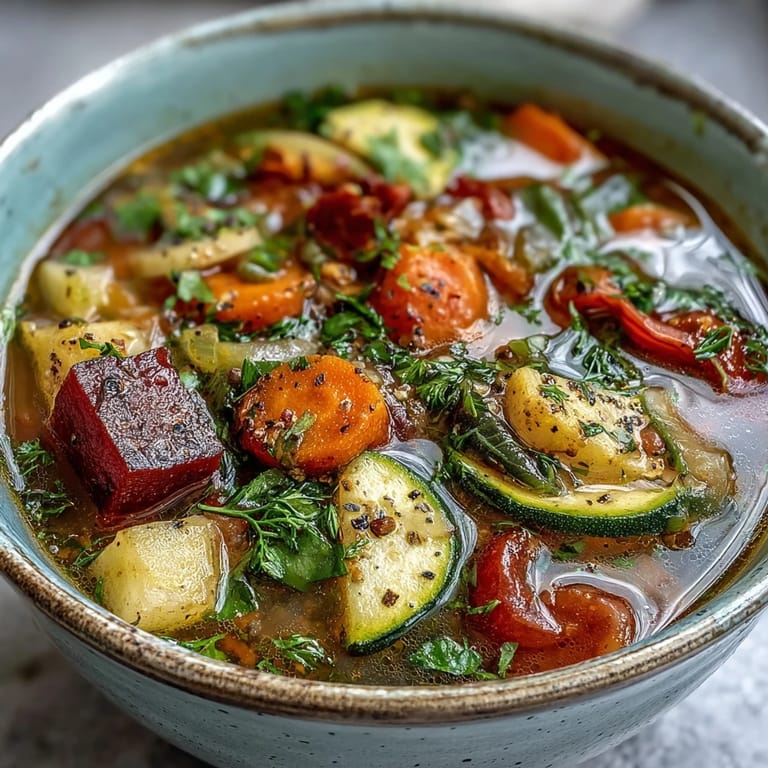
The vibrant colors come from beetroot (red/purple), carrots (orange), courgette (green), tomatoes (red), and green bell pepper. Each vegetable contributes its natural hue to create the rainbow effect.
- → Can I make this soup ahead?
Yes, this soup stores well for 3-4 days in the refrigerator. The flavors often develop and improve overnight. Reheat gently on the stove before serving.
- → How can I add more protein?
Stir in cooked lentils, chickpeas, or white beans during the last 5 minutes of simmering. You can also serve with a side of quinoa or add tofu cubes.
- → What herbs work best in this soup?
Fresh parsley, dill, and basil create a classic herb blend. You can substitute with cilantro, thyme, or oregano based on your preference. Use dried herbs at half the quantity if fresh aren't available.
- → Can I freeze this soup?
Absolutely. Cool completely before transferring to airtight containers. Freeze for up to 3 months. Thaw overnight in the refrigerator and reheat on the stove.