 Save to Pinterest
 There's something about autumn that makes me crave soup, and this miso butternut squash situation started when I had a half-empty container of white miso in my fridge and a farmer's market haul of the most gorgeous squash. My kitchen filled with the smell of caramelizing butternut as it roasted, and I thought, why not layer in that savory umami depth I was craving? That first sip was exactly what I needed on a chilly afternoon.
I made this for my neighbor who had just moved in, and she appeared at my door following the aroma wafting through our shared wall. We ended up talking for two hours over bowls of this soup, and it became the thing that actually made us friends instead of just friendly acquaintances who waved in the driveway.
Ingredients
- Butternut squash (1 medium, about 2 lbs): The heart of this soup, roasting it first builds sweet caramelized notes that miso loves to play off of.
- Yellow onion (1 medium, diced): Your aromatic base that becomes almost melting after sautéing, bringing gentle sweetness.
- Garlic (2 cloves, minced): Don't skip this even though the amount seems small; it rounds out the flavor beautifully.
- Fresh ginger (1-inch piece, grated): A quiet spice that adds warmth and keeps the soup from feeling one-dimensional.
- Low-sodium vegetable broth (4 cups): Use a brand you actually like tasting, since this is the liquid backbone of everything.
- White miso paste (2 tablespoons): The transformative ingredient that brings umami depth and a subtle sweetness, far better than red miso for this particular soup.
- Olive oil (1 tablespoon total): Split between roasting and sautéing for gentle cooking that coaxes out flavor without overwhelming.
- Salt and black pepper: Season in layers rather than all at once; your palate will thank you.
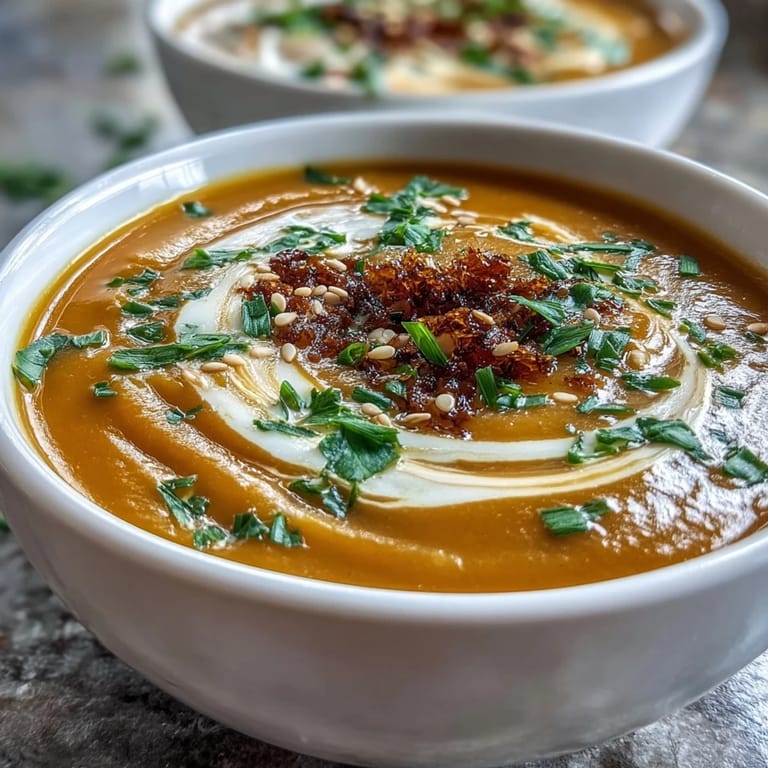
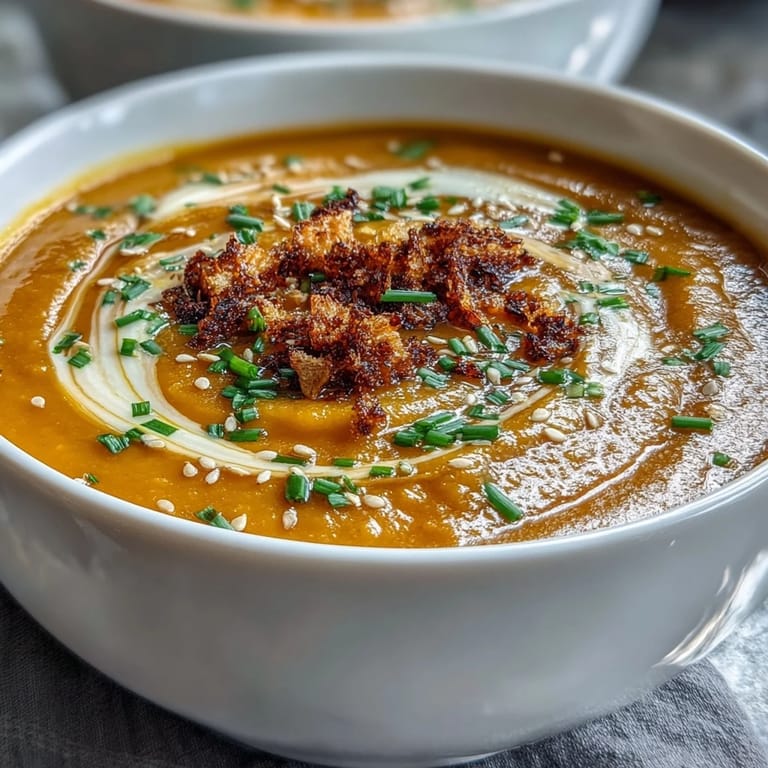
- Coconut cream (2 tablespoons), chives, and sesame seeds: These garnishes aren't just decoration, they add texture and brightness that changes how the soup feels in your mouth.
Tired of Takeout? 🥡
Get 10 meals you can make faster than delivery arrives. Seriously.
One email. No spam. Unsubscribe anytime.
Instructions
- Prep your squash and heat your oven:
- Preheat to 400°F and line a baking sheet with parchment paper. Cut your butternut squash carefully (this is honestly the hardest part), then toss the cubes with half a tablespoon of olive oil, a pinch of salt, and pepper.
- Roast until golden:
- Spread the squash in an even layer and roast for 30 to 35 minutes, giving it a stir halfway through. You're looking for edges that are starting to caramelize and a fork-tender center—this is what makes the soup taste like autumn.
- Build your aromatics:
- While the squash roasts, heat the remaining olive oil in a large pot over medium heat. Add your diced onion, garlic, and ginger, stirring until the kitchen smells incredible and the onion has softened, about 4 to 5 minutes.
- Bring everything together:
- Add the roasted squash to the pot, pour in the vegetable broth, and bring it to a gentle simmer. Let it bubble quietly for 5 minutes so flavors start getting to know each other.
- Blend to silkiness:
- Remove from heat and use an immersion blender to puree everything until completely smooth and creamy, or work in batches with a regular blender. The texture should be velvety, not chunky.
- Miso magic:
- In a small bowl, mix your miso paste with a ladleful of the hot soup until it's completely smooth with no lumps. Stir this back into the pot so the miso distributes evenly and whispers its umami goodness throughout.
- Taste and adjust:
- Take a spoonful, let it cool just enough to taste, and add more salt or pepper if it needs it. Gently reheat if needed, but never let the soup boil after the miso goes in or you'll lose that subtle complexity.
- Serve with intention:
- Ladle into bowls and top with coconut cream, a scatter of chives, and a few toasted sesame seeds if you have them on hand.
 Save to Pinterest
 I learned the miso lesson the hard way on a Sunday night when I rushed the dissolving step and ended up with little grainy bits throughout my otherwise perfect soup. Now I take the thirty seconds to do it right, and the difference is unmistakable.
Why Roasting Makes All the Difference
Roasting the squash before blending transforms it from sweet to deeply caramelized, almost nutty. The high heat breaks down the natural sugars and builds flavor that simple boiling could never achieve. Your soup tastes like something you spent hours on, when really you've just given the oven time to do the heavy lifting.
The Secret Life of Miso in Soup
Miso is almost like the umami translator between butternut squash and your taste buds, taking the natural sweetness and giving it dimension and savory depth. It's a bridge ingredient that doesn't announce itself but makes everyone wonder what you did differently. The white varieties are gentler and slightly sweet, which is why they're perfect here instead of the bold assertiveness of red miso.
Serving Suggestions and Variations
This soup is beautiful on its own or as the opening act to a larger meal. The creamy texture works as a canvas for all kinds of toppings and additions depending on what you have around. Think of the garnishes not as optional but as the final brushstrokes that complete the painting.
- A splash of coconut milk stirred in before serving adds richness and a subtle sweetness if you want the soup to feel even more luxurious.
- Leftover soup keeps for three days in the fridge and actually tastes better the next day as flavors meld, though it may thicken slightly—just thin with a little broth when reheating.
- You can absolutely swap butternut for kabocha squash, delicata, or even pumpkin if that's what you have, adjusting roast time based on size.
 Save to Pinterest
 This soup has become my go-to when someone needs comfort or warmth, and it never fails to deliver. Make it once and you'll understand why it's found its way into regular rotation at my table.
Recipe FAQs
- → What is the best way to roast butternut squash for this soup?
Cut the squash into even cubes, toss with olive oil, salt, and pepper, then roast at 400°F (200°C) for 30-35 minutes until tender and caramelized.
- → Can I substitute the miso paste with another ingredient?
White or yellow miso paste works best for its subtle sweetness, but other fermented soybean pastes can be used to maintain depth of flavor.
- → How do I achieve a silky texture in the soup?
Puree the cooked ingredients using an immersion or countertop blender until completely smooth and creamy before adding the miso.
- → Is it necessary to add the miso paste off the heat?
Yes, adding miso off the heat preserves its delicate flavors and beneficial enzymes without bitterness.
- → What garnishes complement this miso and butternut squash blend?
Coconut cream or sour cream, chopped chives or scallions, and toasted sesame seeds all add texture and richness to the soup.