 Save to Pinterest
 My sister handed me a slice of mango cheesecake at a rooftop dinner in late July, and I haven't stopped thinking about it since. The way the tropical fruit swirled through that cloud of cream cheese felt like tasting summer itself, and within days I was determined to recreate it in my own kitchen. What started as curiosity became an obsession with getting those proportions just right, learning how to coax the perfect wobble from the center, and discovering that patience during chilling time is actually the real magic ingredient.
I made this for a dinner party last summer when a friend mentioned she missed the tropics, and watching her face when she took that first bite made me understand why people say food is love. The whole table went quiet for a moment, which rarely happens, and then everyone wanted the recipe. That's when I knew this cheesecake had crossed from just-a-dessert into something that brings people together.
Ingredients
- Digestive biscuits (200g): The foundation of everything, these provide a subtle, slightly sweet base that won't overpower the mango, though you can substitute with graham crackers if that's what you have on hand.
- Unsalted butter (80g, melted): This binds the biscuit crumbs into a cohesive crust that actually stays put when you slice through it.
- Full-fat cream cheese (500g, softened): Don't skimp on quality here—it's the star, and room temperature is non-negotiable or you'll end up with lumps that no amount of beating will fix.
- Granulated sugar (150g): Sweetness balanced against the tartness of the sour cream and lemon, hitting that perfect tropical note.
- Mango puree (200g for filling plus 100g for swirl, plus 150g for coulis): Use ripe Alphonso or Ataulfo mangoes if you can find them—they're sweeter and less fibrous than standard varieties, making for silky puree.
- Sour cream (150ml): This adds tang and keeps the texture from becoming cloying, a trick I learned after my first attempt tasted almost too sweet.
- Eggs (3 large): Add them one at a time to keep the batter from becoming overworked, which can lead to cracks on the surface.
- Vanilla extract (1 tsp): A whisper of vanilla that plays beautifully with mango without stealing the show.
- Lemon juice (1 tbsp plus 1 tsp for coulis): This brightens everything and prevents the cheesecake from tasting flat, something I discovered by accident when I forgot it the first time.
- All-purpose flour (2 tbsp): A small amount that helps stabilize the filling and prevents it from cracking as it cools.
- Powdered sugar for swirl and coulis (optional, 1 tbsp plus 2 tbsp): Adds a subtle sweetness to the mango decorations without grittiness.
Tired of Takeout? 🥡
Get 10 meals you can make faster than delivery arrives. Seriously.
One email. No spam. Unsubscribe anytime.
Instructions
- Heat your oven and prepare the pan:
- Set the oven to 160°C and line your 23cm springform pan with parchment paper—this is the moment where preparation saves you from disaster later. Having everything ready before you start mixing keeps you calm and focused.
- Crush and combine the biscuit base:
- Pulse your digestive biscuits in a food processor until they look like sand, then stir in the melted butter until every crumb feels slightly damp and cohesive. Press this mixture firmly into the pan's base with the bottom of a measuring cup, creating an even layer about a quarter-inch thick, then refrigerate while you make the filling.
- Beat the cream cheese foundation:
- In a large bowl, beat the softened cream cheese and sugar together for about three minutes until absolutely smooth and pale—rushing this step is how you get a grainy texture, trust me. The transformation from lumpy to cloud-like is your sign that you're ready to proceed.
- Add wet and dry ingredients carefully:
- Add the sour cream, then the eggs one at a time, allowing each to incorporate fully before adding the next, followed by vanilla extract, lemon juice, and flour—mixing just until combined. Overbeating at this stage creates air bubbles that bake into cracks, something I learned the hard way during attempt number three.
- Swirl in the mango magic:
- Gently fold in the 200g of mango puree to create those beautiful ribbons of tropical color throughout the filling, keeping some definition rather than blending it into uniform orange. This is where the cheesecake starts to feel like art rather than just dessert.
- Build and decorate:
- Pour the filling over the chilled biscuit base and smooth the top, then dollop the remaining 100g mango puree mixed with powdered sugar across the surface. Use a skewer or knife to swirl these dollops gently, creating patterns that look intentional but feel organic.
- Water bath magic:
- Place the springform pan into a larger roasting tray and add hot water until it reaches halfway up the sides of the springform—this gentle, moist heat prevents the top from cracking while the center bakes. It feels fussy but it's the secret to that creamy, fudgy texture.
- Bake with intention:
- Bake for 55 to 60 minutes, watching until the edges are set and the center has just a slight wobble when you gently shake the pan. That wobble is everything—it means you're done, even though it looks like it might not be.
- Cool gradually, cool completely:
- Turn off the oven and crack the door open just a few inches, then let the cheesecake sit undisturbed for a full hour to cool slowly. This gradual temperature drop prevents the dreaded cracks that make experienced bakers weep, then remove it completely and chill in the refrigerator for at least four hours, ideally overnight.
- Make the final crown:
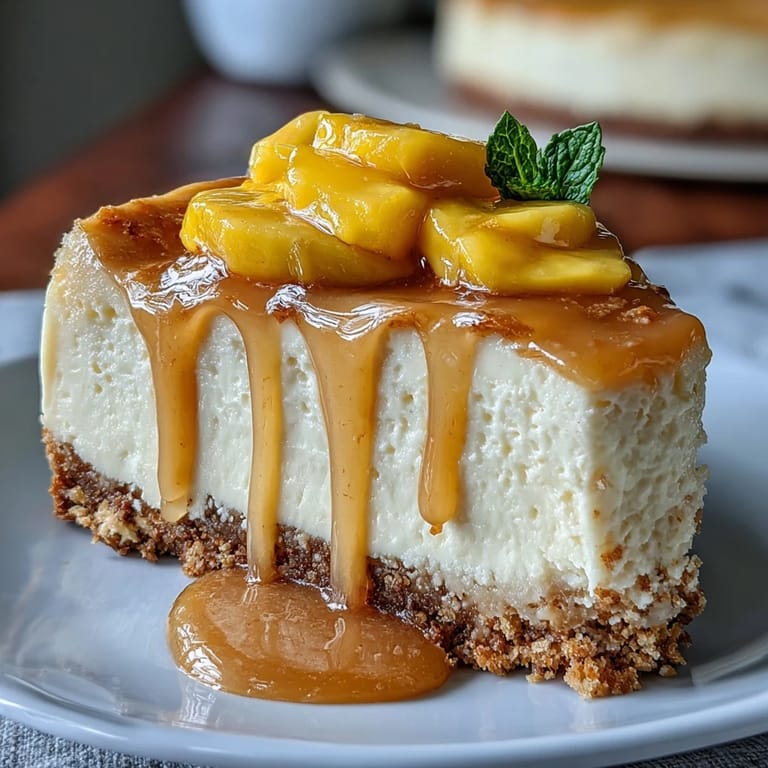
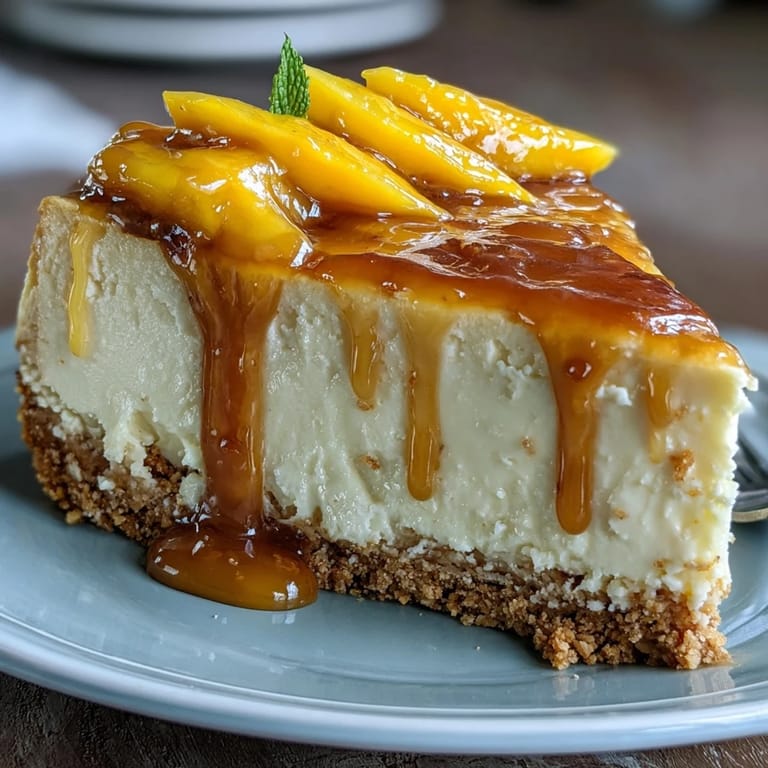
- While the cheesecake chills, blend the mango puree with powdered sugar and lemon juice, then strain through a fine sieve if you want silky smoothness. This coulis becomes the glossy finish that makes people gasp when you plate it.
- Finish and serve:
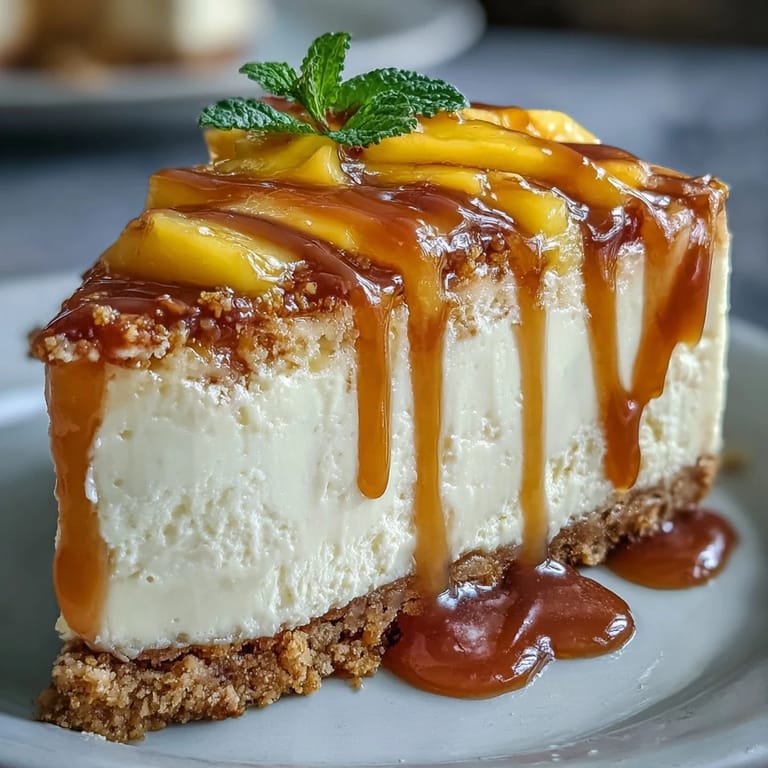
- When ready to serve, drizzle or spread the mango coulis across the chilled cheesecake, slice with a hot knife wiped clean between cuts, and watch the magic happen. The tropical sweetness, the creamy texture, the way it practically melts on your tongue—this is why you did all those steps.
 Save to Pinterest
 My neighbor knocked on my door one evening drawn by the smell of mango and vanilla wafting through our shared hallway, and we ended up sitting on my kitchen steps eating straight from the pan with spoons like we were twelve years old. It became a tradition that summer, this sneaky late-night cheesecake consumption, a reminder that the best meals are often the ones you share unexpectedly.
Choosing Your Mango
The quality of your mango determines everything, and I learned this the hard way by using an underripe specimen that made the whole dessert taste flat and slightly astringent. Look for Alphonso or Ataulfo varieties if possible—they're sweet, creamy, and fiber-poor, making them perfect for puree. You'll know a mango is ready when it yields gently to palm pressure and smells like sunshine, and you can pulp them with a fork or blend them smooth depending on your texture preference.
The Science of Setting
Cheesecake is less about following a recipe and more about understanding what's happening inside the oven as it bakes. The filling sets gradually from the outside in, which is why that slight wobble in the center is actually perfect—it means the residual heat will continue cooking it gently as it cools. The enzymes in eggs coagulate at precise temperatures, the cream cheese's fat content determines how rich and creamy the result becomes, and the small amount of flour acts as insurance against the whole thing collapsing from egg protein overdoing itself.
Making It Truly Yours
Once you've made this cheesecake once, you'll start imagining variations—passion fruit coulis instead of mango, a chocolate-drizzled biscuit base, candied mango slices on top. The beauty of understanding this formula is that the structure supports experimentation, and you can pivot in almost any direction while maintaining that signature creamy texture. Just remember that the water bath, the low oven temperature, and the slow cooling are the non-negotiable elements, the foundations that everything else depends on.
- If you can't find fresh ripe mangoes, frozen mango puree from the grocery store works beautifully and honestly eliminates the uncertainty.
- A springform pan is essential here—trying to remove this from a regular cake pan would result in frustration and possibly tears.
- Make extra mango coulis because people will ask for it on the side, drizzled on ice cream, or straight from a spoon when they think no one's watching.
 Save to Pinterest
 This cheesecake has become the dessert I make when I want to show someone I care, the one that fills my kitchen with that amber-tropical glow and makes me feel like a confident baker. More importantly, it's taught me that patience and precision in the kitchen pay off in ways that restaurant meals never quite manage.
Recipe FAQs
- → What type of mango works best?
Ripe, sweet varieties like Alphonso or Ataulfo provide the richest flavor and smoothest puree for this dessert.
- → How can I make the base gluten-free?
Substitute digestive biscuits with gluten-free biscuits to maintain the crunchy texture without gluten.
- → Why use a water bath during baking?
The water bath gently cooks the filling, preventing cracks and ensuring a smooth, creamy texture.
- → Can I prepare this dessert ahead of time?
Yes, chilling overnight allows the flavors to meld and the texture to firm up perfectly.
- → What is the purpose of the mango swirl?
The mango swirl adds vibrant color and bursts of fresh mango flavor within the creamy filling.
- → How should the coulis be served?
Drizzle the chilled mango coulis over slices just before serving to enhance the tropical taste and presentation.