 Save to Pinterest
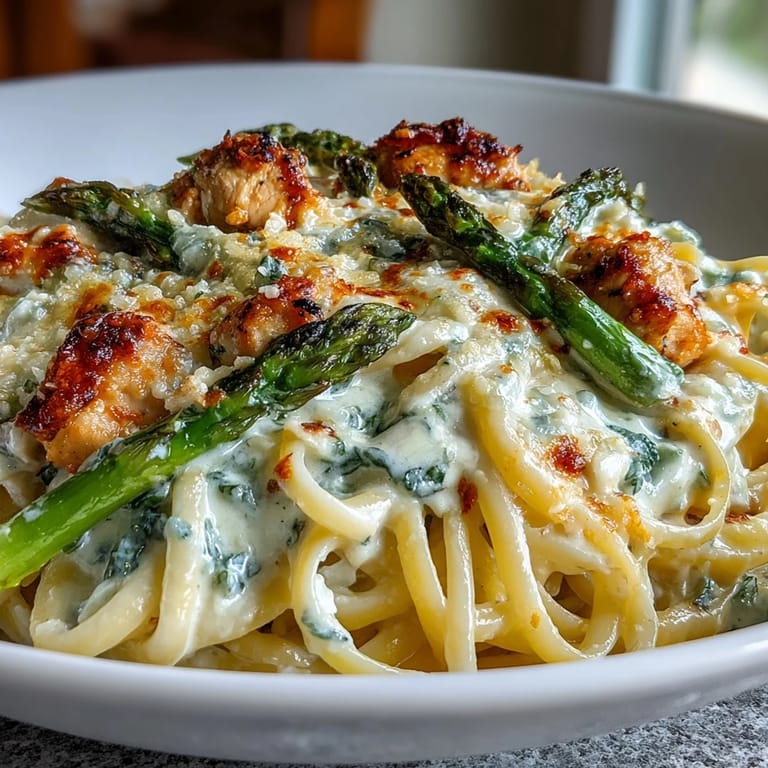
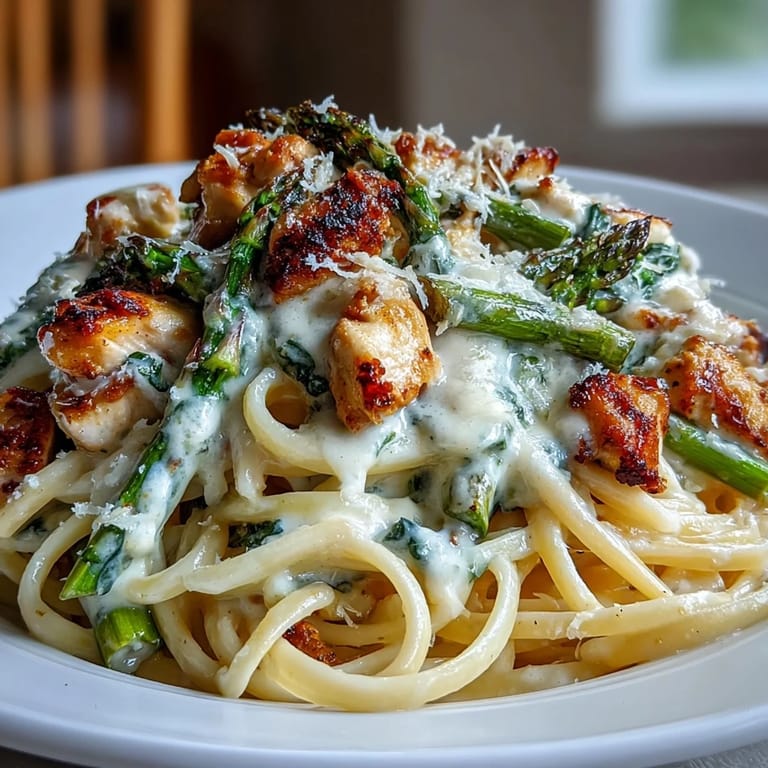
 There's something about the smell of roasting asparagus with cheese that makes a weeknight feel like you're cooking in someone's Italian kitchen. I discovered this dish on a Tuesday when I had a block of Asiago sitting in the fridge, some chicken breasts that needed using, and absolutely zero inspiration. Twenty minutes later, my kitchen smelled incredible, and I realized I'd stumbled onto something that felt both elegant and effortless. The creamy sauce coats the linguine perfectly, the asparagus gets these crispy, golden edges, and the chicken stays tender because you're not overthinking it.
I made this for my partner on a random Thursday, and they asked why I'd been hiding this recipe all along. The pasta water trick genuinely changed how I think about cream sauces—suddenly they're silky and coat everything without being cloyish. That moment when you toss it all together and the sauce clings to every strand of linguine is when you know you've nailed it.
Ingredients
- Chicken breasts: Cut into bite-sized pieces so they cook quickly and absorb the sauce. You want them tender, not tough, which is why medium-high heat and a short cooking time matter.
- Linguine: The long, flat shape holds onto creamy sauces better than round pasta. If you can't find it, fettuccine works beautifully too.
- Asparagus: Roasting brings out sweetness and creates those golden, crispy edges that make the dish feel fancy. Trim the woody ends—they're bitter and nobody wants to chew through them.
- Garlic and onion: These build the flavor base. The onion softens and sweetens, while garlic adds that savory depth.
- Asiago cheese: This is the star. It's milder than Parmesan but has character. Split it between the asparagus topping and the sauce so every component gets that nutty richness.
- Heavy cream: Non-negotiable for richness, but we're using pasta water to stretch it so the sauce stays balanced and glossy.
- Butter: It adds silkiness to the sauté and rounds out the flavors in a way oil alone can't.
- Flour: Just enough to create a roux base for the sauce. Too much makes it grainy, too little and it won't thicken properly.
- Olive oil: One portion roasts the asparagus, the other starts your protein.
Tired of Takeout? 🥡
Get 10 meals you can make faster than delivery arrives. Seriously.
One email. No spam. Unsubscribe anytime.
Instructions
- Get your oven ready and prep the pan:
- Preheat to 220°C and line a baking sheet with parchment paper so cleanup is easier and nothing sticks. This takes 5 minutes while you gather everything else.
- Make the asparagus golden:
- Toss those pieces with oil, salt, pepper, and 40 g of Asiago, then spread them in a single layer. They'll roast for 10 to 12 minutes until the edges turn golden and they're tender but still have a little snap to them.
- Cook the pasta:
- Get a large pot of salted water boiling and drop in the linguine. While it's cooking, remember to reserve 120 ml of pasta water before draining—this starchy liquid is what makes the sauce silky instead of heavy.
- Sear the chicken until golden:
- Heat oil and butter in your skillet over medium-high heat, then add the chicken pieces. Don't crowd the pan or they'll steam instead of sear. They'll take about 5 to 6 minutes and should be golden on the outside and cooked through inside.
- Build the sauce base with onion and garlic:
- Once the chicken is out, sauté the onion in the same pan for a couple of minutes until it softens and turns translucent. Then add garlic for just 30 seconds—you want it fragrant, not burnt.
- Create the roux and add cream:
- Sprinkle the flour over the aromatics and stir for about a minute, coating everything. This cooks out the raw flour taste and creates a base for your sauce. Slowly pour in the cream and pasta water while whisking constantly to avoid lumps.
- Melt the cheese into silkiness:
- Reduce the heat to low and stir in the 80 g of Asiago until it melts completely and the sauce is smooth and glossy. Add more pasta water a little at a time if you want a thinner sauce—everyone likes theirs at a different consistency.
- Bring everything together:
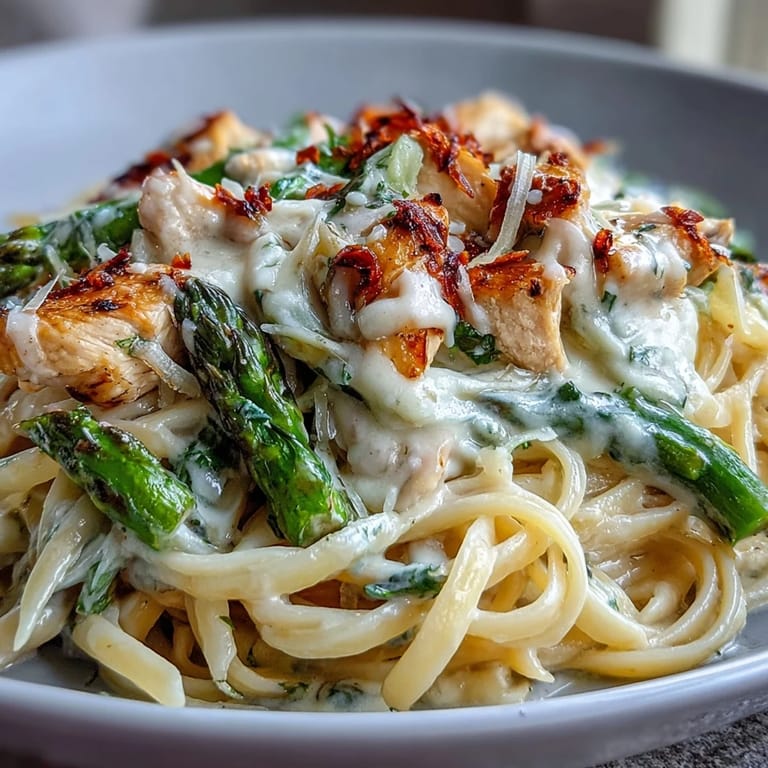
- Return the chicken to the pan, add the cooked linguine, and toss everything together until coated in that creamy sauce. Then fold in the roasted asparagus gently so the pieces don't break apart.
- Serve while it's warm:
- Divide into bowls and garnish with fresh parsley and extra Asiago if you're feeling generous. Eat immediately while the pasta is still warm and the sauce is at its creamiest.
 Save to Pinterest
 There's a moment right when you fold in the asparagus and see all those golden pieces nestle into the creamy pasta that you realize you've created something worth coming home to. This dish stopped being about using up ingredients and became something I actually plan to make.
Why Asiago Over Other Cheeses
Asiago has this subtle nutty undertone that doesn't overpower the cream sauce the way sharp Cheddar might. It melts smoothly without becoming grainy, and it has enough character to make the dish feel more interesting than just another cream pasta. If Asiago isn't available where you are, Parmesan works in a pinch, though it's sharper and requires a lighter hand.
Making This Ahead and Reheating
You can prepare the components separately and assemble fresh—roast the asparagus ahead, cook the chicken in the morning, and make the sauce when you're ready to eat. Leftovers keep for about three days in the fridge, though the pasta will absorb more sauce, so you might need to add a splash of cream when reheating. Cold pasta sauce breaks, so always warm it gently over low heat with a little added cream or pasta water.
How to Customize This Dish
This recipe is flexible enough to bend around what you have on hand. The white wine note in the original recipe is worth trying—deglaze the pan after the chicken comes out for a more complex sauce. Asparagus is traditional here, but roasted broccoli, green beans, or even zucchini work if that's what's in your crisper drawer.
- Try finishing with a crack of fresh black pepper and a small squeeze of lemon juice to brighten all the richness.
- For a lighter version, use half-and-half instead of heavy cream and reduce the butter slightly.
- Keep extra Asiago on the table so people can add more if they're craving extra umami.
 Save to Pinterest
 This is the kind of dish that makes you feel like you've done something special without spending all evening in the kitchen. Make it once, and it becomes the thing you reach for when you want comfort that actually tastes like you tried.
Recipe FAQs
- → Can I make this dish vegetarian?
Absolutely. Simply omit the chicken and increase the asparagus quantity, or add other vegetables like bell peppers or zucchini. You might want to add extra protein such as white beans to keep the dish filling.
- → What can I use instead of Asiago cheese?
Parmesan or Romano work beautifully as substitutes. Both provide that salty, nutty flavor profile that complements the creamy sauce. Aged Gouda or Pecorino Romano are also excellent alternatives.
- → How do I prevent my sauce from becoming too thick?
The reserved pasta water is your secret weapon. Add it gradually while stirring to achieve the perfect silky consistency. If needed, you can also add a splash more cream or even a bit of milk to thin it out.
- → Can I prepare any components ahead of time?
You can roast the asparagus and cook the chicken up to a day in advance. Store them separately in the refrigerator. The sauce is best made fresh, but you can grate the cheese and chop vegetables ahead to save time.
- → What type of pasta works best besides linguine?
Fettuccine, tagliatelle, or penne all work wonderfully. The key is choosing pasta that holds sauce well. Short pasta like rigatoni or farfalle are great alternatives if you prefer something other than long noodles.
- → How do I know when the asparagus is perfectly roasted?
Look for tender spears with golden-brown edges and slightly crispy cheese topping. The asparagus should yield easily when pierced with a fork but still maintain some bite. This usually takes 10-12 minutes at 220°C.