 Save to Pinterest
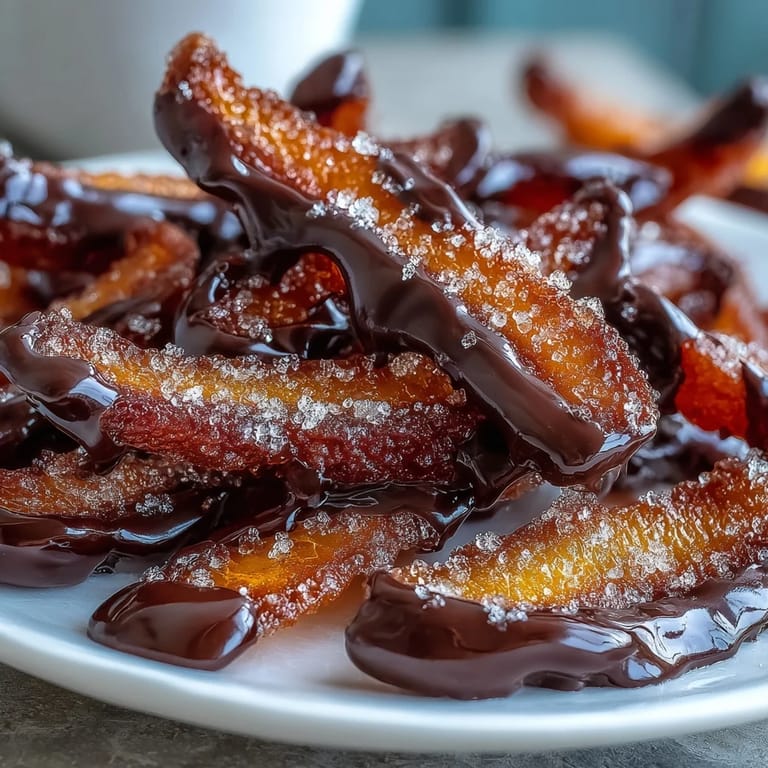
 My sister arrived home one winter afternoon with a small box of candied orange peel dipped in dark chocolate from a fancy confiserie in the city, and I watched her savor each piece like it was spun gold. The combination of that bitter-sweet chocolate against the bright, chewy citrus made me realize this wasn't just candy—it was sophistication I could actually make at home. What struck me most was how the kitchen filled with that particular orange aroma during the simmering, a smell that felt almost luxurious for something so simple.
I made these for a dinner party once without planning ahead, and somehow the whole process became a meditation—the repetitive blanching, the gentle simmering, the careful dipping. My friend wandered into the kitchen mid-preparation and ended up sitting at the counter for twenty minutes, just watching and talking while the peels candied. Those homemade pieces became the moment everyone remembered from that night, not the main course.
Ingredients
- 4 large organic oranges: Organic matters here because you're eating the peel, and the thicker skin of quality oranges gives you better strips that don't fall apart during cooking.
- 2 cups granulated sugar: This creates the syrup that transforms bitter peel into jewel-like candy, and the amount is precise enough that it actually matters.
- 1 cup water: Keep the ratio exact—too much water and your syrup never concentrates properly, too little and it crystallizes.
- 7 oz high-quality dark chocolate (70% cocoa or higher): The chocolate is your final statement, so choose something you'd actually eat on its own; cheap chocolate tastes like it too.
- Extra granulated sugar for coating (optional): This gives a subtle sparkle and adds textural contrast if you're the kind of person who notices those details.
Tired of Takeout? 🥡
Get 10 meals you can make faster than delivery arrives. Seriously.
One email. No spam. Unsubscribe anytime.
Instructions
- Prepare your oranges with care:
- Wash and dry the oranges thoroughly, then score the peel into quarters and gently peel away, keeping as much white pith attached as you can manage. The pith is where the pectin lives, and it's what keeps your strips from disintegrating during the long simmer ahead.
- Cut the peels into ribbons:
- Slice each quarter lengthwise into strips about 1/4-inch wide—thinner and they'll dissolve, thicker and they stay bitter. This is where a sharp knife actually makes the difference in your final product.
- Blanch away the bitterness:
- Place the strips in a saucepan, cover with cold water, and bring to a boil, then drain. Repeat this blanching process two more times total—each time removes more of that harsh, astringent bite that would otherwise dominate the finished candy.
- Build your syrup:
- In a clean saucepan, combine the sugar and water over medium heat, stirring until the sugar completely dissolves and the mixture turns clear. This is your medium now, and every strip that goes in next will slowly absorb sweetness and turn translucent.
- Simmer gently into translucence:
- Add the blanched orange peels and reduce heat to low, letting them simmer for 45 to 60 minutes while you stir occasionally. They're ready when they look almost glowing and bend easily without snapping—you'll recognize the moment when you see it.
- Dry them completely:
- Transfer the candied peels to a wire rack set over parchment paper and leave them undisturbed for at least an hour. They should feel dry to the touch and no longer sticky, which means the sugar has set and they're ready for chocolate.
- Optional sugar coating:
- If you want that extra sparkle and textural crunch, toss the dried peels in granulated sugar until coated. This step is purely aesthetic, but it does add a subtle crunch against the chocolate.
- Melt the chocolate properly:
- Use a double boiler method—a heatproof bowl over simmering water—stirring the chocolate until it's completely smooth and glossy. Never let water touch the chocolate or it will seize into a grainy mess that can't be rescued.
- Dip with intention:
- Hold each peel by one end and dip it halfway into the melted chocolate, letting the excess drip back into the bowl. Place the dipped peels on fresh parchment paper and let them set completely—30 minutes at room temperature or 10 minutes in the refrigerator if you're impatient.
- Store your treasure:
- Once fully set, keep these in an airtight container at room temperature where they'll hold for up to two weeks, though they rarely last that long.
 Save to Pinterest
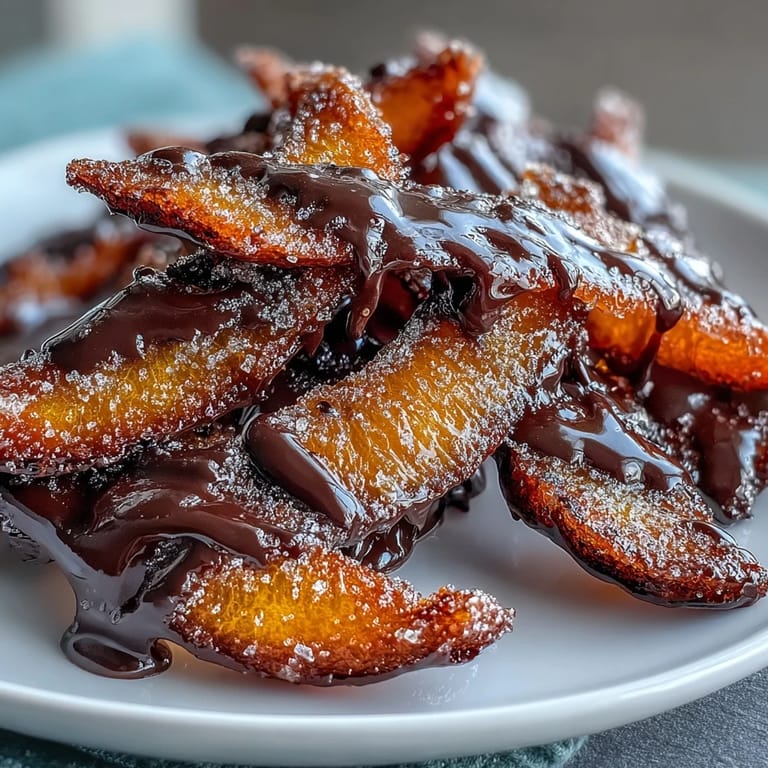
 There's something about giving someone a hand-tied box of homemade candied orange peel that shifts how they see you—suddenly you're the person who makes elegant things in their kitchen. That one dinner party guest asked me for the recipe the next week and admitted she'd been buying expensive versions at the shop for years without realizing it was this straightforward.
The Science of Bitterness
Orange peel contains limonene and naringin, compounds that taste intensely bitter if you skip those blanching steps. Each time you boil and drain, you're leaching away these compounds into the water, which is why the process matters so much more than just recipe instructions make it sound. By the third blanching, the water runs clear and your peels are ready to transform.
Chocolate Temperature Matters More Than You'd Think
I learned this the hard way when my chocolate coating turned dull and streaky instead of glossy and professional-looking. The issue wasn't the chocolate itself but the temperature—it was too hot when I dipped, which caused the cocoa butter to crystallize unevenly. Now I let the chocolate cool slightly to around 88 degrees Fahrenheit before dipping, which gives that snap and shine that makes them look like they came from a real chocolatier.
Customization and Variations
The basic formula is flexible enough that you can add complexity without breaking anything. A cinnamon stick or a few cloves in the syrup during simmering adds warmth, though you remove them before drying, and some people add a whisper of cardamom for something more unexpected. You could also experiment with milk chocolate or white chocolate instead of dark, though the dark version will always feel the most elegant and least cloyingly sweet.
- Try adding a vanilla bean split lengthwise to the syrup for subtle floral notes that won't overpower the citrus.
- If you have rose or orange blossom water on hand, a teaspoon stirred into the finished syrup creates something genuinely special.
- Make these with grapefruit peel or lemon peel if you want to work through a citrus phase, though the timing and bitterness level will vary slightly.
 Save to Pinterest
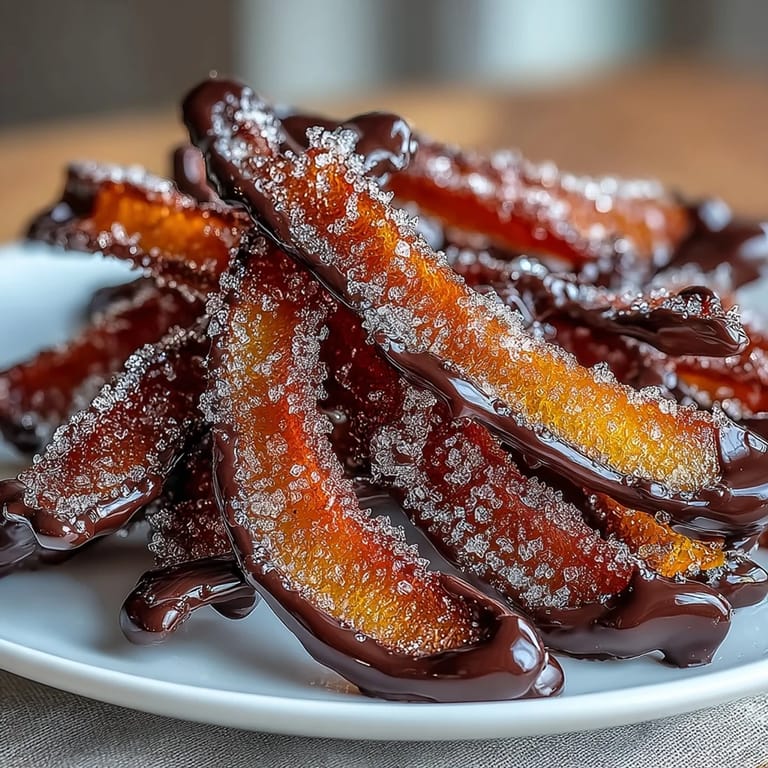
 This recipe taught me that the most impressive homemade gifts are often the ones that look fragile but actually last weeks in the pantry. There's real magic in a small, carefully wrapped box of something you made yourself, especially when it tastes this good with afternoon coffee.
Recipe FAQs
- → How do you remove bitterness from orange peels?
Blanching the strips in boiling water multiple times helps reduce their natural bitterness, making them tender and sweet.
- → What type of chocolate is best for coating?
High-quality dark chocolate (70% cocoa or higher) provides a rich, slightly bitter contrast that complements the sweet citrus flavors.
- → How long should the candied peels dry before dipping?
They should dry at least one hour until no longer sticky, ensuring the chocolate adheres well and sets properly.
- → Can the syrup be flavored for extra aroma?
Yes, adding spices like cinnamon sticks or cloves during simmering enhances the aromatic profile without overpowering the citrus.
- → What’s the best way to melt chocolate for dipping?
Using a double boiler prevents burning and allows smooth, even melting, ideal for coating the candied peels.
- → How should the finished pieces be stored?
Store in an airtight container at room temperature for up to two weeks to maintain freshness and texture.