 Save to Pinterest
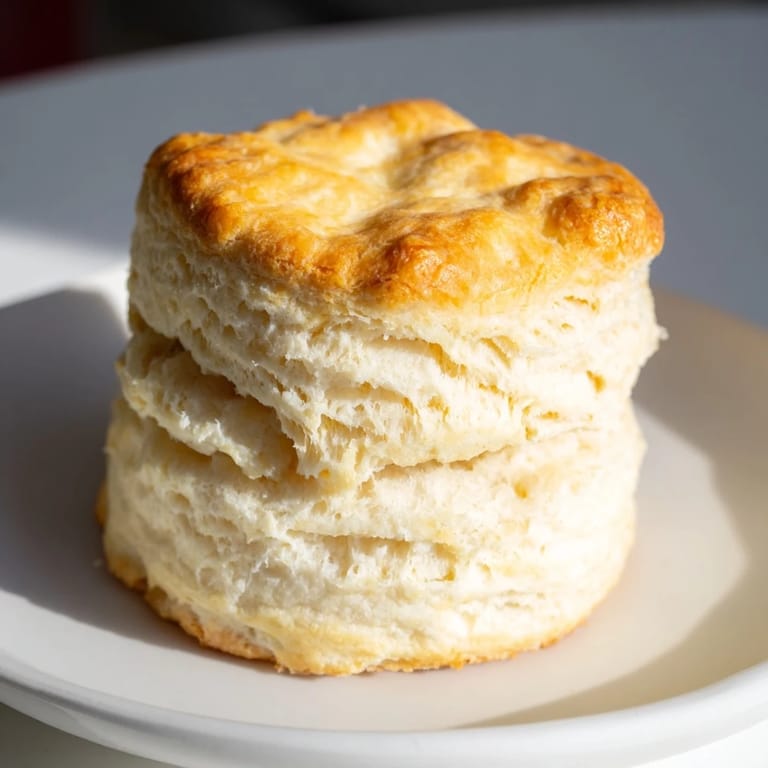
 My grandmother kept a jar of buttermilk in her fridge year-round, and the smell of her biscuits baking on Sunday mornings is something I chase with every batch I make. There's this specific moment when you pull them from the oven—that golden-brown peak, the steam rising—where you understand why people have fought over biscuits for centuries. These aren't complicated, but they demand respect: cold butter, cold buttermilk, and a light hand. Get those three things right, and the rest follows naturally.
I made these for my partner one random Thursday morning after staying up late, and watching his face when he bit into one still gets me. He made this small, surprised sound—almost a laugh—and ate three more before asking what was different about mine. Nothing exotic, I told him; just patience with the butter, gentleness with the dough, and buttermilk that had been sitting in the cold part of the fridge.
Ingredients
- All-purpose flour (2 cups): Use fresh flour from a bag you've stored in a cool place; old flour can turn slightly rancid and flatten your biscuits.
- Cold unsalted butter (½ cup, cubed): This is non-negotiable—cut it into small pieces and keep it cold right up until mixing; frozen butter works even better if you have a microplane to shred it directly into the flour.
- Cold buttermilk (¾ cup): The acidity activates your baking soda, and the cold temperature keeps the butter from melting before the oven does its work.
- Baking powder (1 tablespoon): Check the date on your container; old baking powder loses its lift.
- Baking soda (½ teaspoon): This reacts with the buttermilk's acidity, giving you a tender crumb and that slight tang.
- Fine sea salt (1 teaspoon): Enhances flavor without grittiness.
- Granulated sugar (1 tablespoon): A small amount feeds the yeast in your baking powder and browns the tops beautifully.
Tired of Takeout? 🥡
Get 10 meals you can make faster than delivery arrives. Seriously.
One email. No spam. Unsubscribe anytime.
Instructions
- Get your oven hot and your workspace ready:
- Preheat to 220°C (425°F) and line a baking sheet with parchment paper. A hot oven is crucial—you want the outside to set before the interior has time to spread.
- Mix your dry team:
- Whisk together flour, baking powder, baking soda, salt, and sugar in a large bowl. This distributes the leavening agents evenly and catches any lumps before they become problems.
- Work in the butter with speed and intention:
- Add your cold, cubed butter and use a pastry cutter, fork, or your fingertips to break it into the flour until it resembles coarse crumbs with some pea-sized pieces still visible. Those small butter pieces create steam pockets that become flaky layers; if you over-mix and warm the butter, you lose that magic.
- Bring the dough together gently:
- Make a well in the center, pour in cold buttermilk, and stir with a fork until just combined. Stop the moment you don't see dry flour—overmixing develops gluten, which makes tough, dense biscuits.
- Fold for flakiness:
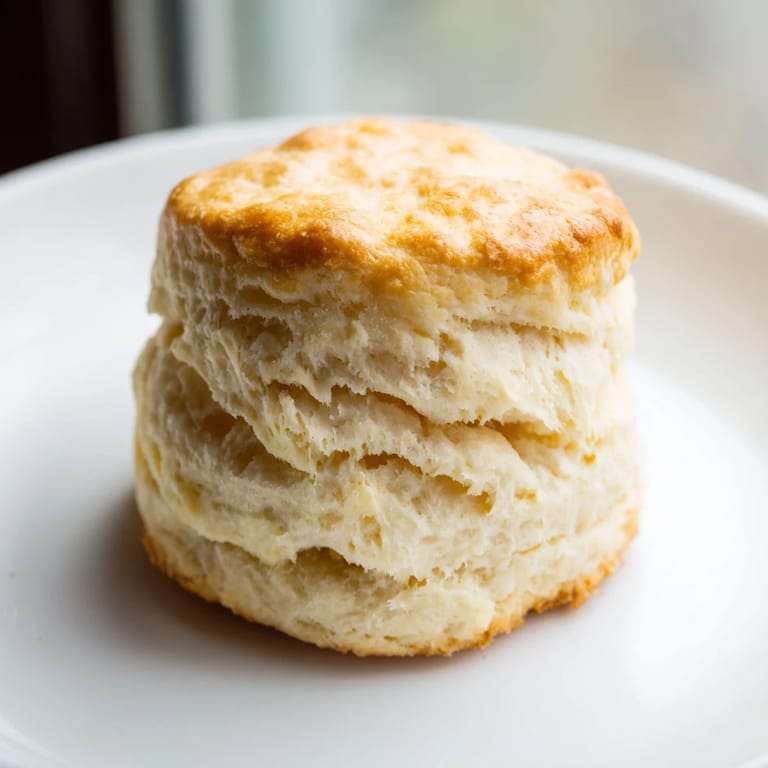
- Turn the dough onto a lightly floured surface, pat it into a rectangle about ½ inch thick, fold it in half, and gently pat out again. Repeat twice more. This technique creates those gorgeous, distinct layers without needing a thousand folds like laminated dough.
- Cut with confidence:
- Pat the dough to a final 1-inch thickness and cut straight down with a 2½-inch round cutter—twisting seals the edges and prevents even rising. Gather scraps gently and cut again.
- Set them up for success:
- Arrange biscuits close together on the baking sheet and brush the tops with a thin layer of buttermilk. Close placement helps them rise taller, and the buttermilk creates that characteristic golden-brown finish.
- Bake until they sing:
- Into the oven for 13–15 minutes, until the tops are deep golden and they smell like butter and toasted flour. They'll feel slightly firm on top but yield gently to pressure.
- Rest before you feast:
- Let them cool for a few minutes—this sets the structure and makes them easier to split. Serve warm.
 Save to Pinterest
 There was a Sunday when I made these for a sick friend, and she told me later that the smell of them baking made her cry a little. Sometimes food becomes more than nourishment; it becomes a small, quiet act of showing up for someone. These biscuits, for me, carry that weight.
The Science of Rise
Biscuits are a conversation between acid and base. Buttermilk brings the acid, baking soda does the work, and baking powder adds backup rise. This double-leavening system gives you a quick, reliable rise without the wait time that yeast requires. The cold butter creates steam, which separates layers as it melts during baking. Temperature is your secret language here; everything stays cold until the oven's heat does the work all at once.
Variations That Work
I've added sharp cheddar and cracked black pepper, fresh chives and thyme, even a whisper of smoked paprika. Each time, the biscuit structure holds perfectly because you're just adding flavor, not changing the ratio. The one time I got adventurous and used self-rising flour instead of adjusting my leavening, they came out dense and bitter—a good reminder that some formulas exist for reasons.
Serving and Storage
Biscuits are best the day they're made, still warm with their butter melting into every layer. If you have leftovers, wrap them well and reheat gently in a low oven. They also freeze beautifully before baking—place unbaked biscuits on a tray, freeze solid, then store in a container and bake directly from frozen, adding a minute or two to the time.
- Split warm biscuits and fill with honey, jam, or fresh cream for an instant breakfast that feels indulgent.
- Serve alongside fried chicken, sausage, or savory gravy for a complete, comforting meal.
- Make a batch on a weekday morning and your whole day feels a little more intentional.
 Save to Pinterest
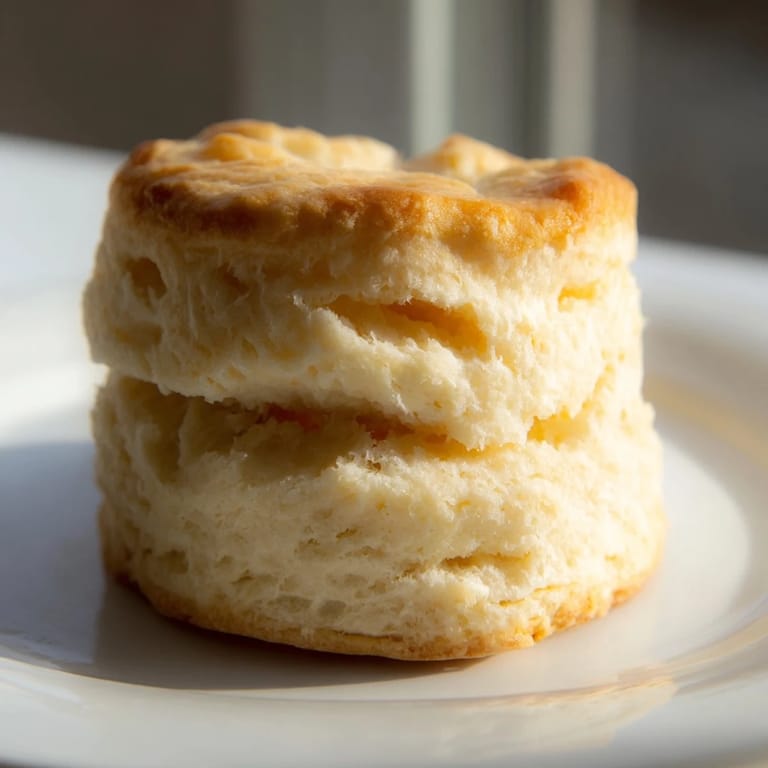
 These biscuits have become my reliable answer to questions I don't have words for—how to show care, how to mark a morning as special, how to make someone feel fed in more ways than one. Bake them with cold hands and a warm heart.
Recipe FAQs
- → How does folding the dough affect biscuit texture?
Folding creates layers by trapping butter within the dough, resulting in flakier, taller biscuits after baking.
- → Can I substitute buttermilk?
Yes, mix milk with lemon juice or vinegar and let it sit for 5 minutes to mimic buttermilk's acidity and texture.
- → Why use cold butter?
Cold butter forms small pockets in the dough that melt in the oven, producing flaky layers and tender crumb.
- → What is the best way to cut biscuits?
Use a sharp round cutter pressed straight down without twisting to maintain the biscuit's rise and shape.
- → How can I add extra flavor?
Incorporate grated cheddar, fresh herbs, or black pepper into the dough for richer taste variations.