 Save to Pinterest
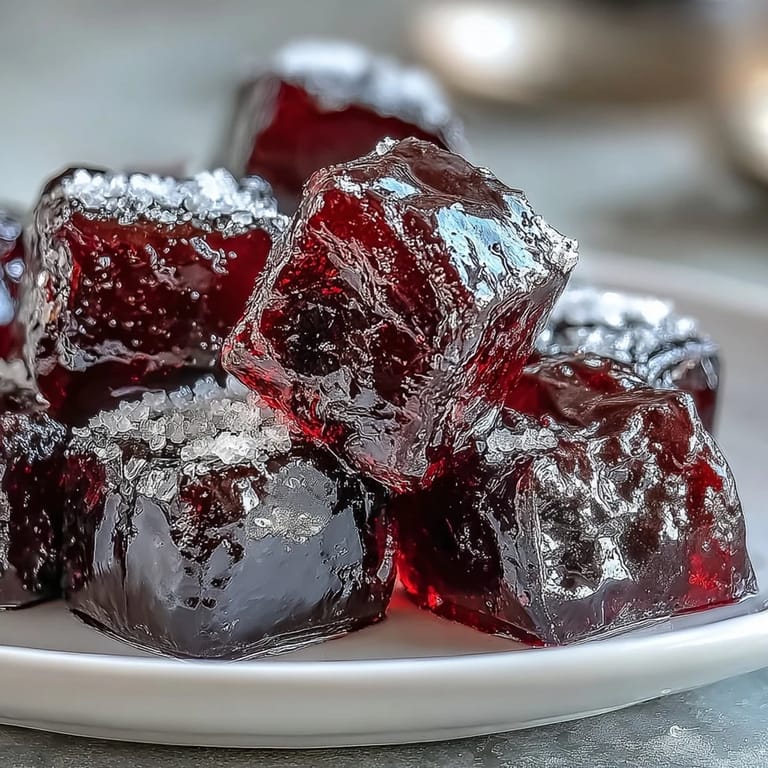
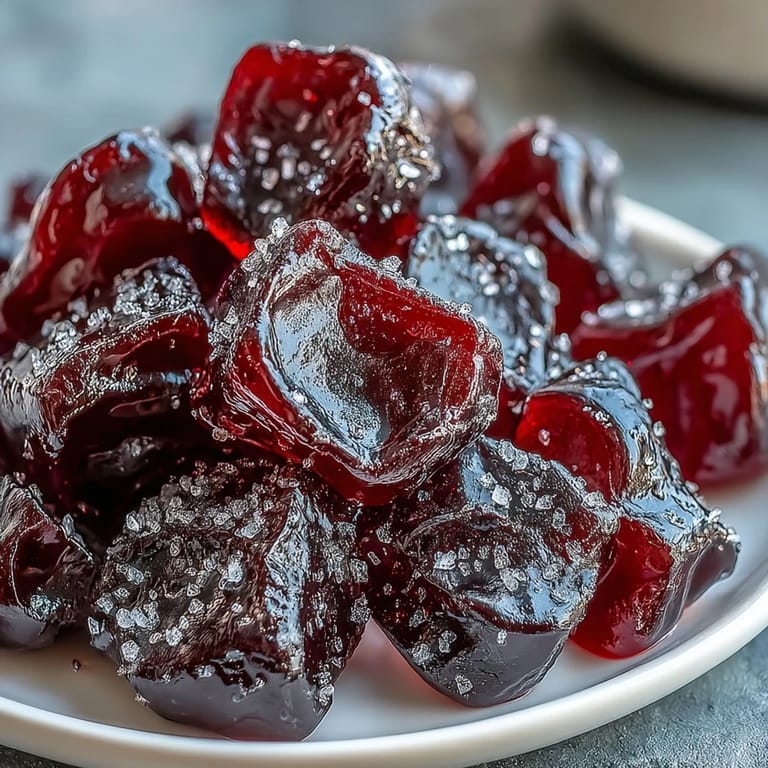
 There's something about black currant that catches people off guard—that deep, tart brightness that makes your mouth wake up. One afternoon, a friend brought over a tin of European candies, and I found myself mesmerized by these dark, chewy squares that tasted like a conversation between a berry and licorice root. The flavors shouldn't work together, yet somehow they create this oddly magnetic pull that keeps you reaching back into the box. That moment sparked the idea to make my own version, bolder and more unapologetic about what it wanted to be.
I made these for my mother's book club, honestly expecting mixed reactions to the licorice-currant pairing. Instead, one of her friends ate five pieces straight and asked if I was selling them, which became the best compliment I've ever received. Since then, they've appeared at every small gathering, and I've started keeping a batch in the freezer just in case someone stops by unexpectedly.
Ingredients
- Black currant purée: Fresh or frozen black currants blended smooth, then strained to remove seeds—this is the soul of the candy, so don't skip straining or you'll bite down on grit.
- Lemon juice: A tablespoon cuts through the sweetness and brightens the currant flavor without tasting citrusy.
- Granulated sugar: One and a half cups combined with corn syrup creates the perfect chewy texture.
- Light corn syrup or glucose syrup: This prevents crystallization and keeps your candies from becoming grainy, which I learned the hard way with an early batch.
- Water: Two portions—one-third cup to bloom gelatin, another one-third cup for the syrup base.
- Powdered gelatin: Three tablespoons give the candies their signature chewy bounce without rubberness.
- Licorice extract: Start with one and a half teaspoons; licorice is bold and you can always add more, but you can't take it back.
- Salt: Just a quarter teaspoon amplifies the fruit and keeps the licorice from becoming one-dimensional.
- Confectioners sugar and cornstarch: Optional coating that prevents sticking and adds a pleasant texture contrast.
Tired of Takeout? 🥡
Get 10 meals you can make faster than delivery arrives. Seriously.
One email. No spam. Unsubscribe anytime.
Instructions
- Prepare your stage:
- Line an 8x8-inch pan with parchment paper, leaving overhang on two sides so you can lift the finished candy slab out cleanly. A light grease under the parchment keeps everything from sticking.
- Bloom the gelatin:
- Sprinkle three tablespoons of powdered gelatin over one-third cup of cold water in a small bowl and let it sit for 10 minutes without stirring. It'll look like a sponge soaking up water, which is exactly what you want.
- Warm the currant base:
- Pour your black currant purée and lemon juice into a medium saucepan and warm gently over low heat—you're just taking the chill off, not cooking it down. The berries should smell bright and alive.
- Cook the sugar syrup:
- In a separate saucepan, combine one and a half cups granulated sugar, half a cup corn syrup, and one-third cup water over medium heat, stirring just until the sugar dissolves. Clip a candy thermometer to the side and let it boil undisturbed until it reaches 250°F, which takes about 8-10 minutes and marks the hard-ball stage.
- Marry the mixtures:
- Pull the hot syrup from heat and immediately stir in your bloomed gelatin until it completely dissolves—the heat does the work here. The mixture will smell intensely sweet at this point.
- Combine with currants:
- Pour the syrup-gelatin mixture into your warm currant purée and whisk vigorously until the colors blend into a uniform deep purple. This whisking prevents lumps and ensures even texture throughout.
- Add the aromatics:
- Stir in one and a half teaspoons of licorice extract and a quarter teaspoon of salt, then taste. If you want that licorice note to sing louder, add a bit more—this is your moment to adjust.
- Set and cool:
- Pour the mixture quickly into your prepared pan and smooth the top with an offset spatula or the back of a spoon. Room temperature cooling for one to two hours sets everything perfectly, and you'll watch it gradually firm up.
- Cut and coat:
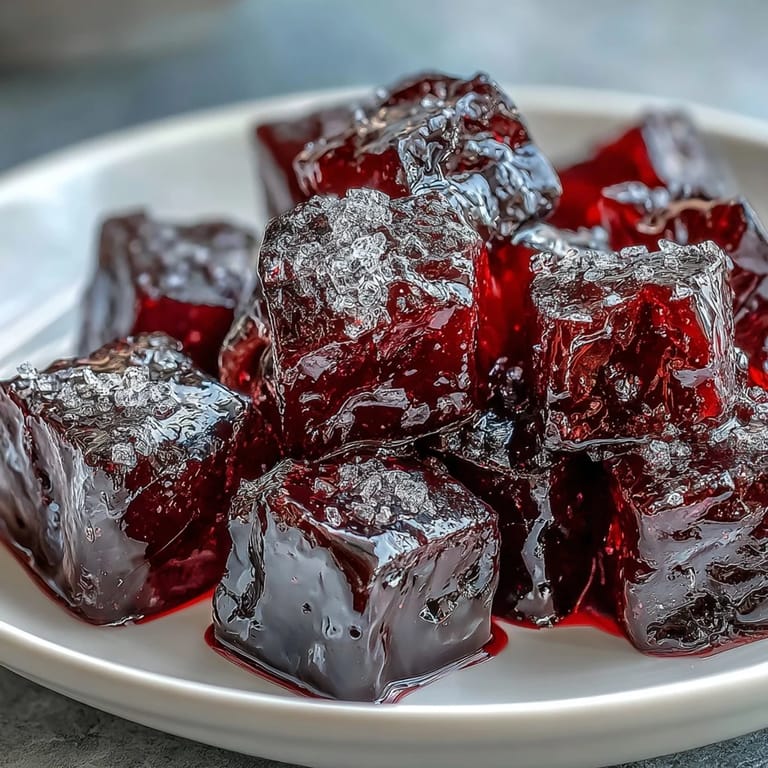
- Once fully set, dust a cutting board with a mixture of confectioners sugar and cornstarch, then turn the candy slab onto it. Cut into one-inch squares with a sharp knife dipped in hot water between cuts, then toss each piece in the coating to prevent sticking.
 Save to Pinterest
 What I didn't expect was how these candies became a symbol of trying something unfamiliar with an open mouth. People who claim they don't like licorice have eaten them anyway, discovering that black currant softens the edge and makes the whole thing feel like an adventure rather than an acquired taste.
The Licorice Question
Licorice divides rooms instantly—people either lean forward with genuine excitement or politely decline. The secret is that black currant is tart enough to balance licorice's sweetness and depth, creating something that tastes sophisticated rather than medicinal. If you're nervous, start with one teaspoon instead of one and a half, taste the mixture, and build from there. I've also found that anise extract works as a milder substitute if you want the aromatic quality without full licorice intensity.
Texture and Time
The cooling stage is genuinely important—rush it and your candies will be sticky and difficult to cut. I learned this by trying to cut them at 45 minutes, which resulted in a gummy, torn mess that I eventually just ate with a spoon, which wasn't terrible but not the plan. Two hours at room temperature gives the gelatin time to set properly and firm up without becoming hard or crystalline.
Storage and Variations
These candies keep beautifully in an airtight container for up to a week, though they rarely last that long in my house. The dark color and chewy texture stay consistent, and they don't dry out like some homemade candies do.
- For a deeper, earthier licorice note, add half a teaspoon of finely ground licorice root powder to the mixture along with the extract.
- Black raspberry or blackberry purée swap in seamlessly if you want to experiment with different fruit flavors.
- If you skip the confectioners sugar coating, store them between parchment paper squares to prevent them from sticking together.
 Save to Pinterest
 These candies remind me that flavor is braver than we give it credit for, and sometimes the combination that seems unlikely on paper becomes the one everyone remembers. Make a batch and watch what happens.
Recipe FAQs
- → What gives the candy its chewy texture?
The gelatin mixture incorporated into the warm syrup and fruit base creates the chewy texture once cooled and set.
- → Can I substitute black currant with another fruit?
Yes, black raspberry or blackberry purée can be used as alternatives for a similar tart flavor profile.
- → How is the licorice flavor enhanced in this confection?
Licorice extract adds aromatic depth, and a small amount of ground licorice root powder can intensify its presence.
- → What is the purpose of dusting the finished pieces with confectioners sugar and cornstarch?
This coating prevents the candy pieces from sticking together after cutting by absorbing moisture on the surface.
- → What tools are needed to prepare this candy?
A baking pan, saucepan, candy thermometer, whisk, sharp knife, and mixing bowls are essential for preparation.
- → How long should the candy cool before cutting?
Allow the confection to cool and set at room temperature for 1 to 2 hours until firm enough to cut.