 Save to Pinterest
 There's something deeply satisfying about assembling a bowl that feels complete—when you realize you've built something genuinely nourishing with your own hands, not ordered from somewhere. I stumbled onto this three-bean combination during a phase where I was tired of repetitive lunches, standing in my kitchen on a Tuesday afternoon with an oddly full pantry and a desire for something that wouldn't bore me by Wednesday. What started as a practical solution became a quiet ritual, something I now make whenever I need to feel grounded and energized all at once.
I made this for a friend who'd just started running marathons and needed fuel that felt like actual food, not fuel. Watching her eat this bowl with the kind of genuine satisfaction that only comes when something hits all the marks at once—protein, vegetables, grains, healthy fat—was a reminder that nourishing yourself doesn't have to be complicated or joyless. She now texts me photos of her versions, each one slightly different based on what's growing in her garden or what the farmers market had that week.
Ingredients
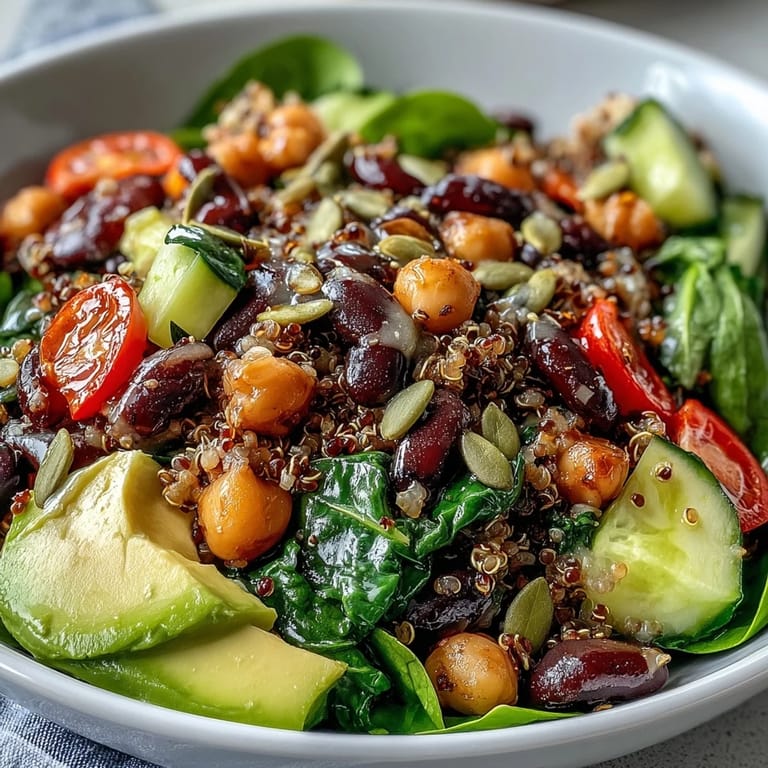
- Black beans: earthy and hearty, they anchor the bowl with their deep flavor and provide folate and iron that your body will actually use.
- Chickpeas: creamy when cooked just right, these bring a nutty sweetness and are packed with fiber that keeps digestion happy.
- Kidney beans: the slightly firmer texture of these beans provides nice contrast and rounds out your protein profile beautifully.
- Quinoa: a complete protein on its own, it binds everything together while adding a pleasant, slightly nutty grain taste—though brown rice works beautifully too if that's what you have.
- Cherry tomatoes: halved so they release just a bit of juice into the bowl, they add brightness and acidity that the dressing needs.
- Cucumber: diced fresh, this vegetable brings cool crispness and hydration without any heaviness.
- Red bell pepper: sliced thin so it stays crisp, it adds sweetness and vitamin C that your immune system appreciates.
- Baby spinach or mixed greens: choose fresh and tender greens that won't wilt immediately when the dressing touches them.
- Avocado: the creamy element that makes each bite feel indulgent while adding healthy monounsaturated fats that your brain loves.
- Red onion: thinly sliced so the sharpness mellows slightly, it adds a bite that keeps the bowl from feeling flat.
- Olive oil: use the good stuff you actually enjoy, since you'll taste it directly in the dressing.
- Lemon juice: always fresh-squeezed if possible, bottled just never has the same brightness and punch.
- Apple cider vinegar: a touch of this adds complexity and helps the dressing wake up your palate.
- Dijon mustard: it acts as an emulsifier so your dressing actually stays together and coats everything evenly.
- Maple syrup or honey: just a teaspoon balances the acidity and sharpness with the gentlest touch of sweetness.
- Garlic: minced fresh, never from a jar if you can help it, since the raw punch is essential here.
- Salt and pepper: taste as you go, because dressing seasoning needs your judgment, not just the recipe's.
- Fresh cilantro or parsley: chopped just before serving so it stays bright and aromatic rather than turning dark and disappointed-looking.
- Toasted seeds: optional but honestly, the textural contrast they bring is worth the extra two minutes of toasting.
Tired of Takeout? 🥡
Get 10 meals you can make faster than delivery arrives. Seriously.
One email. No spam. Unsubscribe anytime.
Instructions
- Set your stage:
- Begin by preparing all your vegetables and setting them in small bowls or on a cutting board—this takes the pressure off once you start assembling. Having everything visible and ready somehow makes the whole process feel less like work and more like creation.
- Build your dressing:
- In a small bowl, whisk together the olive oil, lemon juice, apple cider vinegar, Dijon mustard, maple syrup, and minced garlic until you see the emulsion starting to happen. Add salt and pepper to taste, remembering that you can always add more but you can't take it back.
- Combine your beans and vegetables:
- In a large mixing bowl, layer your three types of beans with all the fresh vegetables and greens—the combination of colors and textures here is honestly half the appeal. Don't overthink this step; just get everything in there.
- Add your grain:
- Stir in your cooked quinoa or brown rice, gently folding it so each grain gets a chance to mingle with the vegetables. If your grain has been sitting in the fridge and feels a bit stiff, this is the moment it loosens up and becomes part of something bigger.
- Dress and toss:
- Pour your dressing over everything and toss gently but thoroughly, making sure the dressing finds its way into every corner. You'll feel the moment when it all comes together—when the colors seem brighter and everything tastes connected rather than like separate ingredients.
- Build your bowls:
- Divide the mixture among four serving bowls, creating a base of the bean and vegetable mixture. Top each bowl with sliced avocado arranged just the way you like it, knowing that this creamy element transforms everything beneath it.
- Finish with intention:
- Scatter fresh cilantro or parsley across each bowl, and if you're using them, sprinkle those toasted seeds on top for crunch. Serve immediately while everything still has that just-assembled freshness, or refrigerate for up to two days if you're planning ahead.
 Save to Pinterest
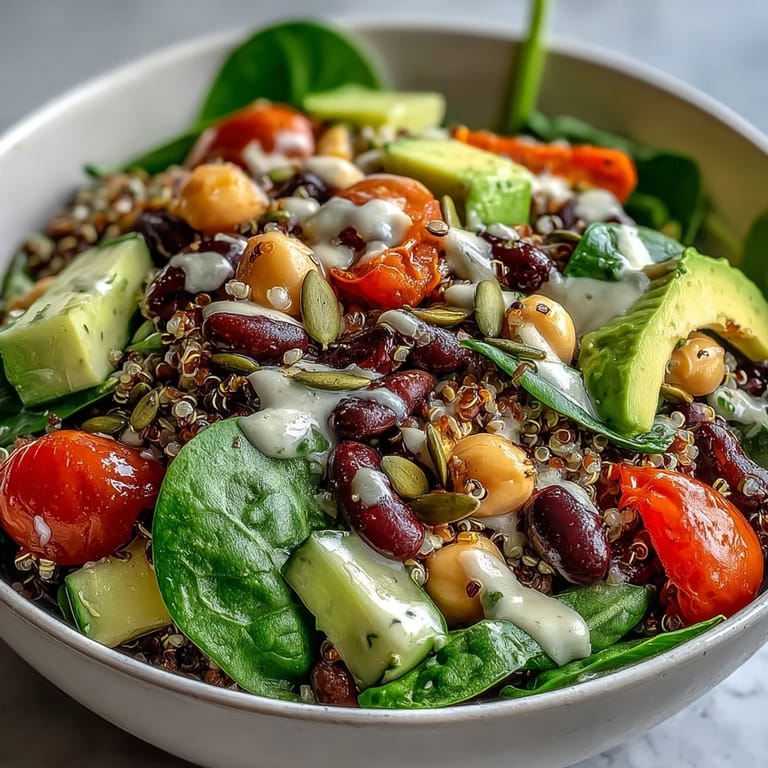
 There's a quiet power in eating something you made that contains three different proteins, seven kinds of vegetables, and a grain that rounds everything out. It's the kind of meal where you don't feel like you're being virtuous—you just feel full, satisfied, and somehow more capable of handling whatever comes next.
Why This Bowl Works as Meal Prep
The genius of this bowl is that almost every component improves or at least holds steady in the refrigerator for two full days. The beans actually absorb the dressing flavors more deeply as time passes, and the vegetables stay crisp if you don't dress them until you're ready to eat. The one exception is the avocado, which I always add fresh when I'm about to eat, keeping the slices reserved in the fridge with a squeeze of lemon juice to prevent browning. This approach means you can prep everything on a Sunday and eat variations of the same bowl all week without it feeling stale or sad.
Variations and Personal Swaps
I've learned that this bowl is less a fixed recipe and more of a template that welcomes your preferences and what's available. Brown rice, farro, or even wheat berries work beautifully in place of quinoa if that's what you're craving or what you have on hand. Roasted chickpeas can replace the standard cooked variety for extra crunch, or you can add grilled chicken, tofu, or even a fried egg on top if you want something more substantial. Some days I add a pinch of chili flakes to the dressing for heat, other days I stir in fresh herbs like mint or basil for brightness.
The Dressing Moment
The dressing is where this bowl becomes more than the sum of its parts, where individual ingredients suddenly taste like they belong together. Whisking it properly so the oil and lemon juice actually emulsify makes it coat everything instead of pooling at the bottom, and tasting it before it meets the vegetables gives you control over whether it needs more salt, more acid, or just a touch more sweetness. I've noticed that the dressing tastes slightly different depending on whether I make it with honey or maple syrup, and honestly, there's no wrong choice—it's just about following your mood that day.
- Make the dressing at least five minutes before serving so the flavors have time to marry and deepen.
- If your dressing feels too sharp or acidic, a touch more maple syrup or honey rounds it out without making it sweet.
- Store leftover dressing in a jar in the fridge and shake it before using again, since the oil and acid naturally separate.
 Save to Pinterest
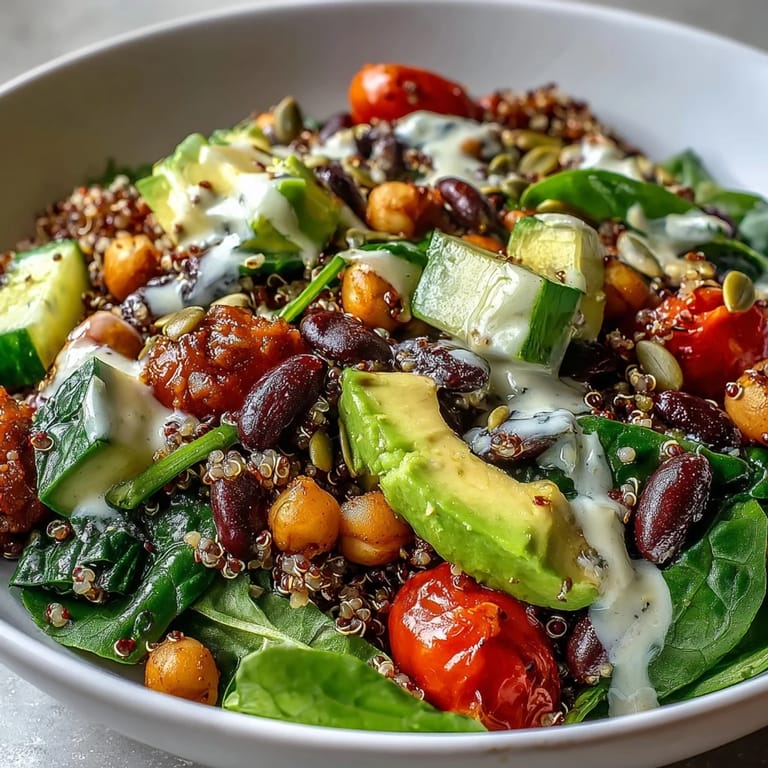
 This bowl has become my answer to the question of what to eat when I want something that feels good going down and even better the next day when my body remembers how well I fed it. There's freedom in a meal this nourishing and flexible, one that welcomes whatever you want to add and never judges you for making it slightly different each time.
Recipe FAQs
- → Can I use canned beans?
Yes, canned beans work perfectly. Just drain and rinse them thoroughly before adding to the bowl. This removes excess sodium and preserves the fresh taste of your final dish.
- → How long does this keep in the refrigerator?
This bowl stores well for up to 2 days in the refrigerator. Keep the dressing separate if possible, and add fresh avocado right before serving to prevent browning.
- → What grains can substitute quinoa?
Brown rice, bulgur, farro, or even couscous make excellent substitutions. Cook according to package directions and let cool slightly before combining with other ingredients.
- → Is this suitable for meal prep?
Absolutely. The flavors actually develop and improve overnight. Prepare everything in advance, portion into containers, and keep dressing separate until ready to eat.
- → Can I add extra protein?
Grilled chicken, baked tofu, or even hard-boiled eggs make great additions. Simply prepare your protein separately and arrange on top when serving.
- → What dressing alternatives work well?
Tahini-based dressing, creamy avocado dressing, or a simple balsamic vinaigrette all complement these flavors beautifully. Adjust based on your taste preferences.