 Save to Pinterest
 The first time I made gumbo, I didn't understand why my roux kept burning. I'd watched my neighbor stir hers with this calm, almost meditative patience while ours bubbled and turned acrid in minutes. She laughed and said the secret wasn't speed—it was presence, the kind of attention you give something you're building from scratch. Now, whenever I make this Louisiana stew, that lesson sticks with me: gumbo isn't rushed, and it rewards the people who respect the process.
I remember serving this to my uncle who'd just moved from New Orleans, and I was terrified he'd find it lacking. He tasted it, went quiet for a moment, and then said it reminded him of his mother's kitchen—not identical, but close enough to matter. That's when I realized gumbo isn't about perfection; it's about creating something warm enough that people feel at home the moment they sit down.
Ingredients
- Andouille sausage, 300 g sliced: This smoky, spiced meat is the backbone of traditional gumbo—look for it in specialty stores or quality butcher sections, and don't skip it if you can find it.
- Boneless, skinless chicken thighs, 400 g: Thighs stay juicy and tender through the long simmer, unlike breast meat which can dry out.
- Medium shrimp, 300 g peeled and deveined (optional): Add these in the final minutes so they stay plump and don't toughen up.
- Onion, 1 large finely chopped: The foundation of flavor—take your time with this one.
- Green bell pepper and celery stalks, diced: Together with the onion, these form the holy trinity that makes gumbo taste like itself.
- Garlic cloves, 4 minced: Add after the vegetables soften so it doesn't scorch in the roux.
- Tomatoes, 2 medium diced (or 1 can drained): Fresh adds brightness; canned works just as well when fresh aren't available.
- Vegetable oil and all-purpose flour, 80 ml and 80 g: These create the roux—the heart of gumbo's rich, velvety texture.
- Chicken or seafood stock, 1.2 liters: Use the best stock you can find; it carries the entire dish.
- Bay leaves, dried thyme, smoked paprika, cayenne pepper: These spices build layers of flavor—don't rush adding them, and taste as you go.
- Worcestershire sauce and hot sauce (optional): Final tweaks that add depth and a gentle kick.
- Cooked long-grain white rice, 360 g: The bed everything rests on—fluff it just before serving.
- Filé powder (optional): Ground sassafras leaves used traditionally; stir it in after removing from heat to avoid stringiness.
- Scallions and fresh parsley for garnish: A bit of green and freshness at the end changes everything.
Tired of Takeout? 🥡
Get 10 meals you can make faster than delivery arrives. Seriously.
One email. No spam. Unsubscribe anytime.
Instructions
- Gather and prep everything first:
- Before you turn on the heat, have your onion, pepper, celery, garlic, and meats all prepped and within arm's reach. Roux demands your undivided attention, and scrambling for ingredients halfway through will cost you.
- Build your roux slowly and steadily:
- Heat oil in your heavy pot over medium heat, then gradually whisk in flour—think of it as a gentle conversation between the two, not a rush. Stir constantly for 15–20 minutes, watching it deepen from sandy blonde to chocolate brown, almost black. This is where the flavor begins; if you rush it or let it burn, start over because a bitter roux ruins everything.
- Wake up the vegetables in the roux:
- Add the onion, pepper, and celery all at once—they'll sizzle and fill your kitchen with a smell that says something good is happening. Stir often for about 5 minutes until they soften and start to caramelize against the dark roux.
- Let the garlic bloom briefly:
- Add minced garlic for just 1 minute, stirring constantly so it perfumes the whole pot without burning.
- Brown the sausage and chicken:
- Toss in the sliced sausage and chicken chunks; let them brown lightly for about 5 minutes, releasing their oils and flavor into the roux.
- Layer in the aromatics and spices:
- Add tomatoes, bay leaves, thyme, paprika, cayenne, salt, and pepper all together. Stir until everything is coated and the spices begin to smell vibrant and deep.
- Add stock gradually, stirring constantly:
- Pour in the stock slowly while stirring—this prevents lumps and helps the roux dissolve evenly into a silky broth. Bring everything to a gentle boil, then drop the heat low and let it simmer uncovered for 45 minutes, stirring occasionally so nothing sticks to the bottom.
- Add shrimp in the final stretch:
- If you're using shrimp, add them only in the last 10 minutes so they turn pink and opaque without becoming rubbery. They'll continue cooking after you remove the pot from heat.
- Finish with Worcestershire and hot sauce:
- Stir these in at the end, taste, and adjust salt or spice to suit your mood and your guests' preferences.
- Filé powder, if desired:
- Stir in ½–1 teaspoon off the heat to thicken and add a subtle, earthy note—add it at the table instead if you want guests to control the texture.
- Serve over rice with garnish:
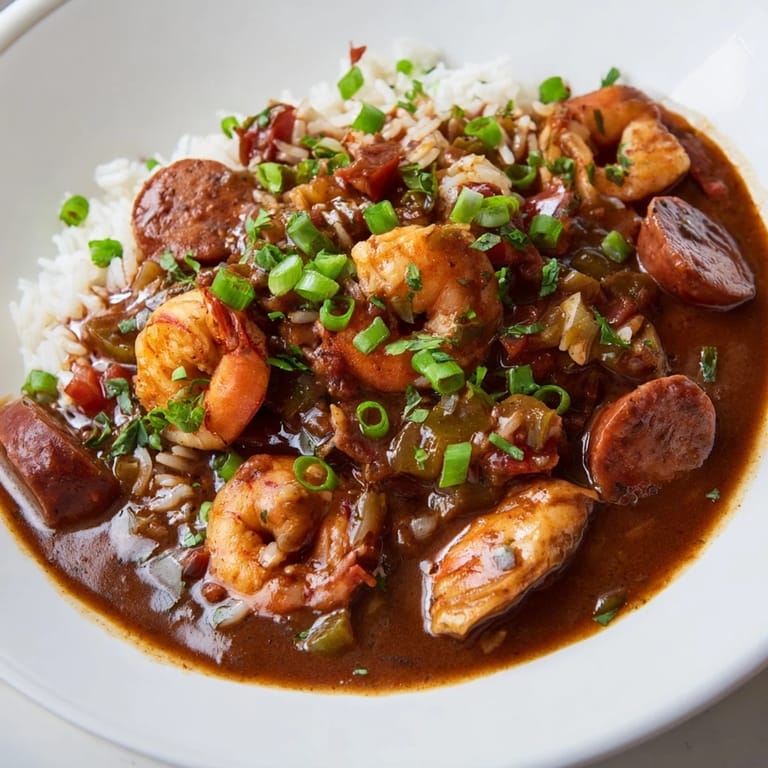
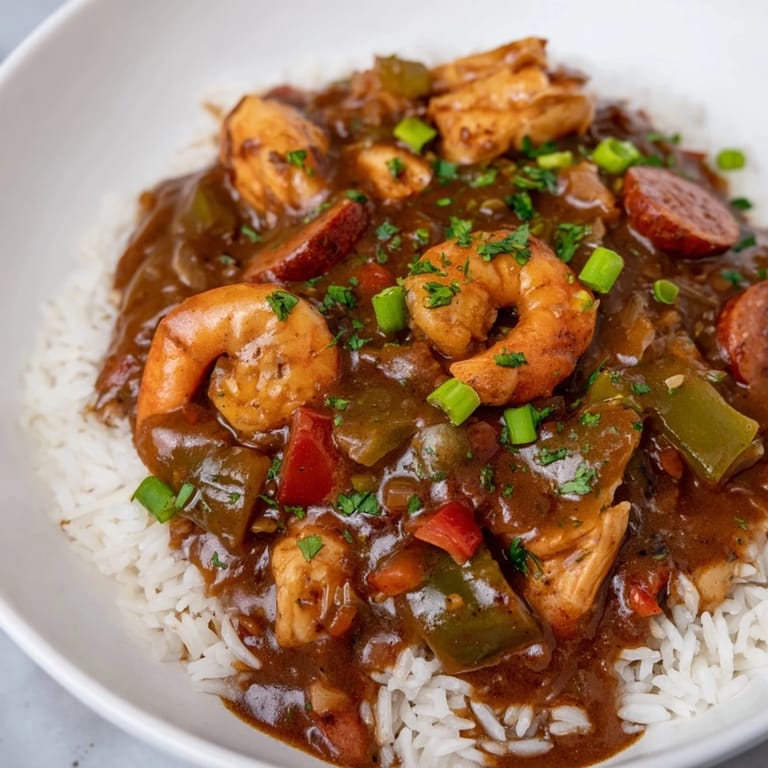
- Ladle the gumbo into bowls over fluffy white rice, scatter scallions and parsley on top, and step back to watch people's faces when they take that first spoonful.
 Save to Pinterest
 There was an evening when my daughter asked why gumbo took so long to make, and I realized I didn't have a hurried answer. We sat together while it simmered, and she drew pictures while I stirred occasionally and we talked about her day. That's when I understood—gumbo gives you permission to slow down, to be present with people you love, to let dinner become an experience instead of a chore.
The Art of the Roux
The roux is where gumbo's soul lives. It's not complicated—just oil and flour cooked together—but it demands respect and attention. Many cooks fear it because it can burn so easily, turning from golden to bitter in moments. The trick is medium heat and constant stirring; if your arm gets tired, you're doing it right. I learned to watch for the color rather than the time: it should smell nutty and deep, never acrid. Once you've made a few successful roux, you'll trust yourself, and that confidence carries into every dish you make.
Choosing Your Proteins
Gumbo is forgiving when it comes to what you put in it. The classic version uses sausage and chicken, but you can build a seafood-only version with crab, oysters, and shrimp if that's what calls to you. Each choice shifts the flavor slightly—sausage brings smokiness, chicken adds richness, shrimp offers delicate sweetness. I've made versions with each, and I've made hybrid versions too. The point is that gumbo wants to be made with whatever is fresh and good in your world right now, and it will taste like home no matter what.
Serving and Storing
Gumbo reaches its peak flavor a day after making it; the spices and broth have time to meld and deepen. Serve it hot over fluffy white rice, garnished with scallions and parsley for brightness. It freezes beautifully for up to three months, making it perfect for nights when you want comfort without the work. Some people like hot sauce on the side for an extra kick, and I've learned that offering it alongside rather than stirring it in lets everyone find their own heat level.
- Reheat gumbo gently on the stovetop over low heat, adding a splash of stock if it's thickened too much.
- If you add filé powder, do it after you've warmed everything through to avoid that stringy texture.
- Leftover rice can be mixed into extra gumbo for a thicker, more substantial bowl.
 Save to Pinterest
 Gumbo is a dish that rewards patience and care, and it returns that kindness by bringing people together. Make it when you want to nourish both body and spirit, and don't be surprised when it becomes the meal people ask for again and again.
Recipe FAQs
- → What proteins are used in this Louisiana stew?
The stew includes andouille sausage, boneless chicken thighs, and optionally medium shrimp for seafood variation.
- → How is the roux prepared for this dish?
The roux is made by slowly whisking flour into vegetable oil over medium heat for 15–20 minutes until it achieves a deep chocolate brown color without burning.
- → What vegetables form the base flavor of the stew?
Onion, green bell pepper, and celery (known as the 'holy trinity' in Cajun cooking) are sautéed to form the flavor base along with garlic and tomatoes.
- → How long should the stew simmer?
After combining all ingredients and stock, the stew should simmer uncovered for about 45 minutes, with shrimp added during the last 10 minutes if using.
- → What is the purpose of filé powder in this dish?
Filé powder, made from ground sassafras leaves, is added at the end to thicken the stew and add a distinct earthy flavor.
- → What spices enhance the flavor of this stew?
Bay leaves, dried thyme, smoked paprika, cayenne pepper, black pepper, salt, Worcestershire sauce, and optional hot sauce contribute layers of seasoning.