 Save to Pinterest
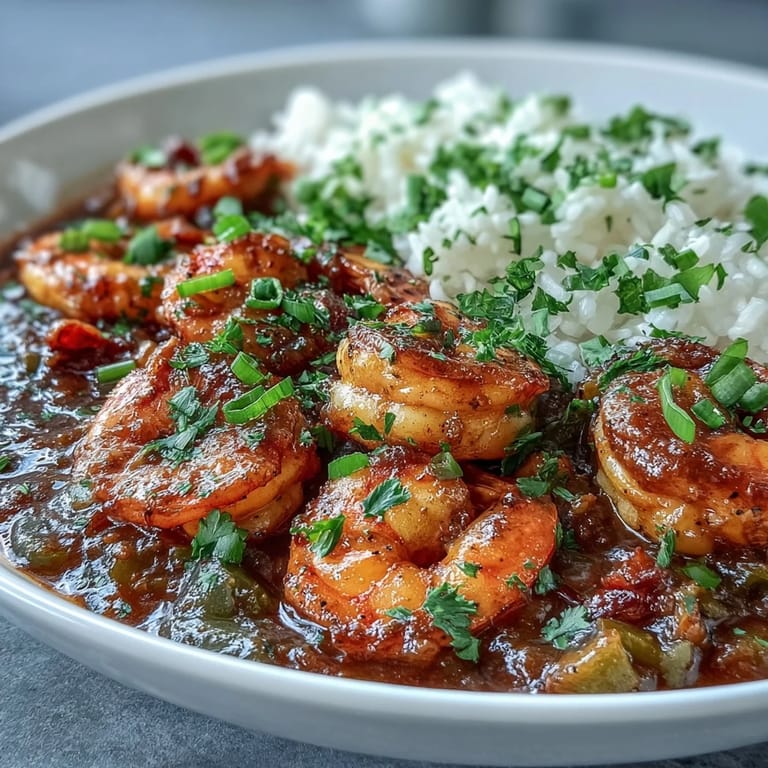
 The smell hit me before I even opened the door, warm and earthy, like someone had captured the entire French Quarter in a pot. My neighbor Mrs. Thibodeaux was stirring something dark and glossy on her stove, and when she saw me peeking through her screen door, she waved me in with a wooden spoon still dripping with roux. That afternoon, I learned that étouffée isn't just about shrimp and rice. It's about patience, about standing over a pot and stirring until your arm aches, about trusting that something as simple as flour and oil can turn into liquid gold.
I made this for my brother's birthday one year, and he got quiet halfway through his second bowl. He's not the sentimental type, but he looked up and said it reminded him of the trip we took to Louisiana when we were kids. I hadn't been trying to recreate a memory, just feed people I loved. That's when I realized good food doesn't need a reason, it makes its own.
Ingredients
- Vegetable oil and all purpose flour: These two transform into the roux, the soul of the dish, so don't rush it or use butter, which burns too easily at the high heat you need.
- Onion, green bell pepper, and celery: The holy trinity of Cajun cooking, they add sweetness and structure, and dicing them small helps them melt into the sauce.
- Garlic: Four cloves might seem like a lot, but they mellow beautifully and add a subtle warmth that balances the spice.
- Shrimp or crawfish: A pound is just enough to make every bite rich without overwhelming the sauce, and buying them already peeled saves you precious time.
- Seafood stock: This brings brininess and body, but chicken stock works in a pinch if that's what you have on hand.
- Worcestershire sauce: Just a tablespoon adds umami and a hint of tang that makes people ask what your secret is.
- Cajun seasoning and cayenne pepper: These bring the heat and complexity, but start conservative because you can always add more at the end.
- Bay leaf: One leaf releases a subtle herbal note that ties everything together, just remember to fish it out before serving.
- White rice, green onions, and parsley: The rice soaks up all that saucy goodness, while the fresh herbs add a pop of color and brightness right before you dig in.
Tired of Takeout? 🥡
Get 10 meals you can make faster than delivery arrives. Seriously.
One email. No spam. Unsubscribe anytime.
Instructions
- Start the roux:
- Heat the oil in a heavy pot over medium heat, then whisk in the flour slowly until it forms a smooth paste. Stir constantly with a wooden spoon or whisk, watching it turn from blonde to peanut butter to deep chocolate brown, which takes about 15 to 20 minutes and requires your full attention.
- Add the trinity:
- Toss in the diced onion, bell pepper, and celery, stirring them into the roux until they soften and start to smell sweet, about 5 to 7 minutes. The vegetables will sizzle and steam, so keep stirring to prevent any sticking.
- Bloom the garlic:
- Stir in the minced garlic and let it cook for just a minute until it releases that unmistakable fragrance. Don't let it brown or it will turn bitter.
- Build the sauce:
- Gradually pour in the seafood stock, whisking constantly to blend it smoothly with the roux and vegetables, scraping up any bits stuck to the bottom. The mixture will thicken as it comes together into a velvety base.
- Add the shrimp and seasonings:
- Stir in the shrimp, Worcestershire sauce, Cajun seasoning, cayenne, bay leaf, salt, and black pepper. Give everything a good stir so the shrimp are coated and the spices distribute evenly.
- Simmer and thicken:
- Bring the pot to a gentle simmer, then lower the heat and let it cook uncovered for 20 to 30 minutes, stirring occasionally. The sauce will thicken and the shrimp will turn pink and tender, absorbing all those deep flavors.
- Adjust and serve:
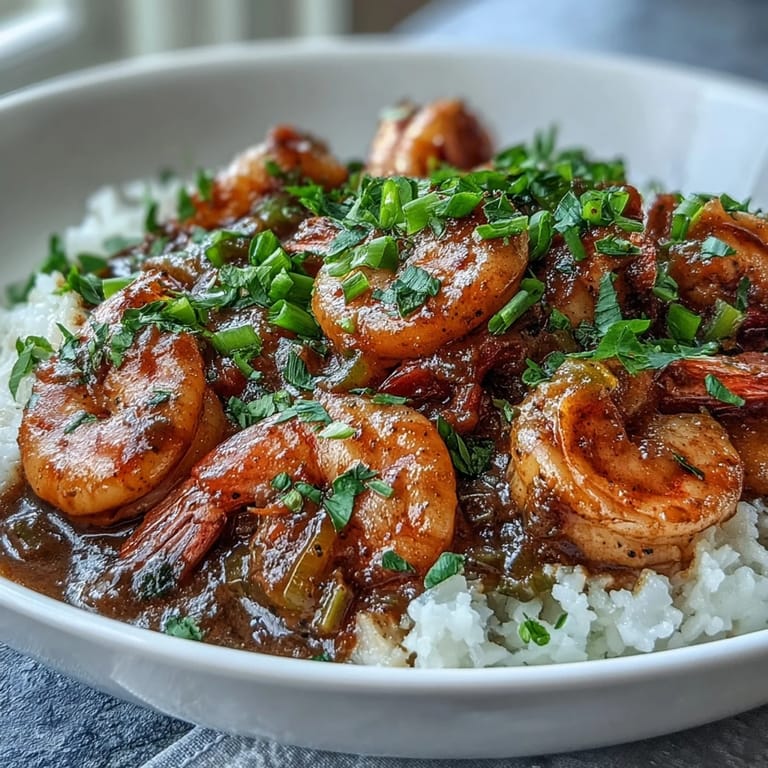
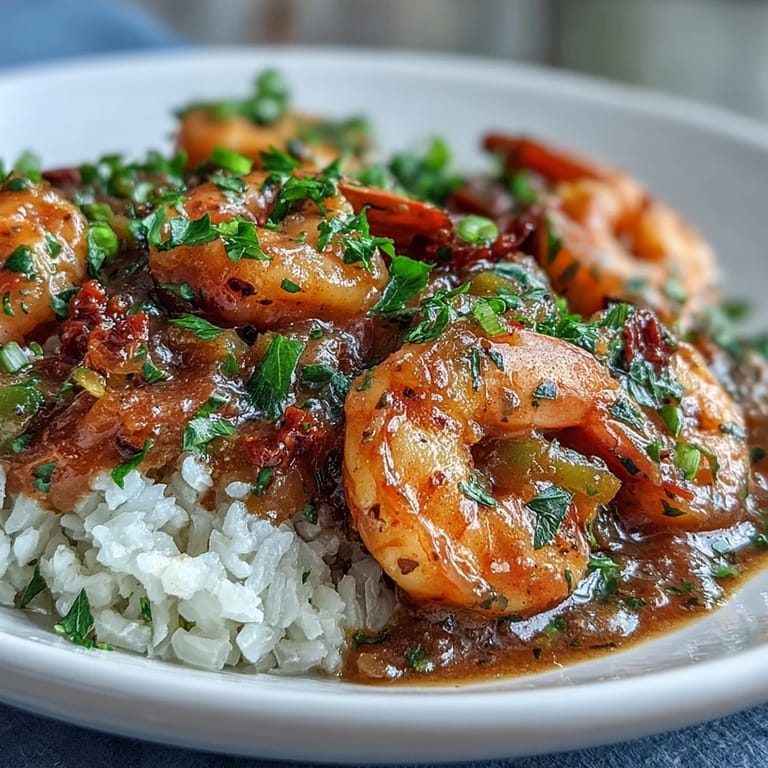
- Taste the étouffée and add more salt, pepper, or cayenne if needed, then remove the bay leaf. Spoon the étouffée over hot rice and scatter green onions and parsley on top.
 Save to Pinterest
 One rainy Saturday, I made a double batch and invited a few friends over with no agenda but to eat and talk. We sat around my kitchen table until the bowls were empty and someone scraped the pot for the last bit of sauce. Nobody wanted to leave, and I realized that's what étouffée does, it slows time down just enough to notice who you're sharing it with.
Swapping the Protein
Shrimp is traditional, but I've used chicken thighs, andouille sausage, even mushrooms when I wanted something heartier or had to cook for someone with a shellfish allergy. Just adjust the cooking time, chicken needs longer to cook through, and sausage benefits from a quick sear before you add it to the pot. The roux and spices are so flavorful that almost anything you stir in will taste like it belongs there.
Making It Ahead
Étouffée is one of those rare dishes that actually improves after a night in the fridge, the flavors meld and deepen in a way that makes day two even better than day one. I usually make it in the evening, let it cool, then reheat it gently on the stove the next day, adding a splash of stock if it's thickened too much. Just cook your rice fresh so it stays fluffy and doesn't turn mushy.
Serving and Sides
I always serve this over plain white rice because it soaks up the sauce like a sponge, but sometimes I'll put out a basket of crusty French bread for people to mop up their bowls. A simple green salad with a sharp vinaigrette cuts through the richness, and if you want to go full Louisiana, a cold beer or sweet iced tea rounds out the meal perfectly.
- Use long grain white rice for the fluffiest texture that won't clump.
- Warm your serving bowls so the étouffée stays hot from first bite to last.
- Leftover étouffée makes an incredible filling for omelets or stuffed peppers the next morning.
 Save to Pinterest
 Every time I make étouffée, I remember that patience isn't just a virtue, it's an ingredient. Let the roux take its time, let the flavors simmer and marry, and you'll end up with something that tastes like you've been cooking it your whole life.
Recipe FAQs
- → What is the secret to a perfect étouffée?
The key is achieving a properly dark roux—cooked to a deep chocolate color without burning. This takes 15-20 minutes of constant stirring but provides the distinctive rich flavor and color that defines authentic New Orleans étouffée.
- → Can I make this étouffée ahead of time?
Yes, étouffée actually tastes better the next day as flavors have time to meld. Store in the refrigerator for up to 3 days and reheat gently, adding a splash of stock if needed to thin the sauce.
- → What protein alternatives work well?
Crawfish is traditional, but you can also use chicken thighs, andouille sausage, or even a combination. For a vegetarian version, try mushrooms or tofu—just adjust cooking time accordingly.
- → How do I know when the roux is ready?
The roux should reach a deep mahogany or chocolate brown color, similar to a penny. It will have a nutty aroma and slightly thinner consistency. Watch closely—it can burn quickly once it starts darkening.
- → What's the difference between étouffée and gumbo?
While both start with a roux and use similar ingredients, étouffée has a thicker, smoother sauce that coats the main ingredient. Gumbo typically has more liquid and includes okra or filé powder as a thickener.